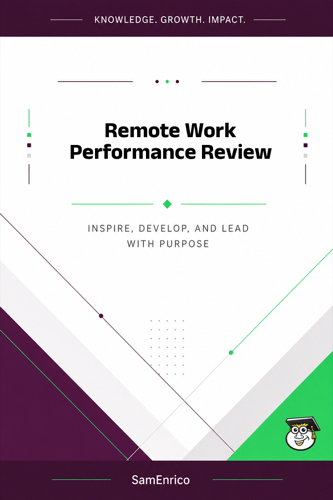
About this book
Free sample
Chapter 1: The Visibility Trap--–- In March 2020, a senior software engineer named Elena did something remarkable. She refactored her company’s entire payment processing system over three weeks, eliminating a persistent bug that had caused $2.3 million in failed transactions the previous year. She worked from a spare bedroom with a sleeping baby in the next room, often starting at 5:00 AM and finishing after 10:00 PM to accommodate team calls across three time zones. Her code was clean, her documentation thorough, and her results undeniable.When annual review season arrived in December, Elena received a “Meets Expectations” rating and a 2% salary increase. Her manager’s written feedback praised her “reliable technical contributions” but noted that she “could be more visible in team discussions” and “might benefit from participating more actively in cross-functional meetings.” Meanwhile, a colleague who sat two desks away from the manager in the pre-pandemic office—someone who had spent most of 2020 fixing minor front-end issues while working from a vacation home—received an “Exceeds Expectations” rating and a 7% increase.
The colleague’s review highlighted “strong collaborative presence” and “excellent team engagement.”Neither Elena nor her colleague knew it at the time, but they had just experienced the most destructive force in remote work management: proximity bias. And the problem, as this chapter will demonstrate, has only grown worse as organizations have settled into permanent hybrid and remote structures.The Hallway Test That Never Ended Proximity bias is the unconscious tendency for managers to rate employees who are physically or digitally visible as higher performers, even when objective data suggests otherwise. The term emerged from organizational psychology research in the early 2000s, but the phenomenon gained urgent relevance when millions of knowledge workers left physical offices between 2020 and 2022. What researchers discovered was alarming: managers who had successfully led remote teams during emergency lockdowns nonetheless reverted to biased evaluation patterns once hybrid work began, rating in-office employees higher for identical work.A 2023 Stanford study tracking 1,200 professionals across 40 companies found that remote employees logged an average of 7% more hours and completed 11% more tasks than their in-office counterparts, yet received…
This is the end of the free sample. Get the eBook to keep going. Buy now
Contents
- Chapter 1
- Chapter 2
- Chapter 3
- Chapter 4
- Chapter 5
- Chapter 6
- Chapter 7
- Chapter 8
- Chapter 9
- Chapter 10
- Chapter 11
- Chapter 12
Details
- Author
- Robinson Jacquelyn
- Publisher
- SamEnrico
- Language
- English
- Genre
- Non-Fiction, Self-Help / Performance
- Released
- 2026-06-09
- Pages (approx.)
- 150
- Available as
- eBook, Audiobook

Read better in the ZLOADR app
Your eBooks on your phone or tablet. Sign in with your SamEnrico account and start reading.
More by Robinson Jacquelyn
 Overwatch 2 Play Reduction PlanRobinson Jacquelyn$11.99
 Sucking Chest Wound SealRobinson Jacquelyn$11.99
 Nonverbal De escalation CuesRobinson Jacquelyn$11.99
 Memory Palace For LanguageRobinson Jacquelyn$11.99
 Notion Database Filter Group GuideRobinson Jacquelyn$11.99
 Iron Deficiency LinkRobinson Jacquelyn$11.99
 Addiction Financial RecoveryRobinson Jacquelyn$11.99
 When the Sun Stood Still: The Cosmic Rebellion of JoshuaRobinson Jacquelyn$11.99
 The Golden Harps of Meroë: Music in the Royal Courts of KushRobinson Jacquelyn$11.99
 A Collector's Handbook to the Rover Speed PilotRobinson Jacquelyn$11.99
 How to Start a Hobby in BicyclingRobinson Jacquelyn$11.99
 How to Produce Musical Scrapers and RatchetsRobinson Jacquelyn$11.99