
Non-FictionSelf-HelpTeachingEducation
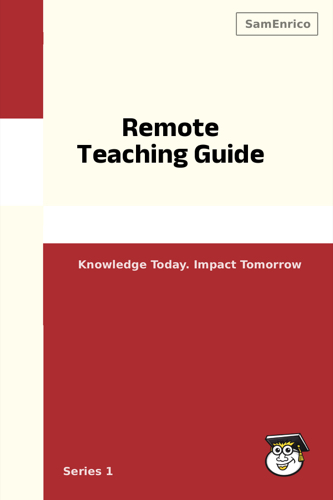
Remote Teaching Guide eBook
Manage virtual classroom time, grading, and prep e
by Oshea Andria
Manage virtual classroom time, grading, and prep effectively.
Formats
Free sample
Chapter 1: The Platform Paradox--–- The email arrived at 11:47 PM on a Sunday. Seventeen unread messages. Three discussion forums overdue for responses. A stack of ungraded essays sitting in a digital folder she’d named “Week 3 – Urgent.” And tomorrow morning, thirty-two faces would appear in tiny Zoom rectangles, expecting her to be prepared, enthusiastic, and in control.Dr. Maya Chen stared at her screen and realized she had not left her desk in fourteen hours.She had been a celebrated in-person instructor for twelve years.
Students lined up for her seminars. Department chairs observed her classes as models of engagement. She knew how to read a room, adjust pacing on the fly, use body language to draw out quiet students, and shut down off-task behavior with a single glance. None of that translated. Her first month of remote teaching had reduced her to a person who spent seventy hours a week building Power Points that nobody watched, typing comments that nobody read, and answering the same question—“Where is the link?”—forty-two times in seven days.Maya’s story is not unusual.
It is the story of almost every teacher who made the sudden, jarring transition to virtual instruction without a roadmap. And it reveals a painful truth that most professional development workshops refuse to acknowledge: being a great in-person teacher does not automatically make you a great remote teacher.But here is the deeper truth that this chapter will prove: effective teaching is effective teaching. The principles that made Maya a brilliant instructor in a physical classroom—clarity, feedback loops, scaffolding, relationship-building—are exactly the principles that will make her brilliant online. The problem is not the principles. The problem is the translation.This chapter dismantles the most dangerous myth in remote education—the belief that virtual teaching requires an entirely new pedagogy—and replaces it with a framework that will save your time, your sanity, and your students’ learning.
You will learn why the “Sage on the Stage” must become the “Guide on the Side,” how to diagnose what your students truly need using a century-old psychological tool, and why every remote course inevitably passes through four predictable phases—each with its own traps and opportunities. By the end of this chapter, you will stop trying to replicate your physical classroom on a screen and start designing a virtual learning environment that works better than anything you ever did in person.The Myth That Is Destroying Remote Teachers Let us name the enemy explicitly. The myth is this: “If I just work harder, add more videos, respond to more emails, and spend more hours online, I will eventually replicate my in-person classroom.”This myth has three poisonous assumptions embedded within it. First, that the physical classroom model is the gold standard against which all teaching should be measured. Second, that remote teaching is inherently a lesser form of education that requires heroic effort to overcome its deficiencies.
Third, that students learn primarily from the teacher’s presence and delivery rather than from their own active engagement with content and peers.Each of these assumptions is wrong. And each one leads directly to burnout.Research from the National Center for Education Statistics (2023) found that remote teachers reported working an average of fifty-three hours per week—eleven hours more than their in-person counterparts—yet rated their effectiveness as significantly lower. They were doing more and achieving less. The culprit was not laziness or incompetence. It was the relentless, unexamined attempt to map physical pedagogy onto virtual infrastructure.Consider the physical classroom.
A teacher stands at the front of a room. Students sit in rows or clusters. Eye contact happens naturally. A raised hand is visible. A confused frown is readable from fifteen feet away.
The teacher can circulate, peek at a student’s worksheet, whisper a clarifying question, and redirect attention with a tap on the shoulder. None of these cues exist in a Zoom grid. The teacher cannot see who is actually looking at the screen versus who is checking email. The raised hand icon requires a deliberate click that many students will not make. The confused frown appears as a pixelated blur at 480p resolution.The natural response to this loss of cues is to overcompensate.
More slides. More emails. More reminders. More assignments to “prove” that students are learning. This is the exhaustion curve, and it has claimed more remote teachers than any technical failure.The solution begins with a single, liberating realization: You are not supposed to replicate the physical classroom.
The physical classroom had limitations you have forgotten—thirty students, one voice at a time, a fixed pace that left some behind and bored others, a permanent record that existed only in fading whiteboard marker. The virtual classroom has different limitations, yes, but it also has superpowers. Recorded lectures that students can pause and rewatch. Discussion threads that unfold over days, not minutes. Global collaboration.
Personalized pacing. Data from LMS analytics that tells you exactly who is struggling before they fail.The teachers who thrive online are not the ones who replicate the past. They are the ones who redesign teaching for a new medium.From Sage on the Stage to Guide on the Side The most important shift you will make in your entire remote teaching career is this: stop thinking of yourself as a content deliverer and start thinking of yourself as a learning architect.In the physical classroom, the “Sage on the Stage” model worked reasonably well because the stage was physically present. Your voice, your gestures, your proximity created a shared experience. Students were captive in a way that felt natural because they had chosen to be there.In the virtual classroom, the stage is gone.
Your students are not captive. They are in their bedrooms, kitchens, coffee shops, and cars. They have infinite distractions one click away. If your pedagogy depends on them watching you talk for forty-five minutes while you click through slides, you have already lost them. Not because they are bad students, but because you are asking them to do something that no human brain is designed to do: sustain passive attention on a two-dimensional rectangle for an extended period.The Guide on the Side, by contrast, does something radical: she stops being the main event.
She designs activities, structures collaboration, curates resources, and then gets out of the way. Her live sessions are short, focused, and interactive. Her recorded content is broken into bite-sized chunks. Her assessments ask students to do something with the information, not just repeat it.Consider two approaches to teaching the same concept—say, the causes of World War I.The Sage on the Stage approach: A sixty-minute Zoom lecture covering the assassination of Archduke Franz Ferdinand, the alliance system, imperialism, and nationalism. Forty slides.
The teacher talks for fifty minutes. The last ten minutes are for questions. Two students ask something. The rest remain silent.The Guide on the Side approach: A seven-minute recorded video explaining the same four causes. Students watch it before the live session.
During the twenty-minute live session, students work in permanent Micro-Teams (more on this in Chapter 6) to rank the four causes from most to…
This is the end of the free sample. Get the eBook to keep going. Buy now
About this book
Details
- Author
- Oshea Andria
- Publisher
- SamEnrico
- Language
- English
- Genre
- Non-Fiction, Self-Help, Teaching, Education
- Released
- 2026-06-08
- Pages (approx.)
- 120
- Available as
- eBook, Audiobook

Read better in the ZLOADR app
Your eBooks on your phone or tablet. Sign in with your SamEnrico account and start reading.
More by Oshea Andria
 The Sobriety Workbook for Early RecoveryOshea Andria$11.99
 Greenland Ice Cap LeaderOshea Andria$11.99
 John Ramsey Polygraph TestsOshea Andria$11.99
 The Phantom of Rue Morgue: Montreal's Unsolved Mob ExecutionOshea Andria$11.99
 Learn to Play the Chemnitzer ConcertinaOshea Andria$11.99
 Equity for Technical CofounderOshea Andria$12.99
 Bond TradingOshea Andria$11.99
 How to Start a Caravan Sites Business (Beginners Guide)Oshea Andria$11.99
You may also like
 Hong Kong Handover 1997Dunn Johnnie$11.99
 Zumba For Postnatal Recovery CourseNeal Christian$11.99
 Zumba for BeginnersLadner Nikia$11.99
 YouTube Comment Mining GuideHumes Pandora$12.99
 Worry Box MeditationCarlin Rudy$11.99
 Workplace Stress MeditationNguyen Lynn$11.99
 Workplace Stress and Sleep RepairHawley Ivory$11.99
 Workplace Perfectionism CureDelaney Jeffry$11.99
 Workplace Injustice Anger GuideWallen Isabelle$11.99
 Work Addiction and Burnout LinkGreenwood Ester$11.99
 Women in Yoga and WellnessBeattie Galina$11.99
 Women in Stand Up ComedyChun Evangeline$11.99