
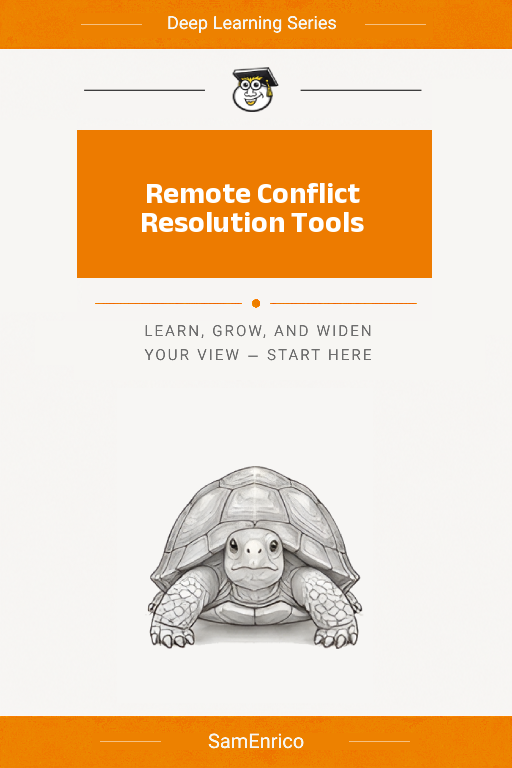
Non-FictionProfessional's Cheat SheetTechnology Tools
Remote Conflict Resolution Tools
Evaluates software platforms for anonymous reporti
Evaluates software platforms for anonymous reporting, mediation scheduling, and conflict tracking specifically designed for distributed teams.
Formats
About this book
Free sample
Chapter 1: The Silent Escalation--The first sign of trouble was not a raised voice or a slammed door. It was a Slack message that went unanswered for forty-eight hours. Two software engineers who had once collaborated seamlessly, who had shared inside jokes in the #random channel and tagged each other in pull request comments, had stopped speaking. No one noticed. Their manager was in a different time zone.
Their teammates were focused on their own deadlines. The conflict, whatever it was, festered in silence.Three months later, one of them quit. In the exit interview, she cited “a toxic work environment.” Her manager was baffled. He had seen nothing. He had heard nothing.
The conflict had never appeared in any formal channel, never escalated to HR, never triggered any of the early warning systems that existed in the physical office. It had simply grown in the dark, like mold behind a wall, until it was too late to save.This story is not unusual. It is the new normal of remote work. And it reveals a terrifying truth: the infrastructure that once caught conflicts early—the hallway conversations, the overheard words, the observable body language—has vanished. In its place is a void where small misunderstandings become silent resentments, and silent resentments become attrition, legal claims, and organizational dysfunction.This chapter diagnoses why traditional conflict resolution breaks online.
We will explore the four structural failures of distributed work environments, examine the hidden costs of unresolved conflict, and lay the foundation for the software-based solutions that the rest of this book will evaluate. By the end, you will understand why your current methods are failing and what you must do differently.The Four Broken Pillars of Traditional Conflict Resolution For decades, organizations relied on an invisible architecture of conflict resolution. It was not written in any policy manual. No one trained managers to use it. It simply existed, a byproduct of human proximity.This architecture rested on four pillars.
In distributed teams, every pillar has crumbled.Pillar One: Proximity-Based Observation In a physical office, a manager could walk the floor and sense the…
This is the end of the free sample. Get the eBook to keep going. Buy now
Contents
- Chapter 1
- Chapter 2
- Chapter 3
- Chapter 4
- Chapter 5
- Chapter 6
- Chapter 7
- Chapter 8
- Chapter 9
- Chapter 10
- Chapter 11
- Chapter 12
Details
- Author
- Comer Krystyna
- Publisher
- SamEnrico
- Language
- English
- Genre
- Non-Fiction, Professional's Cheat Sheet, Technology Tools
- Released
- 2026-06-01
- Pages (approx.)
- 124
- Available as
- eBook, Audiobook

Read better in the ZLOADR app
Your eBooks on your phone or tablet. Sign in with your SamEnrico account and start reading.
More by Comer Krystyna
 Corporate Wellness Program UsersComer Krystyna$11.99
 Tanganyika Nyerere Union GuideComer Krystyna$11.99
 Cabin in the WoodsComer Krystyna$11.99
 The John Wayne Gacy Insanity DefenseComer Krystyna$11.99
 Social Skills EQ EnhancementComer Krystyna$11.99
 The Last Voyage of the Mary Celeste: A Mind Palace MysteryComer Krystyna$11.99
 Payroll SupervisorComer Krystyna$11.99
 Understanding Mucopolysaccharidosis Type 3Comer Krystyna$17.99
 How to Become a Cloth-bale HeaderComer Krystyna$11.99
 AI Video Translation GuideComer Krystyna$12.99
You may also like
 Hong Kong Handover 1997Dunn Johnnie$11.99
 Zumba For Postnatal Recovery CourseNeal Christian$11.99
 Zumba for BeginnersLadner Nikia$11.99
 YouTube Comment Mining GuideHumes Pandora$12.99
 Worry Box MeditationCarlin Rudy$11.99
 Workplace Stress MeditationNguyen Lynn$11.99
 Workplace Stress and Sleep RepairHawley Ivory$11.99
 Workplace Perfectionism CureDelaney Jeffry$11.99
 Workplace Injustice Anger GuideWallen Isabelle$11.99
 Work Addiction and Burnout LinkGreenwood Ester$11.99
 Women in Yoga and WellnessBeattie Galina$11.99
 Women in Stand Up ComedyChun Evangeline$11.99