
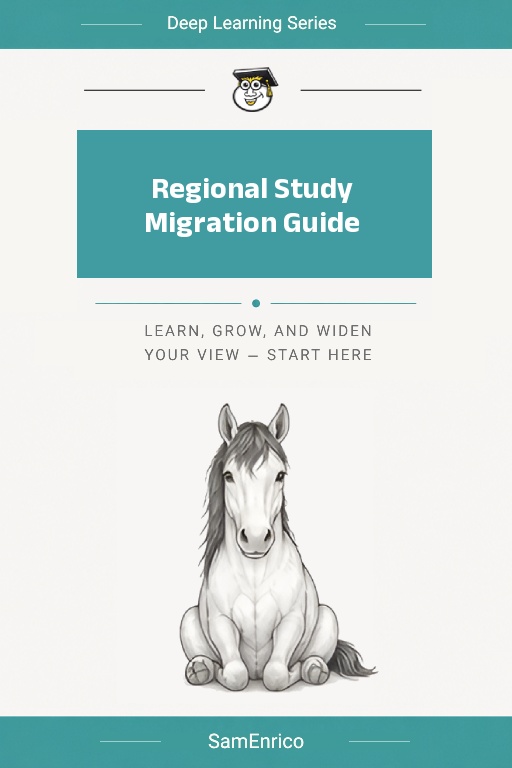
Non-FictionStudent's ShortcutRegional Focus
Regional Study Migration Guide eBook
Choose universities in regional Australia for extr
Choose universities in regional Australia for extra PR points and access to 491 visas. Compare Tasmania, South Australia, and Northern Territory pathways.
Formats
Free sample
Chapter 1: The Math Trap--–- Most international students discover the hard way that 65 points is a lie. They arrive in Australia with a dream, a suitcase, and a spreadsheet from an education agent showing that 65 points guarantees an invitation. Six months after graduation, they are still waiting. A year later, they watch their friends with 95 points board planes to Perth and Brisbane while they pack boxes to go home. The spreadsheet did not mention that the Department of Home Affairs received 47,000 Expressions of Interest for the 491 visa in 2025 but only issued 7,550 invitations.
The spreadsheet did not explain that 65 points works only for nurses in rural Tasmania or welders in the Northern Territory – not for the 12,000 business graduates competing for the same 300 spots. This chapter dismantles the myth of the minimum points threshold and rebuilds your understanding of the Australian migration system from the ground up. By the time you finish reading, you will know exactly how many points you need for each state, why the 23 percent reduction in 491 places changes everything, and how the Double Regional Advantage can add 20 points to your score before you submit a single form.The 65-Point Illusion The Australian Department of Home Affairs publishes a document called the Points Test. It lists the minimum pass mark as 65 points. That is legally true.
You can submit an Expression of Interest with 65 points. The system will accept it. You will receive a confirmation email. Then nothing will happen.The 65-point threshold is a eligibility floor, not an invitation floor. Think of it like applying to a university with a minimum entry score of 65.
Every year, ten thousand students apply with 90. The university admits the top one thousand. The minimum score was 65. The actual cutoff was 88. Migration works exactly the same way, except the consequences of misunderstanding are years of waiting and a ticket home.In 2025, the Department received 47,000 EOIs for the 491 visa.
They issued 7,550 invitations. That is an invitation rate of 16 percent. Among those invited, the average points score ranged from 85 to 100, depending on the occupation. General accountants needed 95 points to receive an invitation from South Australia. Chefs needed 75 points in the Northern Territory.
Community workers needed 85 points in Tasmania. The variation is enormous, and it is the single most important concept in this book.The 23 Percent Reduction At the beginning of the 2025-2026 migration year, the Department announced that 491 visa places would be reduced from 9,800 to 7,550. That is a 23 percent cut nationally. But cuts were not distributed evenly across states. South Australia lost 41 percent of its allocation because the state had oversubscribed its 491 nominations in 2024, forcing the Department to recalibrate.
Tasmania lost only 12 percent because the state had consistently nominated within its cap. The Northern Territory lost 18 percent but started from a smaller base.What does this mean for you? Fewer invitations mean higher points thresholds. In 2024, an IT professional with 80 points could expect a 491 invitation from South Australia within six months. In 2026, that same candidate needs 90 points and may wait twelve months.
The competition has intensified, and the old strategies no longer work. The only way to win is to understand exactly how the points system works and where the leverage points are.The Full Points Table Explained The Australian points test awards points across seven categories. Each category has multiple bands. The difference between one band and the next can be the difference between an invitation and rejection.Age is the first category. You receive 30 points if you are between 25 and 32 years old.
You receive 25 points between 18 and 24. You receive 15 points between 33 and 39. You receive 5 points between 40 and 44. Students over 45 cannot apply for the 491 visa at all. If you are 34 years old, you have lost 15 points compared to a 28-year-old.
Those 15 points must be earned elsewhere – through higher English scores, longer work experience, or partner skills.English language ability is the second category. You receive 20 points for superior English (PTE 79 or IELTS 8.0 in each band). You receive 10 points for proficient English (PTE 65 or IELTS 7.0). You receive 0 points for competent English (PTE 50 or IELTS 6.0). Most international students graduate with competent English.
They receive zero points. Their competitors from India and the Philippines spend three months studying for the PTE and earn 20 points. That is a 20-point gap before anyone has looked at occupation lists.Work experience is the third category. You receive 20 points for eight or more years of overseas work experience. You receive 15 points for five to seven years.
You receive 10 points for three to four years. You receive 5 points for one to two years. Australian work experience is worth more: three years of Australian work gives you 10 points, while three years of overseas work gives you only 5 points. This is why working while studying on a 485 visa is not optional – it is the difference between 75 points and 90 points.Education is the fourth category. You receive 20 points for a doctorate.
You receive 15 points for a bachelor's or master's degree. You receive 10 points for a diploma or trade qualification. You receive 0 points for a certificate or below. A master's degree gives you 15 points. A Ph D gives you 20 points.
The difference is five points. That five points could be earned faster by improving your English score or adding a partner's skills rather than spending three extra years in a Ph D program.Specialist education is the fifth category. You receive 10 points if you completed at least two academic years of study in Australia in a science, technology, engineering, or mathematics field. This is the STEM points. Not all STEM degrees qualify.
The degree must be on the designated STEM list, which includes data science, artificial intelligence, advanced manufacturing, and renewable energy. A standard computer science degree may qualify. A business information systems degree probably will not.Regional study is the sixth category. You receive 5 points if you completed at least two academic years of study at a campus in a designated regional area. This is the first half of the Double Regional Advantage.
Every student in this book will claim these 5 points if they follow the course selection rules in Chapter 6. But here is the catch: you must complete the full course at a regional campus. Studying two years in Sydney then one year in Hobart does not qualify. The entire course must be undertaken at a regional campus, or the majority of the course with an explanation for any non-regional study.Partner skills are the seventh category. You receive 10 points if your partner has competent English and a positive skills assessment in an occupation on the same list as yours.
You receive 5 points if your partner has competent English but no skills assessment. You receive 0 points if your partner has no English and no skills assessment. Here is the brutal math: an unskilled partner with no English reduces your effective score to zero because the Department assumes that partner will require social services. A single applicant is better than an unskilled partner. A skilled partner is better than a single applicant.The Double Regional Advantage Explained The Double Regional Advantage is the central framework of this book.
It has two components. The first component is the 5 points for regional study, which you have just read about. The second component is the 15 points…
This is the end of the free sample. Get the eBook to keep going. Buy now
About this book
Details
- Author
- Sharlow Rachael
- Publisher
- SamEnrico
- Language
- English
- Genre
- Non-Fiction, Student's Shortcut, Regional Focus
- Released
- 2026-05-29
- Pages (approx.)
- 146
- Available as
- eBook, Audiobook

Read better in the ZLOADR app
Your eBooks on your phone or tablet. Sign in with your SamEnrico account and start reading.
More by Sharlow Rachael
 Smoking Triggers Mastery GuideSharlow Rachael$11.99
 IBS Antispasmodic MedicationSharlow Rachael$11.99
 International Trade Tariff HandbookSharlow Rachael$11.99
 Compulsive Spending for LawyersSharlow Rachael$11.99
 The Picasso Thief: The Art Heist That Shocked the World (1974)Sharlow Rachael$11.99
 How to Produce Anode RodsSharlow Rachael$11.99
 Territory Business SpecialistSharlow Rachael$11.99
 Ultimate Handbook Guide to Edmonton : (Canada) Travel GuideSharlow Rachael$11.99
You may also like
 Hong Kong Handover 1997Dunn Johnnie$11.99
 Zumba For Postnatal Recovery CourseNeal Christian$11.99
 Zumba for BeginnersLadner Nikia$11.99
 YouTube Comment Mining GuideHumes Pandora$12.99
 Worry Box MeditationCarlin Rudy$11.99
 Workplace Stress MeditationNguyen Lynn$11.99
 Workplace Stress and Sleep RepairHawley Ivory$11.99
 Workplace Perfectionism CureDelaney Jeffry$11.99
 Workplace Injustice Anger GuideWallen Isabelle$11.99
 Work Addiction and Burnout LinkGreenwood Ester$11.99
 Women in Yoga and WellnessBeattie Galina$11.99
 Women in Stand Up ComedyChun Evangeline$11.99