
Non-FictionCompliance & Risk ArchiveFood Tech
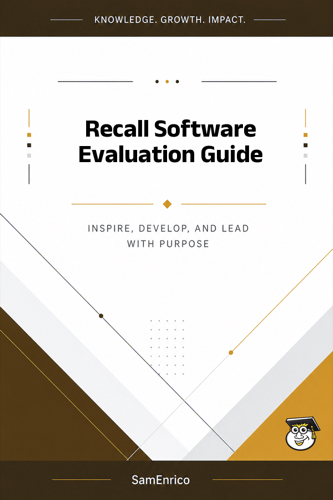
Recall Software Evaluation Guide eBook
Compare digital recall management platforms for tr
Compare digital recall management platforms for traceability and notification automation.
Formats
Free sample
Chapter 1: The 2:47 AM Call--–- The phone rang at 2:47 AM on a Tuesday. Diana Ross, Quality Assurance Director for a regional pet food manufacturer, had been asleep for less than three hours. She had spent the previous evening reviewing quarterly reports, signing off on a new supplier audit, and briefly worrying about the upcoming FSMA compliance deadline. None of that prepared her for what came next.The voice on the line was the night shift supervisor at Plant 3. His words came out in a rushed, almost apologetic stream: "Diana, the rapid test just lit up for Salmonella.
We've already shipped 42,000 cases. I don't know which lots. I don't know where they went. I just know the test is positive."Diana sat up in the dark. Her husband stirred, mumbled something, and rolled over.
She did not turn on the light. She did not want to see her own face in the mirror yet. Instead, she opened her laptop, navigated to the shared drive, and opened the folder labeled "Recall_Procedures." Inside were three spreadsheets: one for raw material lot tracking, one for finished goods shipments, and one for customer contact information.She had personally designed these spreadsheets five years ago. She had trained every QA analyst on them. She had run mock recalls—seven of them—and passed every time.
But those mock recalls had been announced. They had been scheduled. They had been run from a single desk with a single version of each spreadsheet, not from a darkened bedroom at 3 AM with a supervisor on hold and 42,000 cases already moving through the supply chain.What followed was fourteen hours of hell.The raw material spreadsheet had been updated by three different people over the past month, each using slightly different naming conventions. "Chicken Meal Supplier A" appeared as "Chkn Meal A," "Supplier A Chicken," and "Chicken Meal-A" across three different tabs. The finished goods spreadsheet had not been reconciled with the warehouse management system for six days because the IT integration kept failing.
The customer contact list was missing the two new distributors that had been added last quarter.By 5 PM that evening, Diana had identified the contaminated lot—a single batch of raw chicken meal received on a specific date from a specific supplier. But she could not reliably trace which finished products had used that batch because the production logs were handwritten and only partially scanned into the system. She could not tell which trucks had carried those finished products because the shipping records were in a different spreadsheet that had not been updated for three weeks. And she could not contact all the affected customers because she had six different versions of the customer contact list, each with different email addresses for the same distributors.The final tally: 200,000 units of pet food consumed before the recall notice could be issued. Three dogs died.
A class-action lawsuit followed. Diana kept her job—barely, and only because the CEO was equally at fault for underfunding the quality department. She now speaks at industry conferences about what not to do. And she starts every presentation with the same sentence: "The spreadsheet is not a recall management system. It is a lawsuit waiting to happen."This book exists because of Diana—and because of the hundreds of QA directors, supply chain VPs, and IT managers who have lived through similar nights and survived to tell the story.
You are holding the guide they wish they had.The Paper Tiger: Why Spreadsheets Fail Under Pressure The term "paper tiger" refers to something that appears threatening but is actually harmless. In the context of recall management, spreadsheets are the opposite: they appear harmless—familiar, flexible, free—but they are actually lethal. They create the illusion of control while systematically undermining every action required for a successful recall.Let us count the ways.No Native Lot Genealogy. A spreadsheet is a flat file. It has rows and columns.
It does not understand relationships. In a real supply chain, a single lot of raw material can be split across multiple production runs, combined with other lots, reworked, repackaged, and shipped to dozens of customers. Representing this as a network of interconnected nodes requires a graph database or a relational database with proper foreign keys. A spreadsheet cannot do this. At best, you can maintain multiple spreadsheets linked by manual lookups.
At worst—and this is more common—you simply lose the relationships entirely.No Real-Time Data Links. Spreadsheets are snapshots. The moment you save a spreadsheet, it becomes historical data. But recalls happen in real time. Product is moving.
Trucks are on the road. Warehouses are picking and shipping. A spreadsheet that was accurate at 9 AM is almost certainly inaccurate by 2 PM. Without a live connection to your ERP, your WMS, and your transportation management system, you are recalling against a ghost.No Audit Trail. Spreadsheets do not log changes by default.
Even with Track Changes enabled, a motivated user can accept all changes, delete the history, and save a clean version. For regulators, this is a nightmare. The FDA requires an immutable, time-stamped record of every action taken during a recall—who issued the hold, when, to which warehouses, and whether the hold was acknowledged. Spreadsheets cannot provide this. They can only provide the final state, not the journey.Multiple Versions, No Single Source of Truth.
This is the killer. In every manual recall we have studied, the QA team ends up with at least three versions of the "master" spreadsheet: one on the QA manager's laptop, one on the shared drive, and one that someone emailed to themselves to work from home. These versions diverge within hours. When it comes time to issue notifications, which version is correct? No one knows.
And in the pressure of a real recall, no one has time to reconcile them.FSMA Section 204, which went into full enforcement in January 2026, requires companies to provide a complete traceability report to the FDA within 24 hours of a request. The regulation does not say "within 24 hours, assuming your spreadsheets are consistent." It says within 24 hours, period. Spreadsheets cannot meet this requirement. They have never been able to meet this requirement. The only reason companies have gotten away with them for so long is that regulators have been lenient.
That era of leniency is over.The High Cost of Slow: Three Companies That Learned the Hard Way Theory is useful. Stories are better. Let me tell you about three recalls—all real, all public, all devastating—and what they teach us about the cost of manual processes.The Peanut Butter Recall: $48 Million in 48 Hours A well-known peanut butter manufacturer received a positive Salmonella test on a Tuesday morning. The contamination was traced to a single production line over a four-hour shift. The actual affected product was approximately 500 cases.
But because the company's traceability system was spreadsheet-based, they could not isolate which finished goods lots contained the contaminated raw material. They recalled everything produced on that line for the previous ten days: approximately 10,000 cases.The recall notice went out 48 hours after the positive test. Why the delay? Because it took that long to manually compile the customer list from multiple…
This is the end of the free sample. Get the eBook to keep going. Buy now
About this book
Details
- Author
- Lefebvre Rosamaria
- Publisher
- SamEnrico
- Language
- English
- Genre
- Non-Fiction, Compliance & Risk Archive, Food Tech
- Released
- 2026-06-07
- Pages (approx.)
- 147
- Available as
- eBook, Audiobook

Read better in the ZLOADR app
Your eBooks on your phone or tablet. Sign in with your SamEnrico account and start reading.
More by Lefebvre Rosamaria
 Dream Journal For Trauma ProcessingLefebvre Rosamaria$11.99
 The Kanpur Massacre HistoryLefebvre Rosamaria$11.99
 Tall Body Esteem GuideLefebvre Rosamaria$11.99
 Engineering Design Thinking GuideLefebvre Rosamaria$11.99
 AI Deck Accessibility GuideLefebvre Rosamaria$11.99
 High Blood Pressure MetabolicLefebvre Rosamaria$11.99
 Croatian Green Hydrogen PotentialLefebvre Rosamaria$11.99
 The Last Shot: How a Vaccine Stopped a PandemicLefebvre Rosamaria$11.99
 Moving House DreamsLefebvre Rosamaria$11.99
 The Last Dive of the *Ming*Lefebvre Rosamaria$11.99
 Blood and Ink: The Last Stand of the Kelmendi WarriorsLefebvre Rosamaria$11.99
 Leveraged Introductions and Warm AccessLefebvre Rosamaria$11.99
You may also like
 Hong Kong Handover 1997Dunn Johnnie$11.99
 Zumba For Postnatal Recovery CourseNeal Christian$11.99
 Zumba for BeginnersLadner Nikia$11.99
 YouTube Comment Mining GuideHumes Pandora$12.99
 Worry Box MeditationCarlin Rudy$11.99
 Workplace Stress MeditationNguyen Lynn$11.99
 Workplace Stress and Sleep RepairHawley Ivory$11.99
 Workplace Perfectionism CureDelaney Jeffry$11.99
 Workplace Injustice Anger GuideWallen Isabelle$11.99
 Work Addiction and Burnout LinkGreenwood Ester$11.99
 Women in Yoga and WellnessBeattie Galina$11.99
 Women in Stand Up ComedyChun Evangeline$11.99