Rainforest Alliance Export Guide
Certify farms under Rainforest Alliance for sustai
Certify farms under Rainforest Alliance for sustainable agriculture exports. Requires integrated pest management and buffer zones near water sources.
Formats
About this book
Free sample
Chapter 1: The $44.53 Question--–- On a humid morning in Pereira, Colombia, a fifth-generation coffee farmer named Elena sat across from her exporter with a spreadsheet that would change everything. The exporter had just returned from the Specialty Coffee Expo in Portland, where buyers from three European roasters asked the same question: "Are you EUDR-compliant, and do you have Regenerative certification?" Elena had been Rainforest Alliance certified for six years under the old Sustainable Agriculture Standard. She had paid her audit fees, maintained her buffer zones, and trained her workers in integrated pest management. She assumed she was future-proof. The exporter slid the spreadsheet across the table.
It showed two columns: her current selling price of 2.85perpound,andthepriceofferedbyacertified Regenerativefarmin Nicaragua—2.85 per pound, and the price offered by a certified Regenerative farm in Nicaragua—2.85perpound,andthepriceofferedbyacertified Regenerativefarmin Nicaragua—3.42 per pound. The difference was 0.57.Onherannualproductionof80metrictons,thatwasalossof0.57. On her annual production of 80 metric tons, that was a loss of 0.57.Onherannualproductionof80metrictons,thatwasalossof45,600. Elena looked up and asked the question that became the title of this chapter: "What is the $44.53 question?"The answer is not about a single number. It is about a fundamental shift in how agricultural exports are bought, sold, and trusted.
The 44.53figurerepresentsthepremiumdifferentialbetweenthreecertificationpathwaysforcoffee:baseline Sustainable Agriculture Standard(SAS)at44.53 figure represents the premium differential between three certification pathways for coffee: baseline Sustainable Agriculture Standard (SAS) at 44.53figurerepresentsthepremiumdifferentialbetweenthreecertificationpathwaysforcoffee:baseline Sustainable Agriculture Standard(SAS)at38.58 per metric ton, the new Regenerative Agriculture Standard (RAS) at 42.55permetricton,anddualcertification(both SASand RASonthesamefarm)at42.55 per metric ton, and dual certification (both SAS and RAS on the same farm) at 42.55permetricton,anddualcertification(both SASand RASonthesamefarm)at44.53 per metric ton. But these numbers are not merely accounting figures. They are signals to the market about your farm's risk profile, your environmental credibility, and your eligibility for the fastest-growing segment of the specialty coffee, cocoa, tea, and palm oil markets. This chapter reframes certification not as a compliance burden but as a profit driver. It analyzes the regulatory forces that are making traditional "sustainable" models obsolete, quantifies buffer zones and pest management as financial assets rather than costs, and introduces the payment windows that determine when you actually see the money.…
This is the end of the free sample. Get the eBook to keep going. Buy now
Contents
- Chapter 1
- Chapter 2
- Chapter 3
- Chapter 4
- Chapter 5
- Chapter 6
- Chapter 7
- Chapter 8
- Chapter 9
- Chapter 10
- Chapter 11
- Chapter 12
Details
- Author
- Graves Emanuel
- Publisher
- SamEnrico
- Language
- English
- Genre
- Non-Fiction, Business Brief, Rainforest
- Released
- 2026-05-30
- Pages (approx.)
- 160
- Available as
- eBook, Audiobook

Read better in the ZLOADR app
Your eBooks on your phone or tablet. Sign in with your SamEnrico account and start reading.
More by Graves Emanuel
 Geo Arbitrage for Sales ProfessionalsGraves Emanuel$11.99
 Scripting MetaphorsGraves Emanuel$11.99
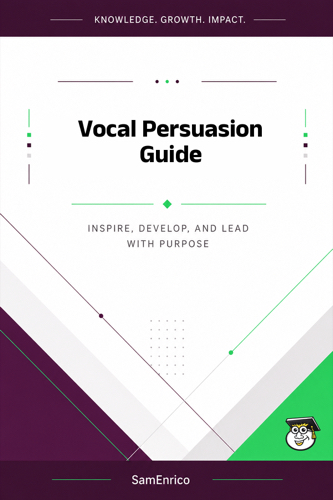 Vocal Persuasion GuideGraves Emanuel$11.99
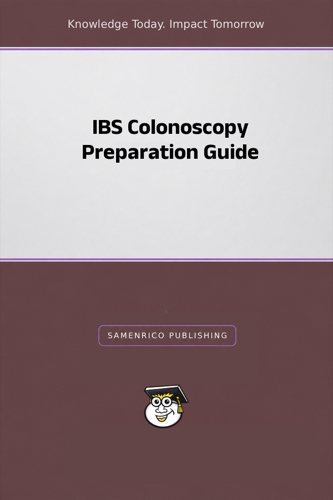 IBS Colonoscopy Preparation GuideGraves Emanuel$11.99
 Managing Interruptions for Parents HandbookGraves Emanuel$11.99
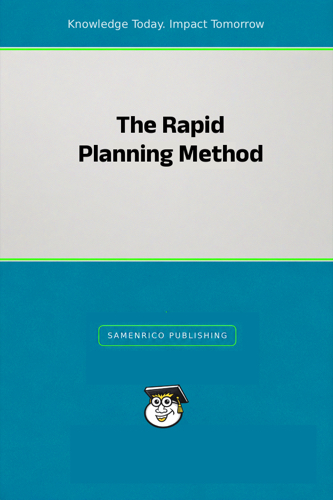 The Rapid Planning MethodGraves Emanuel$11.99
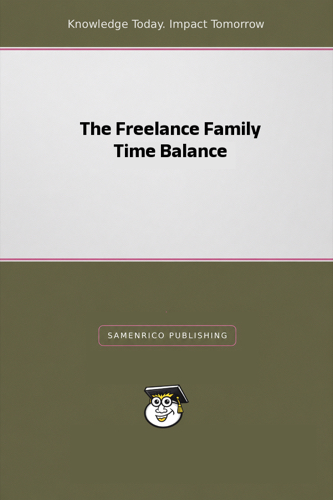 The Freelance Family Time BalanceGraves Emanuel$11.99
 Shin Splints Prevention and RecoveryGraves Emanuel$11.99
 Navigating Car Wash TunnelsGraves Emanuel$11.99
 The Great Bitcoin Heist: How 1,000,000 Coins Vanished OvernightGraves Emanuel$11.99
 The Viking Geometer: Lost in the Ice and Found in the StarsGraves Emanuel$11.99
 The Sky Splitter: How a 1908 Asteroid Nearly Ended the WorldGraves Emanuel$11.99