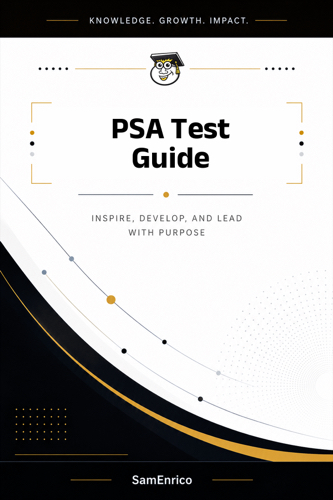
PSA Test Guide eBook
Reviews prostate specific antigen and biopsy decis
by Ham Jae
Reviews prostate specific antigen and biopsy decision.
Formats
Free sample
Chapter 1: The Prostate Paradox...--–- The phone call comes on a Tuesday afternoon. You are 58 years old, you feel fine—no pain, no blood, no midnight bathroom runs. You had a routine physical because your wife made the appointment. The doctor’s voice has that careful, measured tone that immediately tells you something is wrong. “Your PSA came back at 5.8.
That’s slightly elevated. We should probably see a urologist.” You hang up and do what every man does: you Google. Within ten minutes, you have convinced yourself that you have metastatic cancer, that you will need surgery, that you might lose your sex life or your bladder control or both. You are terrified. You are also, in all likelihood, completely fine.This chapter exists to walk you off that ledge.
It will not tell you that prostate cancer is harmless—that would be a lie. It will tell you something far more useful: prostate cancer is fundamentally different from almost every other cancer you have heard about. Understanding that difference is the single most important step you can take before making any decision about testing, biopsy, or treatment. By the end of this chapter, you will understand why most men diagnosed with prostate cancer will never die from it, why the medical establishment spent twenty years fighting about PSA screening, and why the goal of modern prostate cancer care is not to find all cancers—it is to find the ones that matter.The Unique Nature of Prostate Cancer Let us start with a startling fact that most doctors do not have time to explain during a fifteen-minute office visit. Autopsy studies of men who died from unrelated causes—car accidents, heart attacks, other cancers—have consistently found prostate cancer in about 30 to 40 percent of men over the age of 60 and in 50 to 70 percent of men over the age of 80.
These men had cancer. They had no idea they had cancer. And the cancer never bothered them. They died with it, not of it.Compare this to lung cancer. A man with untreated lung cancer does not die of old age.
He dies of lung cancer, usually within one to three years. Pancreatic cancer kills quickly and mercilessly. Even breast cancer, which has made enormous treatment strides, kills most of the women who develop metastatic disease within five to ten years. Prostate cancer is different. The vast majority of prostate cancers—approximately 70 to 80 percent of all cases diagnosed today—are indolent.
They grow so slowly that they will never cause symptoms, never metastasize, and never shorten a man’s life. They are like a garden weed that looks ugly under a microscope but never spreads beyond its corner of the yard.This is both good news and bad news. The good news is that most men diagnosed with prostate cancer have time to think, time to get second opinions, and time to choose surveillance over aggressive treatment. The bad news is that our screening tools—starting with the PSA test—cannot reliably tell the difference between the harmless weed and the invasive vine that will eventually kill. The PSA test measures a protein that leaks from the prostate when it is disturbed.
Cancer disturbs the prostate. But so does benign enlargement, inflammation, recent sex, and even a long bike ride. The PSA test is a smoke alarm. It tells you there is smoke, but it cannot tell you whether the house is on fire or someone is just burning toast.The Shift from Finding All Cancer to Finding Clinically Significant Cancer Medicine has not always understood this distinction. In the 1980s and 1990s, when PSA screening first became widely available, the prevailing philosophy was simple: find cancer early, treat it aggressively, save lives.
That philosophy worked spectacularly for colon cancer and cervical cancer. For prostate cancer, it created a catastrophe of overtreatment.Consider what happened in the United States between 1990 and 2010. PSA screening became routine. The number of men diagnosed with prostate cancer tripled almost overnight. Millions of men underwent radical prostatectomies (surgical removal of the prostate) and radiation therapy.
And here is the uncomfortable truth that the medical establishment eventually had to confront: the vast majority of those men had cancers that would never have hurt them. They endured impotence, incontinence, and other complications for cancers that did not need treatment in the first place. The problem was not that screening failed to save lives. The problem was that screening succeeded too well—it found everything, including the cancers that should have been left alone.This realization led to a fundamental shift in how thoughtful urologists think about prostate cancer. The goal is no longer to find all cancers.
The goal is to find clinically significant cancer. That term has a specific definition: a cancer that is likely to metastasize and cause death within a patient’s lifetime. Clinically significant cancer is generally Gleason 7 or higher (we will decode Gleason scores in detail in Chapter 11), or a cancer that is large enough (usually 1.5 centimeters or more on MRI) to pose a real threat. Everything else—Gleason 6, tiny low-grade lesions—can be monitored safely without treatment.This shift from “find all cancer” to “find only the cancer that matters” is the central organizing principle of this entire book. Every subsequent chapter—from how to interpret your PSA to whether to get an MRI to how to read a pathology report—exists to help you distinguish the clinically significant from the indolent, and to help you avoid unnecessary biopsies and unnecessary treatments.A Brief History of the PSA Controversy To understand where you are today, you need to understand how we got here.
The story of PSA screening is one of the most dramatic reversals in modern medical history.The PSA test was first approved by the FDA in 1986, but not for screening. It was approved to monitor men who had already been diagnosed with prostate cancer, to see if their cancer was returning after treatment. Within a few years, doctors began using it off-label as a screening test for healthy men. By the early 1990s, the American Cancer Society and the American Urological Association recommended annual PSA screening for all men over 50.Then came the evidence. Two massive randomized controlled trials—the Prostate, Lung, Colorectal, and Ovarian (PLCO) trial in the United States and the European Randomized Study of Screening for Prostate Cancer (ERSPC)—produced conflicting results.
The PLCO trial found no mortality benefit from screening. The ERSPC trial found a modest benefit: screening about 1,000 men for 10-15 years prevented approximately one to two deaths from prostate cancer. But the same trial also found that screening led to overdiagnosis in 20 to 30 percent of men—men who were told they had cancer and treated unnecessarily.Based on these data, the US Preventive Services Task Force (USPSTF)—the independent panel of experts that issues screening guidelines—made a radical recommendation in 2012. They gave PSA screening a Grade D rating, meaning there was moderate to high certainty that the harms outweighed the benefits. They recommended against screening for men of any age.
The reaction was explosive. Urologists protested. Patient advocacy groups split. And within a few years, the rate of PSA screening…
This is the end of the free sample. Get the eBook to keep going. Buy now
About this book
Details
- Author
- Ham Jae
- Publisher
- SamEnrico
- Language
- English
- Genre
- Non-Fiction, Health & Wellness, Prostate
- Released
- 2026-06-06
- Pages (approx.)
- 157
- Available as
- eBook, Audiobook

Read better in the ZLOADR app
Your eBooks on your phone or tablet. Sign in with your SamEnrico account and start reading.
More by Ham Jae
 Emotion Regulation For CancerHam Jae$11.99
 Gambling Addiction For CouplesHam Jae$11.99
 John Edward CrossingHam Jae$11.99
 Antwerp Heist Tourist GuideHam Jae$11.99
 Sitting Pelvic Floor RoutineHam Jae$11.99
 The Delegation Decision MatrixHam Jae$11.99
 Mental Formation Calming BreathHam Jae$11.99
 The Great Emu War: When Australia Fought Birds (And Lost)Ham Jae$11.99
 The Marble Dreamers: Michelangelo and the Birth of High Renaissance SculptureHam Jae$11.99
 Mastering The Art of JudoHam Jae$11.99
 How to Produce Stone Carvings and SculpturesHam Jae$11.99
 A Collector's Handbook to the Dodge DuHam Jae$11.99