
Free sample
Chapter 1: The Shame Trap--–- The clock on your laptop reads 11:47 PM. You’ve had fourteen hours to start the reading. You’ve spent seven of them on Tik Tok, three reorganizing a Spotify playlist you’ll never use, two staring at the blank document, and the remaining two feeling a slow, churning dread that has no off switch. Your chest feels tight. Your phone is warm from your grip.
And somewhere beneath the guilt, you can hear a quiet voice whispering: What is wrong with you?That voice is lying to you. Nothing is wrong with you. You are not lazy, broken, or undisciplined. You are trapped inside a neurological and emotional loop that has been engineered to defeat you—and you are about to learn exactly how to break it.Welcome to the first chapter of The Procrastination Study Fix. This is not a book about working harder.
It is not a collection of stern lectures about time management delivered by someone who wakes up at 4 AM and drinks green juice. This is a book written by someone who once spent six hours "studying" by color-coding their desktop folders—and then decided to figure out why.By the end of this chapter, you will understand the single most important truth about procrastination: it is not a character flaw. It is a predictable response to perceived threat. And once you understand that, you can stop fighting yourself and start building a system that actually works.The Myth of Lazy Let’s start by killing the most dangerous idea in academic life: the belief that procrastination equals laziness.Laziness, if it exists at all, looks like this: you don't care about the task, you feel no distress about not doing it, and you happily do something else without guilt. Does that sound like your experience?
Probably not. When you procrastinate, you don't feel peaceful. You feel anxious, guilty, and exhausted. You think about the undone task constantly. You lie in bed at night replaying everything you should have done.
That is not laziness. That is internal conflict.Here is what is actually happening inside your brain. You have two competing systems.The first is your prefrontal cortex—the logical, planning, future-oriented part of your brain. This is the part that knows you should study for the exam because the exam is in three days and you want a good grade. The prefrontal cortex speaks in sentences like, "If I do twenty minutes of flashcards now, I will feel better tomorrow."The second is your limbic system—the emotional, immediate, survival-oriented part of your brain.
This is the part that cares about right now. It does not understand "three days from now." It understands comfort, safety, and the immediate relief of looking away from something stressful. The limbic system speaks in sensations: tension in your shoulders, a slight queasiness when you open the textbook, a sudden urge to check your phone.Here is the unfair fight: the limbic system is faster, stronger, and older. It can hijack your brain in milliseconds. Your prefrontal cortex takes effort to engage.
When you are tired, stressed, or hungry—which is most of the time for a student—the limbic system runs the show.So when you sit down to study and immediately feel an urge to do literally anything else, you are not weak. You are experiencing a neural takeover. Your brain has classified the textbook as a mild threat (because it might lead to failure, judgment, or the uncomfortable feeling of not understanding something), and your limbic system has launched an avoidance response.This is not a metaphor. Brain scans of procrastinators show reduced activity in the prefrontal cortex and increased activity in the amygdala—the fear center—when they are presented with a task they have been avoiding. Your brain is treating that history reading like a predator.
And you have been blaming yourself for running.The Procrastination Cycle Now let’s map the loop. Almost every student who procrastinates follows the same five-step pattern. Read it carefully. I suspect you will recognize yourself.Step 1: Intention. You decide you are going to study.
You feel motivated, maybe even excited. "Tomorrow morning," you tell yourself, "I will wake up early and crush three chapters."Step 2: Anxiety. The moment arrives. You sit down. You open the book.
And instead of feeling ready, you feel a small flicker of discomfort. The material looks harder than you remembered. You realize you don't know where to start. Your chest tightens slightly.Step 3: Avoidance. Your brain, seeking relief, offers you an escape route.
You check your phone. Just for a second. You get a glass of water. You open a different tab. The discomfort vanishes immediately.
Relief floods in. Your brain learns: avoiding the task feels good.Step 4: Guilt. Hours pass. You look at the clock. You have done nothing.
Now the guilt arrives, heavier than the original anxiety. You call yourself lazy, stupid, undisciplined. The self-criticism feels like punishment—and somehow, it also feels like you deserve it.Step 5: Renewed Intention. To escape the guilt, you make a new plan. "Tomorrow," you promise.
"Tomorrow I will really do it." And because tomorrow feels distant and abstract, the promise gives you temporary relief. You go to bed feeling resolved. And then tomorrow morning, you start again at Step 1.This cycle is not a failure of character. It is a behavioral loop that has been reinforced hundreds or thousands of times. Every time you avoid a task and feel immediate relief, your brain strengthens the neural pathway that says: avoiding feels good, so avoid again.
Every time you criticize yourself afterward, you add shame to the mix—and shame, paradoxically, makes you more likely to avoid the next time because the task now feels even more emotionally loaded.You are not stuck because you are broken. You are stuck because you are caught in a loop. And loops can be broken.The One Sentence That Changes Everything Before we go any further, I need to tell you the single most important sentence in this entire book. You will see variations of it in every chapter. You might want to write it down.Shame is the engine of procrastination.
Self-compassion is the off switch.Read that again.For years, you have probably believed that the way to stop procrastinating is to get harder on yourself. To crack down. To use guilt as motivation. But guilt does not lead to action. Guilt leads to avoidance.
Because when you feel ashamed of yourself, your brain classifies you as the threat—and then it tries to escape from you by distracting itself.Every time you call yourself lazy, you are adding fuel to the fire. Every time you say "I should have started earlier," you are making it harder to start now.The students who overcome chronic procrastination are not the ones who hate themselves the most. They are the ones who learn to interrupt the shame spiral with something else: curiosity, kindness, or simply a neutral observation. "I am avoiding this right now. That is interesting.
What would happen if I did just one sentence?"This is not soft advice. This is hard neuroscience. Self-criticism activates the…
This is the end of the free sample. Get the eBook to keep going. Buy now
About this book
Details
- Author
- Mccann Neta
- Publisher
- SamEnrico
- Language
- English
- Genre
- Non-Fiction, Self-Help
- Released
- 2026-06-07
- Pages (approx.)
- 113
- Available as
- eBook, Audiobook

Read better in the ZLOADR app
Your eBooks on your phone or tablet. Sign in with your SamEnrico account and start reading.
More by Mccann Neta
 Small Talk for Hearing ImpairedMccann Neta$11.99
 The Smoke Free Driving PlanMccann Neta$11.99
 Spin Recovery WeekMccann Neta$11.99
 Napping for Dementia CaregiversMccann Neta$11.99
 The Treatment DecisionMccann Neta$11.99
 TickTick Task ManagerMccann Neta$11.99
 Empathy Development EQ WorkbookMccann Neta$11.99
 Rainbow Baby After LossMccann Neta$11.99
 The Day the Sky Fell: The 1970 Bhola Cyclone That Changed HistoryMccann Neta$11.99
 The Opium King of Hong Kong: How One Man Built a Smuggling EmpireMccann Neta$11.99
 Red Dust Rising: The Untold Story of the First Martian Dust StormMccann Neta$11.99
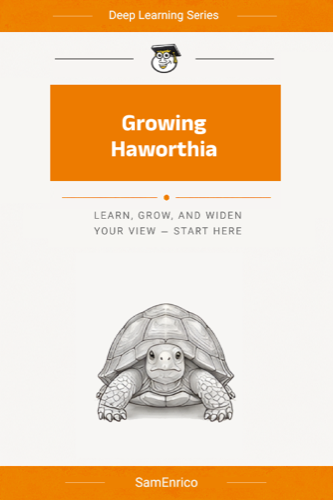 Growing HaworthiaMccann Neta$11.99
You may also like
 Workplace Stress MeditationNguyen Lynn$11.99
 Volcano Monitoring ScientistCox Alexis$11.99
 The Tech Professional NetAguiar Nevada$11.99
 The Morning Metta RitualCanales Anya$11.99
 The Chunking Memory TechniqueClanton Hyacinth$11.99
 The Beginner Mistake FixAmmons Cassondra$11.99
 Surrendering to What IsGrimm Reatha$11.99
 Self Hypnosis for Fear of FireBillups Eli$11.99
 Road Rage for Professional DriversBrackett Janise$11.99
 Psychiatric Ward Nurse StressDunning Wyatt$11.99
 Observation vs Evaluation NVCTimmons Alda$11.99
 Networking for Nonprofit ProfessionalsPoole Jesse$11.99