
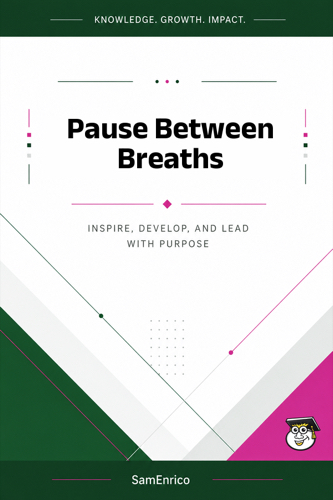
Pause Between Breaths eBook
Discover the still gap at the end of exhalation fo
Discover the still gap at the end of exhalation for profound peace.
Formats
Free sample
Chapter 1: The Oxygen Trap...–- It begins not with a gasp, but with a sigh you never noticed. You are reading these words right now, and somewhere beneath your awareness, your lungs are performing their ancient, automatic rhythm. In. Out. Pause.
In. Out. Pause. Twenty thousand times today. Twenty thousand times yesterday.
Twenty thousand times tomorrow. And in almost every single one of those cycles, you have missed the most important moment entirely.The problem is not that you breathe poorly. The problem is that you have been taught to worship the wrong part of the breath.Let me prove this to you in the next sixty seconds. Place one hand on your chest and the other on your belly. Take what you believe to be a “good, deep breath.” Fill your lungs completely.
Hold it for a moment. Now release. Did you feel powerful? In control? Virtuous?
Most people do. We have been conditioned to believe that a deep breath is the gold standard of wellness, the universal antidote to stress, the first thing any reasonable person advises when someone says, “I’m anxious.”Now try something different. Exhale completely. Push every last molecule of air out of your lungs until there is nothing left. And then — this is the strange part — do nothing.
Do not inhale. Do not panic. Simply wait at the bottom of your breath for two seconds. Feel that? That hollow, quiet, absolutely still space at the very bottom of emptiness?
That is the subject of this entire book. And you have been rushing past it your whole life.Welcome to the oxygen trap.The Great Misunderstanding We live in a culture that worships more. More air, more oxygen, more lung capacity, more deep breathing exercises, more expensive breathwork classes promising to “flood your cells with life-giving prana.” The assumption is simple and seductive: if a little oxygen is good, more must be better. If deep breathing calms you down, deeper breathing must calm you down more. If breath is life, then the biggest breath must be the biggest life.This assumption is wrong.
And not just slightly wrong — dangerously, counterproductively, exhaustingly wrong.The truth, which has been known for millennia in the yogic traditions and is only now being rediscovered by Western respiratory science, is precisely the opposite. Peace is not found in the inhalation. Peace is found in the exhalation and in the forgotten space that follows it. The deepest healing does not come from taking more air into the body. It comes from learning to rest in the emptiness at the bottom of your breath, where the lungs are still, the heart rate naturally slows, and the nervous system finally receives the signal that you are safe.This is not philosophy.
This is physiology. And it is the most underutilized healing tool in the human body.Consider what happens during a typical panic attack. The person feels a wave of anxiety and immediately does what everyone has told them to do: they take a deep breath. But that deep breath, taken from an already elevated state, actually over-oxygenates the blood. It reduces carbon dioxide levels.
It constricts the blood vessels in the brain. And it creates the very lightheadedness, tingling fingers, and sense of impending doom that characterize a panic attack. The cure becomes the cause. The deep breath becomes the trap.I have watched this happen hundreds of times. A client comes to me after years of anxiety, convinced they “just can’t breathe properly.” They have tried every breathing app, every meditation course, every well-meaning You Tube video telling them to “take ten deep belly breaths.” And they feel worse.
Not because breathing doesn’t work, but because they have been aiming at the wrong target.The target is not the inhale. The target is the exhale. And the bullseye is the pause at the end of it.The High-Alert Epidemic Before we can understand the cure, we must understand the disease. Call it what it is: High-Alert Breathing. It is the default respiratory pattern of the modern human being, and it is slowly breaking us.Here is what High-Alert Breathing looks like.
The breath is shallow, confined to the upper chest rather than the belly. It is rapid — sixteen to twenty cycles per minute or more, compared to the optimal six to ten. It is driven by the sympathetic nervous system, the branch of your autonomic nervous system responsible for fight, flight, or freeze. And most critically, the exhalation is shorter than the inhalation, meaning the body never fully empties, never fully releases, never fully rests.This pattern is so common that most people do not even know they are doing it. They think this is just what breathing feels like.
It is not. It is what chronic low-grade panic feels like.Where does High-Alert Breathing come from? Everywhere. Screens, which keep our visual cortex in a state of constant alert. Deadlines, which keep our stress hormones elevated.
Social media, which keeps our threat-detection systems scanning for rejection. News cycles, which feed our amygdala a steady diet of catastrophe. And perhaps most insidiously, the cultural narrative that busyness is virtue, that rest is laziness, that the only good breath is a deep, productive, oxygenating breath.We have built a world that rewards vigilance and punishes stillness. And our breath has adapted accordingly.The consequences are not minor. Chronic over-breathing — technically called chronic hyperventilation syndrome — has been linked to anxiety disorders, panic attacks, insomnia, fatigue, brain fog, irritability, muscle tension, digestive issues, and a suppressed immune system.
It keeps the body in a state of low-grade inflammation. It tells the brain, moment by moment, breath by breath, that something is wrong.And here is the cruelest part: the more you over-breathe, the more sensitive you become to the sensation of air hunger. Your CO2 tolerance drops. Your brain interprets even normal CO2 levels as a threat. So you breathe even more, which lowers your CO2 even further, which increases your sensitivity even more.
It is a feedback loop of exhaustion, and most people are trapped in it without knowing the loop exists.The way out is not more air. The way out is less.The Forgotten Phase Every complete breath has four distinct phases. Most people can name two of them. Let me name all four.First, there is the inhalation. This is the active phase, driven by the contraction of the diaphragm and intercostal muscles.
The chest expands, the lungs fill, and oxygen floods into the alveoli. The heart rate increases slightly. The sympathetic nervous system — the gas pedal — is gently engaged. This is the phase of taking in, of receiving, of gathering.Second, there is the pause after the inhalation. In yogic tradition, this is called Antara Kumbhaka — internal retention.
It is a brief moment of fullness, of suspension at the top of the breath. Some traditions use it for energy cultivation. But it requires effort, and it keeps the sympathetic nervous system engaged.Third, there is the exhalation. This is the passive phase. You do not need to push air out; you simply relax the diaphragm, and the elastic recoil of the lungs does the work.
The heart rate decreases. The parasympathetic nervous system — the brake pedal — is activated. This is the phase of…
This is the end of the free sample. Get the eBook to keep going. Buy now
About this book
Details
- Author
- Ramsey Ernestine
- Publisher
- SamEnrico
- Language
- English
- Genre
- Non-Fiction, Self-Help
- Released
- 2026-06-09
- Pages (approx.)
- 133
- Available as
- eBook, Audiobook

Read better in the ZLOADR app
Your eBooks on your phone or tablet. Sign in with your SamEnrico account and start reading.
More by Ramsey Ernestine
 The Stress Audit for CouplesRamsey Ernestine$11.99
 The Carnival Worker EnslavementRamsey Ernestine$11.99
 Study Reward SystemRamsey Ernestine$11.99
 Listening In Incident CommandRamsey Ernestine$11.99
 Gratitude for Chronic IllnessRamsey Ernestine$11.99
 EMDR Humanitarian GuideRamsey Ernestine$11.99
 The Refugee Olympic TeamRamsey Ernestine$11.99
 Larry Bird HickRamsey Ernestine$11.99
 The Unseen Hand: How a Teenage Girl’s Letter Changed the Course of a WarRamsey Ernestine$11.99
 Quantum Echoes: The Lost Dynasty of AtlantisRamsey Ernestine$11.99
 The Great Airline Heist: How One Pilot Stole a 727 and VanishedRamsey Ernestine$11.99
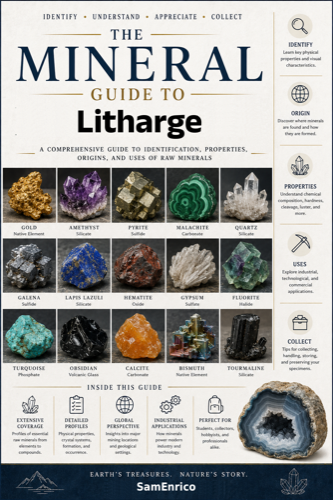 The Mineral Guide to LithargeRamsey Ernestine$11.99
You may also like
 Hong Kong Handover 1997Dunn Johnnie$11.99
 Zumba For Postnatal Recovery CourseNeal Christian$11.99
 Zumba for BeginnersLadner Nikia$11.99
 YouTube Comment Mining GuideHumes Pandora$12.99
 Worry Box MeditationCarlin Rudy$11.99
 Workplace Stress MeditationNguyen Lynn$11.99
 Workplace Stress and Sleep RepairHawley Ivory$11.99
 Workplace Perfectionism CureDelaney Jeffry$11.99
 Workplace Injustice Anger GuideWallen Isabelle$11.99
 Work Addiction and Burnout LinkGreenwood Ester$11.99
 Women in Yoga and WellnessBeattie Galina$11.99
 Women in Stand Up ComedyChun Evangeline$11.99