NA Step Study Guide eBook
Companion to Narcotics Anonymous step working guid
by Hook Kena
Companion to Narcotics Anonymous step working guide with practical application examples.
Formats
Free sample
Chapter 1: The Gift of Desperation--–- The handcuffs were cold. That was my first conscious thought after three days of running. My second thought, as the patrol car door slammed shut, was: I cannot do this anymore. Not "I don't want to." Not "I should stop." But "I cannot." That single syllable—cannot—was the most honest word I had spoken in years. It was also the beginning of everything.This chapter is about that word.
It is about the paradox of Step One: admitting powerlessness over addiction while simultaneously mustering the power to seek help. For many newcomers, this feels like a contradiction. How can I be powerless and yet responsible for getting myself to a meeting? How can I admit defeat and still be expected to take action? The answer, which this chapter will walk you through step by step, is that the admission of powerlessness is not the end of your agency.
It is the beginning of a different kind of agency—one that does not rely on the broken tool of willpower but instead reaches outward for something that actually works.If you are reading this chapter, you have likely tried to quit before. Perhaps you have tried dozens of times. You have made promises to yourself, to your family, to a judge, to a God you weren't sure you believed in. You have thrown away drugs, only to buy more hours later. You have sworn on everything sacred that this time would be different, and then you used again before the day was over.
This pattern is not evidence of moral failure or weak character. It is evidence of a disease that operates exactly as it is designed to operate. The purpose of this chapter is not to shame you for that pattern. It is to help you see it clearly for the first time, so that you can finally stop fighting a battle you cannot win with weapons that have already failed.The Paradox of Powerlessness The first step of Narcotics Anonymous reads: "We admitted that we were powerless over our addiction, that our lives had become unmanageable."Most newcomers stumble over the word "powerless." It sounds like weakness. It sounds like giving up.
In a culture that worships self-reliance, willpower, and pulling yourself up by your bootstraps, the admission of powerlessness feels like a confession of failure. But here is the truth that only another addict can understand: the people who have the hardest time with Step One are not the ones who have lost everything. They are the ones who still have something left to lose. They are the ones who can still point to a job, a marriage, a house, or a bank account and say, "See? I'm not that bad." The paradox is that the more functional your addiction appears from the outside, the harder it is to admit that you have lost the ability to choose.Powerlessness, as NA defines it, is not a philosophical statement about your worth as a human being.
It is a practical, clinical observation about your relationship with drugs. It means that once you put the first drug in your body, you lose the ability to predict or control what happens next. Sometimes you might stop after one. Sometimes you might stop after a weekend. Sometimes you might not stop for years.
The point is that you do not get to decide which version shows up. The disease decides. And the disease always wants more.The second part of Step One is unmanageability. If powerlessness is about the loss of control over use, unmanageability is about the consequences of that loss. These consequences are not always dramatic.
They do not always look like eviction notices, overdoses, or prison sentences. Sometimes unmanageability looks like a marriage that is technically intact but spiritually dead. Sometimes it looks like a job you have managed not to lose but that you hate with every fiber of your being. Sometimes it looks like a bank account with money in it that you cannot explain because you do not remember earning it or spending it. Unmanageability is the slow, quiet erosion of every area of your life that addiction touches.The good news—and there is good news in this chapter—is that desperation is not a weakness.
In NA, we call it the gift of desperation. Desperation is the point at which the pain of staying the same finally exceeds the fear of changing. Desperation is the voice that says "I cannot do this anymore" with enough force that you actually listen. Desperation is not something to be ashamed of. It is something to be grateful for, because without it, you would still be running.The Disease Model: Why Willpower Is Not the Answer Before we go any further, we need to be clear about what we are dealing with.
Addiction is not a bad habit. It is not a moral failing. It is not a weakness of character. It is a disease, recognized as such by every major medical and psychiatric organization in the world. The American Medical Association classified alcoholism as a disease in 1956, and the American Society of Addiction Medicine has since extended that classification to all substance use disorders.
This is not a metaphor. It is a medical fact.The disease of addiction has two primary components: a mental obsession and a physical compulsion. The mental obsession is the persistent, intrusive thought that using is a good idea, even when every single piece of evidence in your life says otherwise. You lose your job, and your brain says "use." You get out of jail, and your brain says "use." You survive an overdose, and your brain says "use." The obsession does not respond to logic, consequences, or promises. It operates on its own logic, which is simply this: more.The physical compulsion is what happens once the first drug enters your body.
For a non-addict, the first drink or first line produces a predictable effect, and then the person stops because they have had enough. For an addict, the first drug triggers a phenomenon of craving that is qualitatively different. It is not just wanting more; it is needing more in a way that overrides every other consideration. The compulsion is why you have said "just one" and then woken up three days later with no memory of what happened in between. The compulsion is why you have promised to stop after this one and then immediately started planning the next one.Together, the obsession and the compulsion create a cycle that is self-perpetuating.
The obsession tells you to use. The compulsion takes over once you do. The consequences of using create more pain, and the obsession offers the only relief it knows: more use. This cycle is not a failure of will. Willpower is the ability to make a decision and carry it out through sheer force of self-discipline.
But willpower operates in the realm of choice, and addiction progressively destroys the capacity for choice. You cannot will yourself out of a disease any more than you can will yourself out of diabetes or cancer.This is why every attempt to quit using willpower alone…
This is the end of the free sample. Get the eBook to keep going. Buy now
About this book
Details
- Author
- Hook Kena
- Publisher
- SamEnrico
- Language
- English
- Genre
- Non-Fiction, Self-Help, Narcotics
- Released
- 2026-06-09
- Pages (approx.)
- 139
- Available as
- eBook, Audiobook

Read better in the ZLOADR app
Your eBooks on your phone or tablet. Sign in with your SamEnrico account and start reading.
More by Hook Kena
 Time Blocking For Developers GuideHook Kena$11.99
 Franchise Builder's Bootstrapped StartHook Kena$11.99
 Helplessness Anger Trigger CourseHook Kena$11.99
 The Poisoner's ApothecaryHook Kena$11.99
 The Great Airline Heist: The Inside Story of the 1970s Skyjacking WaveHook Kena$11.99
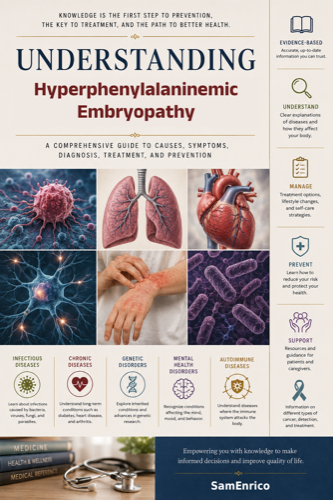 Understanding Hyperphenylalaninemic EmbryopathyHook Kena$17.99
 Treasury Management APIsHook Kena$12.99
 Grant Writer Portfolio WorkbookHook Kena$12.99
 How to Start a Casting of Heavy Metal and Precious Metal Business (Beginners Guide)Hook Kena$11.99
 Chiropractic AdjustmentHook Kena$11.99