
Non-FictionBusiness BriefMorocco Payments
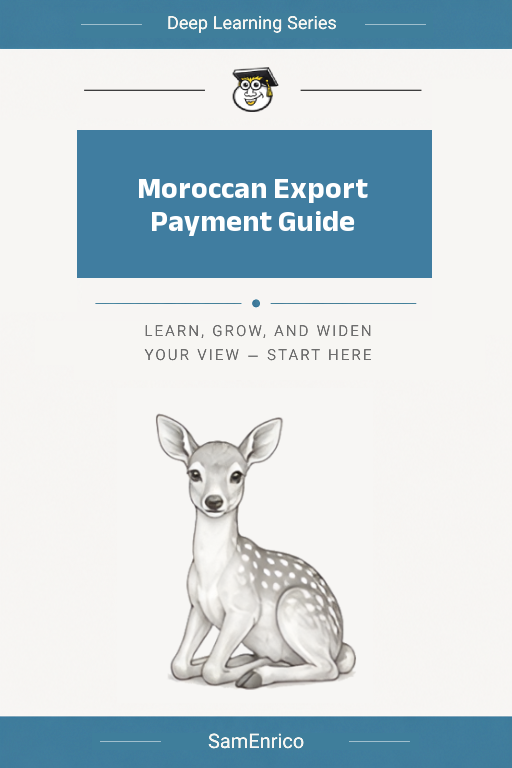
Moroccan Export Payment Guide Audiobook
Navigate Dirham convertibility and receive payment
Navigate Dirham convertibility and receive payments as a Moroccan exporter.
Formats
Free sample
Chapter 1: The Invisible Frontier--The first time a Moroccan exporter loses 30% of their profit margin, it rarely happens in a boardroom. It happens in the quiet space between a signed contract and a settled payment—a frontier where dirhams meet dollars, where deadlines govern destinies, and where the difference between success and failure is measured not in effort but in understanding. This invisible frontier is the Moroccan foreign exchange regulatory system, and crossing it successfully requires a map that most exporters never receive.For the uninitiated, exporting from Morocco appears deceptively simple. A foreign buyer agrees to purchase goods or services. The exporter ships the product.
The buyer sends payment. The transaction concludes. Yet beneath this surface lies a complex ecosystem of regulations, institutions, and currency classifications that can transform a profitable deal into a compliance nightmare within weeks. The exporter who fails to understand this ecosystem does not merely risk delayed payments—they risk blocked licenses, customs investigations, and the complete suspension of their ability to export.This chapter serves as the foundation for everything that follows in this book. Before we can discuss letters of credit, retention quotas, or hedging strategies, we must first understand the architecture within which all Moroccan export payments operate.
We will examine the three regulatory bodies that govern every cross-border transaction, distinguish between the three types of currency accounts available to exporters, and explore the evolving regulatory landscape that is gradually reshaping Morocco's approach to foreign exchange.The Three Pillars of Moroccan Foreign Exchange Regulation Morocco's foreign exchange system is not a single entity but a carefully balanced trinity of institutions, each with distinct responsibilities, authorities, and limitations. Understanding the relationship between these three pillars is the first step toward mastering export payments.Bank Al-Maghrib: The Central Authority At the apex of the regulatory structure sits Bank Al-Maghrib, Morocco's central bank. Established in 1959, Bank Al-Maghrib operates as a public institution with legal personality and financial autonomy. Its primary mandate, as defined by its statutes, is to ensure price stability, regulate the banking system, and manage the country's foreign exchange reserves.For exporters, Bank Al-Maghrib's most visible function is its management of the dirham's exchange rate. Unlike central banks in freely floating currency regimes, Bank Al-Maghrib actively maintains the dirham's value within a managed float against a basket of currencies.
As we will explore in detail in Chapter 7, this basket consists of 60% Euro and 40% US Dollar, meaning…
This is the end of the free sample. Get the Audiobook to keep going. Buy now
About this book
Details
- Author
- Hoyt Georgene
- Publisher
- SamEnrico
- Language
- English
- Genre
- Non-Fiction, Business Brief, Morocco Payments
- Released
- 2026-05-29
- Pages (approx.)
- 147
- Available as
- eBook, Audiobook

Listen in the VoxFlicks app
Audiobooks and audio dramas wherever you go. Sign in with your SamEnrico account and press play.
More by Hoyt Georgene
 Recovering from Bankruptcy After FiftyHoyt Georgene$11.99
 Menopause Positive Mindset GuideHoyt Georgene$11.99
 Unemployment Financial GuideHoyt Georgene$11.99
 Discord Server Status GuideHoyt Georgene$11.99
 The Personal Brand Website GuideHoyt Georgene$11.99
 Time Blocking for ManagersHoyt Georgene$11.99
 Email Greeting Efficiency GuideHoyt Georgene$11.99
 Vulnerability Confidence HypnosisHoyt Georgene$11.99
 The Battle of Crécy: Longbows and Long Shadows (1346)Hoyt Georgene$11.99
 Baba Yaga’s Bone Tower: The Witch’s Architectural WrathHoyt Georgene$11.99
 How to Become a Pediatric DentistHoyt Georgene$11.99
 How to Produce PlumbingHoyt Georgene$11.99
You may also like
 Hong Kong Handover 1997Dunn Johnnie$11.99
 Zumba For Postnatal Recovery CourseNeal Christian$11.99
 Zumba for BeginnersLadner Nikia$11.99
 YouTube Comment Mining GuideHumes Pandora$12.99
 Worry Box MeditationCarlin Rudy$11.99
 Workplace Stress MeditationNguyen Lynn$11.99
 Workplace Stress and Sleep RepairHawley Ivory$11.99
 Workplace Perfectionism CureDelaney Jeffry$11.99
 Workplace Injustice Anger GuideWallen Isabelle$11.99
 Work Addiction and Burnout LinkGreenwood Ester$11.99
 Women in Yoga and WellnessBeattie Galina$11.99
 Women in Stand Up ComedyChun Evangeline$11.99