
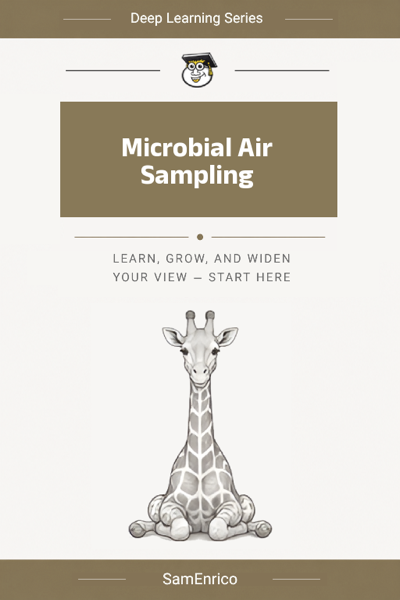
Non-FictionInformativeEducational
Microbial Air Sampling eBook
A Coursebook on Microbial Air Sampling
A Coursebook on Microbial Air Sampling
Formats
Free sample
Chapter 1: The Invisible Avian...--The air you just breathed contained approximately 10,000 bacterial cells, several hundred fungal spores, and—if you are indoors—a cocktail of skin fragments, dust mite feces, and whatever your neighbor exhaled thirty seconds ago. You noticed none of this. You felt nothing. And yet, within that single breath, a complex biological ecosystem traveled through your nasal passages, navigated your trachea, and deposited its smallest passengers deep into your alveolar sacs. This is the invisible avian—the silent, ceaseless flight of microbes through the atmosphere.
For most of human history, we had no idea this aerial river existed. We breathed, we coughed, we died of plagues, and we never once considered the possibility that the air itself was alive. This chapter changes that. It pulls back the curtain on aeromicrobiology, the science of microbial life in the atmosphere, and establishes why sampling that life is not merely an academic exercise but a public health imperative. By the end of this chapter, you will understand what bioaerosols are, where they come from, how they harm human health, and why the COVID-19 pandemic finally forced the world to take airborne transmission seriously.
More importantly, you will begin to think like an aerobiologist—seeing the invisible, questioning the assumed, and recognizing that every breath tells a story.A Brief History of a Forgotten Science The idea that air could carry disease is ancient. The Greek physician Hippocrates advised his followers to avoid "miasmas"—bad air rising from swamps and carcasses—as causes of illness. For two thousand years, the miasma theory dominated medicine. It was wrong about the mechanism but right about the pattern: something was coming from the air. The turning point came in the 1860s, when Louis Pasteur, a French chemist with no medical training, became curious about why wine and beer spoiled.
He designed a simple experiment: a swan-neck flask whose curved neck trapped dust particles while allowing air to enter. He boiled broth in the flask, and it remained sterile indefinitely. But when he tilted the flask so that the trapped dust washed into the broth, microbial growth exploded. Pasteur had done something profound: he had demonstrated that the air carries germ-like particles, and that these particles—not spontaneous generation—were responsible for putrefaction and, by extension, infection. His contemporary, the British surgeon Joseph Lister, read Pasteur's work and immediately understood its implications for the operating room.
He began spraying carbolic acid into the air during surgeries, and his patients stopped dying of postoperative infections. The germ theory of disease was born.Yet for the next century, aeromicrobiology remained a niche field. Tuberculosis was known to be airborne, but the dominant concern was droplet transmission from sneezes and coughs—large, heavy droplets that fell quickly to the ground. In the 1930s and 1940s, William F. Wells, a Harvard engineer studying tuberculosis transmission, made a crucial distinction.
He showed that droplets larger than 100 μm fell to the ground within seconds, but droplets smaller than 5 μm evaporated almost instantly, leaving behind "droplet nuclei"—tiny, dry particles that could remain suspended for hours and travel through ventilation systems. Wells called these airborne infections, and he correctly identified tuberculosis as the classic example. But his insights were slow to penetrate clinical practice. For decades, the medical establishment maintained that most respiratory infections spread via large droplets requiring close contact. The possibility that a virus could float through a hospital corridor and infect a patient three rooms away seemed too alarming, too disruptive to infection control protocols.Then came 2020.
The COVID-19 pandemic did what a century of research could not: it forced a global reckoning with airborne transmission. By mid-2020, mounting evidence showed that SARS-Co V-2 spread through aerosols that accumulated in poorly ventilated indoor spaces. Singing in a choir, dining in a restaurant, exercising in a gym—these became superspreading events. The World Health Organization, which had initially downplayed airborne transmission, reversed its position in 2021. Suddenly, governments were investing in ventilation, air filtration, and, crucially, air sampling.
If you could measure the concentration of viral RNA in indoor air, you could assess risk, target interventions, and verify safety. Aeromicrobiology had its moment. This book is, in many ways, a product of that moment. But the lessons extend far beyond one virus.Defining the Invisible: What Exactly Is a Bioaerosol?A bioaerosol is a suspension in air of particles of biological origin. That definition is simple, but the reality is staggering in its diversity.
Bioaerosols include living and dead bacteria, fungal spores of every shape and color, viruses riding inside respiratory droplets, pollen grains the size of a human hair, and microscopic fragments of larger organisms: skin cells, plant debris, fecal pellets from dust mites, and bacterial cell wall components such as endotoxins. A single cubic meter of indoor air—a volume roughly the size of a kitchen table—can contain thousands of distinct biological entities.Let us break this down by category.Bacteria are the most abundant airborne microbes, with concentrations typically ranging from 100 to 10,000 colony-forming units (CFU) per cubic meter in indoor environments. Most are harmless environmental species belonging to genera such as Bacillus, Micrococcus, Staphylococcus, and Streptomyces. But pathogenic bacteria can also become airborne. Mycobacterium tuberculosis, the cause of tuberculosis, travels exclusively through the air.
Legionella pneumophila grows in cooling towers and hot water systems, then aerosolizes when those systems operate, causing Legionnaires' disease in susceptible individuals. Bacillus anthracis, the agent of anthrax, forms highly resistant spores that have been weaponized as bioterrorism agents. Not all airborne bacteria are viable; many die within minutes of aerosolization due to UV exposure or desiccation. But their fragments—especially endotoxins from Gram-negative bacteria—retain biological activity and can trigger inflammation when inhaled.Fungi produce spores in staggering quantities. A single square meter of moldy drywall can release millions of spores per hour.
The most common airborne fungal genera worldwide are Cladosporium (olive-green, shield-shaped spores), Penicillium and Aspergillus (tiny, round to elliptical conidia that penetrate deep into the lungs), and Alternaria (club-shaped, multicellular spores that are potent allergens). Fungal spores range in size from 2 μm ( Penicillium conidia, respirable) to over 50 μm (some basidiospores). Unlike bacteria, many fungal spores are naturally adapted to survive desiccation and UV radiation; they can remain viable for months in indoor dust. When water-damaged buildings are disturbed, these spores become airborne again, creating long-term exposure risks. Health effects from fungi include allergic rhinitis (hay fever), asthma exacerbation, hypersensitivity pneumonitis (a flu-like illness from repeated exposure), and, in immunocompromised patients, invasive aspergillosis—a life-threatening lung infection with mortality rates exceeding 50%.Viruses are the smallest bioaerosols, ranging from 20 nm (parvoviruses) to 300 nm (poxviruses).
They cannot replicate outside a host cell; in air, they are essentially inert genetic material packaged in protein. Yet they remain infectious for minutes to hours, depending on temperature, humidity, and UV exposure. Respiratory viruses—influenza, rhinovirus, respiratory syncytial virus, coronaviruses—are the most studied airborne viruses. They are expelled in respiratory fluid particles ranging from submicron aerosols to visible droplets. The distinction between "droplet" and "airborne" transmission, which dominated infection control for decades, is now understood as a continuum, not a binary.
A virus in a 0.5 μm aerosol can remain suspended for hours and travel tens of meters; the same virus…
This is the end of the free sample. Get the eBook to keep going. Buy now
About this book
Details
- Author
- Villarreal Dell
- Publisher
- SamEnrico
- Language
- English
- Genre
- Non-Fiction, Informative, Educational
- Released
- 2026-05-11
- Pages (approx.)
- 139
- Available as
- eBook, Audiobook

Read better in the ZLOADR app
Your eBooks on your phone or tablet. Sign in with your SamEnrico account and start reading.
More by Villarreal Dell
 Teen Suicide Attempt Aftermath GuideVillarreal Dell$11.99
 Fear of Men Androphobia GuideVillarreal Dell$11.99
 Twitter Addiction Management GuideVillarreal Dell$11.99
 Depreciation for Construction EquipmentVillarreal Dell$11.99
 The Cortisol Weight Gain ConnectionVillarreal Dell$11.99
 The Alchemists of Timbuktu: Gold, Science, and the Secrets of the SaharaVillarreal Dell$11.99
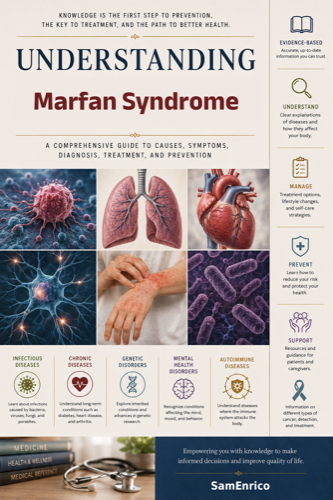 Understanding Marfan SyndromeVillarreal Dell$17.99
 Global Time Zone Review Scheduling GuideVillarreal Dell$12.99
 Slovakia Auto Industry GuideVillarreal Dell$12.99
 How to Start a Pencil Sharpeners Business (Beginners Guide)Villarreal Dell$11.99
You may also like
 Hong Kong Handover 1997Dunn Johnnie$11.99
 Zumba For Postnatal Recovery CourseNeal Christian$11.99
 Zumba for BeginnersLadner Nikia$11.99
 YouTube Comment Mining GuideHumes Pandora$12.99
 Worry Box MeditationCarlin Rudy$11.99
 Workplace Stress MeditationNguyen Lynn$11.99
 Workplace Stress and Sleep RepairHawley Ivory$11.99
 Workplace Perfectionism CureDelaney Jeffry$11.99
 Workplace Injustice Anger GuideWallen Isabelle$11.99
 Work Addiction and Burnout LinkGreenwood Ester$11.99
 Women in Yoga and WellnessBeattie Galina$11.99
 Women in Stand Up ComedyChun Evangeline$11.99