
Non-FictionSelf-HelpAntipsychotics
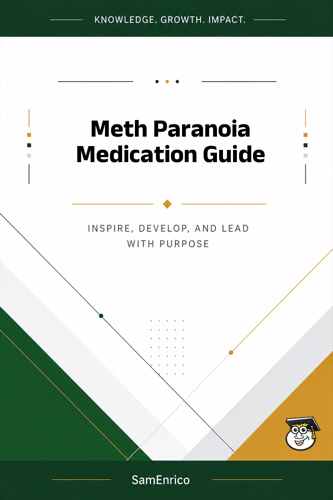
Meth Paranoia Medication Guide
Uses antipsychotic medications to treat persistent
by Mccarty Hans
Uses antipsychotic medications to treat persistent meth-induced paranoia.
Formats
About this book
Free sample
Chapter 1: The Thing Nobody Talks About--–- The first time Carol realized something was terribly wrong, she was standing in her own kitchen, holding a glass of orange juice that her son had just accused her of poisoning. He was twenty-eight years old, a former high school valedictorian with a mechanical engineering degree, and he was backing away from her with genuine terror in his eyes. "I saw you," he whispered. "In the garage. You were pouring something into the bottle when you thought I wasn't looking." Carol set the juice down slowly, her hands trembling, and tried to remember when her son had become a stranger.
That was the moment she started searching for answers—and discovered that she was far from alone.The Quiet Epidemic In the popular imagination, methamphetamine is a drug of the rural poor, a scourge of trailer parks and deserted highway towns, something that happens to "other people" in places most Americans never see. That image is dangerously outdated. Methamphetamine has been undergoing a silent renaissance over the past decade, and with it, a specific and terrifying psychiatric complication has exploded: methamphetamine-induced paranoia that persists long after the drug itself has left the body. This is not the jittery, hypervigilant state of a user coming down from a binge. This is a clinical psychosis—fixed false beliefs, auditory hallucinations, and a profound loss of contact with reality—that can last for months or even years, devastating families and overwhelming emergency rooms across the country.The statistics are staggering.
In urban centers across the Western United States, methamphetamine now accounts for nearly half of all psychiatric emergency visits. A 2024 analysis of emergency department data from San Francisco General Hospital found that meth-related psychosis was the primary diagnosis in 47% of all psychiatric crisis presentations—surpassing schizophrenia, bipolar disorder, and alcohol withdrawal combined. In Portland, Oregon, the figure was 41%. In Denver, 38%. In rural counties where psychiatric resources are already stretched thin, the proportion is often higher because there are fewer alternatives for crisis care.But these numbers, alarming as they are, tell only part of the story.
The patients arriving in these emergency rooms are not the stereotypical "tweakers" of television dramas—emaciated, toothless, twitching. Many are employed.…
This is the end of the free sample. Get the eBook to keep going. Buy now
Contents
- Chapter 1
- Chapter 2
- Chapter 3
- Chapter 4
- Chapter 5
- Chapter 6
- Chapter 7
- Chapter 8
- Chapter 9
- Chapter 10
- Chapter 11
- Chapter 12
Details
- Author
- Mccarty Hans
- Publisher
- SamEnrico
- Language
- English
- Genre
- Non-Fiction, Self-Help, Antipsychotics
- Released
- 2026-06-06
- Pages (approx.)
- 127
- Available as
- eBook, Audiobook

Read better in the ZLOADR app
Your eBooks on your phone or tablet. Sign in with your SamEnrico account and start reading.
More by Mccarty Hans
 Nova A.I. Voiceover Sync GuideMccarty Hans$11.99
 Dental Phobia Self HelpMccarty Hans$11.99
 Operation Car Wash Cross Border RaidsMccarty Hans$11.99
 The Sobriety Recovery Skills HandbookMccarty Hans$11.99
 Enki’s Great Deception: The God Who Tricked the SkyMccarty Hans$11.99
 Acquisition AnalysisMccarty Hans$11.99
 India Rising Consumer Class GuideMccarty Hans$12.99
 Termination Meeting Script GuideMccarty Hans$12.99
 Understanding Inborn Error of MetabolismMccarty Hans$17.99
 Ultimate Handbook Guide to Tripoli : (Libya) Travel GuideMccarty Hans$11.99
You may also like
 Hong Kong Handover 1997Dunn Johnnie$11.99
 Zumba For Postnatal Recovery CourseNeal Christian$11.99
 Zumba for BeginnersLadner Nikia$11.99
 YouTube Comment Mining GuideHumes Pandora$12.99
 Worry Box MeditationCarlin Rudy$11.99
 Workplace Stress MeditationNguyen Lynn$11.99
 Workplace Stress and Sleep RepairHawley Ivory$11.99
 Workplace Perfectionism CureDelaney Jeffry$11.99
 Workplace Injustice Anger GuideWallen Isabelle$11.99
 Work Addiction and Burnout LinkGreenwood Ester$11.99
 Women in Yoga and WellnessBeattie Galina$11.99
 Women in Stand Up ComedyChun Evangeline$11.99