
Non-FictionInformativeEducational
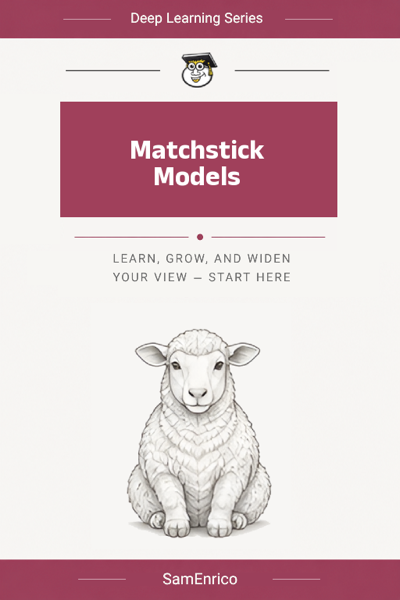
Matchstick Models eBook
A Coursebook on Matchstick Models
A Coursebook on Matchstick Models
Formats
Free sample
Chapter 1: The Spark and the Shackle...--The first matchstick model was not built in a comfortable workshop with Plexiglas sheets and precision knives. It was built in the dark, in the hold of a rotting prison ship, by a man who had no freedom, no tools, and no future. His name is lost to history. His creation—likely a tiny ship or a crude guillotine—survives only in fragments of letters smuggled out of the hulks that floated off the coasts of England and France in the late 18th century. But his legacy endures in every matchstick cathedral, every toothpick bridge, every patient hour spent aligning splinters of wood into something larger than yourself.
This is not a hobby born of leisure. It is an art born of extremity.To understand matchstick modeling, you must first understand that the matchstick itself is a paradox. It is among the cheapest, most disposable objects ever invented—a tiny stick of wood designed to burn once and be thrown away. And yet, in the hands of a patient maker, that same disposable object becomes a brick, a beam, a shingle, a plank, a bone, a jewel. The matchstick is transformed from fuel into structure, from ephemeral to permanent.
This alchemy is the heart of the craft. But the alchemist must know the history of their material, because history teaches respect, and respect teaches patience, and patience is the only tool that cannot be bought.This chapter will take you from the prison hulks of the Napoleonic Wars to the record-breaking workshops of modern masters. You will learn why matchstick modeling has survived for more than two centuries, how it transitioned from survival mechanism to middle-class pastime to high art, and why the constraints of the medium—small sticks, no power tools, enormous patience—are not limitations but the very source of its power. By the end of this chapter, you will never look at a matchstick the same way again.The Prison Hulks: An Art Forged in Chains In the late 1700s and early 1800s, the British Royal Navy and the French Navy faced a problem: what to do with tens of thousands of captured sailors. Prisons on land were already overflowing.
The solution was the prison hulk—decommissioned warships stripped of their masts and sails, anchored in muddy estuaries, and converted into floating dungeons. The most infamous were the British hulks at Chatham, Portsmouth, and Plymouth, and the French hulks at Rochefort and Toulon.Conditions were appalling. A single hulk might hold 500 to 800 men in space designed for 200. Ventilation was nearly nonexistent. Disease was rampant—typhus, dysentery, and scurvy killed more prisoners than the war ever did.
Rations were meager: stale biscuit, salted pork, and water so foul it had to be mixed with vinegar to be drinkable. Prisoners were given no tools, no income, and no occupation. Idleness was a form of torture.And yet, men built.Prisoners discovered that the wooden ration boxes—the crates that held biscuit and salt meat—could be pried apart into splinters. The heads of burnt matches (the early friction matches, then called "lucifers") could be scraped off, leaving small sticks of charred wood. Rusty nails could be hammered flat against the iron hull plates to create crude blades.
With these meager materials, prisoners began to carve.The earliest known matchstick models were not matches at all—they predated the modern safety match by decades. But the principle was the same: small, uniform wooden splinters assembled into larger forms. Prisoners built model ships, mostly, because ships were the only thing they could see from their portholes. They built guillotines, as a dark joke about their own fate. They built intricate furniture—chairs, tables, beds no larger than a thumbnail—that could be traded to sympathetic guards for extra bread or medicine.These models were not art for art's sake.
They were survival. The act of building gave prisoners something to do with their hands, something to focus their minds on, something to complete in a world where nothing else could be controlled. A prisoner who built a ship was not just killing time—he was asserting that he still had agency, still had skill, still had a future beyond the hulk's rotting planks.The models were also currency. A well-built ship might buy a prisoner a week of extra rations, or a blanket in winter, or even a bribe to a guard to look the other way during an escape attempt. Some models were smuggled out of the hulks and sold to collectors on the outside, creating a small underground economy that sustained prisoners who had nothing else.When prisoners were finally released—after years, sometimes decades—many took their tools and techniques with them.
The matchstick model, born in chains, walked free.The Victorian Era: From Desperation to Diversion The invention of the safety match in the 1820s and 1830s changed everything. Before the safety match, matches were dangerous, unreliable, and expensive. The safety match—which could only be struck on a prepared surface—made fire cheap, safe, and ubiquitous. Matches became a household commodity, sold by the box for pennies.And with ubiquity came disposability. People used matches, threw away the burnt sticks, and thought nothing of them.But a few people—the same kind of people who had always saved string and straightened bent nails—began to save matchsticks.
They cleaned off the burned heads, sorted the sticks by length, and started gluing them together. The hobby that had been born in desperation now became a respectable middle-class pastime.Patterns began to appear in magazines. "How to Build a Matchstick Cottage" was a popular feature in Victorian household journals, alongside instructions for pressing flowers and making scrapbooks. The matchstick model became a symbol of thrift, patience, and moral virtue—using waste materials to create something beautiful. It was the Victorian equivalent of recycling.But the Victorian matchstick modeler faced a problem that the prisoners had not: inconsistency.
Household matches are not made to uniform specifications. One box might contain matches that varied by a millimeter or more in length, and the wood was cheap pine that warped as it dried. The prisoners had used splinters from ration boxes that were reasonably uniform; the Victorian hobbyist was stuck with whatever the match factory produced.This problem would not be solved for another century. In the meantime, matchstick modelers developed workarounds: sorting matches by hand, sanding ends to length, discarding warped sticks. The hobby remained accessible but frustrating.It also remained small.
Matchstick modeling never achieved the popularity of stamp collecting or model railroading. It was seen as a curious niche—something grandparents did to keep their hands busy, or something prisoners did because they had nothing else. But a handful of dedicated makers kept the craft alive, passing techniques from generation to generation through word of mouth and the occasional magazine article.The 20th Century: Craft Matches and the Rise of the Master The turning point came in the mid-20th century, when a few small manufacturers began producing "craft matches"—matchsticks designed specifically for modeling, not for lighting fires. These were headless, made from high-quality basswood or birch, cut to precise dimensions (typically 2mm x 2mm…
This is the end of the free sample. Get the eBook to keep going. Buy now
About this book
Details
- Author
- Marr Maribeth
- Publisher
- SamEnrico
- Language
- English
- Genre
- Non-Fiction, Informative, Educational
- Released
- 2026-05-09
- Pages (approx.)
- 119
- Available as
- eBook, Audiobook

Read better in the ZLOADR app
Your eBooks on your phone or tablet. Sign in with your SamEnrico account and start reading.
More by Marr Maribeth
 Outsourcing Calendar ManagementMarr Maribeth$11.99
 Wingman Support System GuideMarr Maribeth$11.99
 Body Language Mirroring GuideMarr Maribeth$11.99
 Senior Fitness Myths BustedMarr Maribeth$11.99
 The First Fingerprints: The 1892 Buenos Aires Murder That Changed Forensics ForeverMarr Maribeth$11.99
 B2B Pricing Without Fear HandbookMarr Maribeth$12.99
 How to Produce Carpet and Upholstery Care ProductsMarr Maribeth$11.99
 How to Start a Luggage Handbags Made of Paperboard Business (Beginners Guide)Marr Maribeth$11.99
You may also like
 Hong Kong Handover 1997Dunn Johnnie$11.99
 Zumba For Postnatal Recovery CourseNeal Christian$11.99
 Zumba for BeginnersLadner Nikia$11.99
 YouTube Comment Mining GuideHumes Pandora$12.99
 Worry Box MeditationCarlin Rudy$11.99
 Workplace Stress MeditationNguyen Lynn$11.99
 Workplace Stress and Sleep RepairHawley Ivory$11.99
 Workplace Perfectionism CureDelaney Jeffry$11.99
 Workplace Injustice Anger GuideWallen Isabelle$11.99
 Work Addiction and Burnout LinkGreenwood Ester$11.99
 Women in Yoga and WellnessBeattie Galina$11.99
 Women in Stand Up ComedyChun Evangeline$11.99