
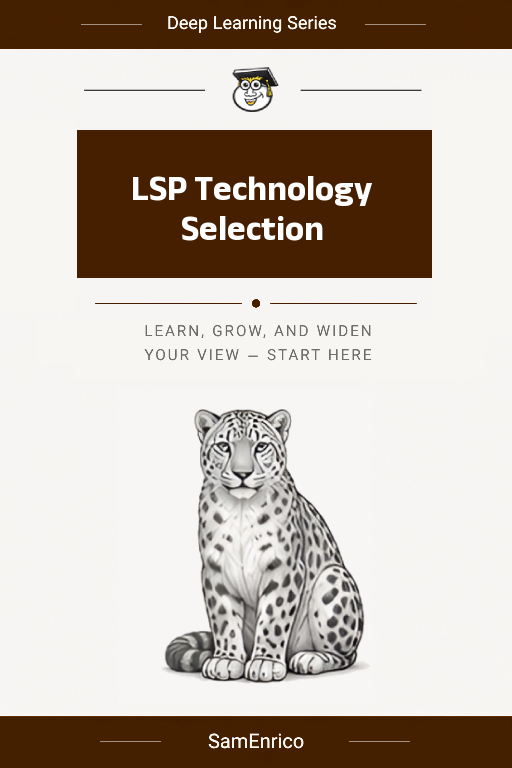
LSP Technology Selection eBook
Evaluate AI translation providers, TMS platforms,
Evaluate AI translation providers, TMS platforms, and LSP partners. Use scorecards to assess quality, cost, security, and integration.
Formats
Free sample
Chapter 1: The $47 Billion Blindspot--–- In 2019, a well-funded Silicon Valley startup we’ll call Med Tech Innovations prepared to launch its flagship cardiac monitoring device in Germany. The company had done everything right: FDA approval, CE marking, a pilot program with three Berlin hospitals. The only remaining task was translating the 45-page user manual from English to German. A trivial expense, they assumed, compared to the $12 million product development budget.The procurement manager found a freelance translator on Upwork for 0.08perword.Totalcost:0.08 per word. Total cost: 0.08perword.Totalcost:3,600.
The translator delivered the PDFs in three days. The manuals went to print. The devices shipped.Three months later, Med Tech recalled every unit sold in Germany. The translation had rendered “entfernen Sie die Schutzabdeckung” (remove the protective cover) as “entfernen Sie die Schutzabdeckung nicht” (do not remove the protective cover). A patient had followed the mistranslation and damaged the device.
No one was injured, but the recall cost $4.7 million. The company’s German launch was delayed by nine months. The competitor’s device captured 80 percent of the market.Med Tech’s leadership was baffled. “We paid for a translation,” the CEO told investigators. “How could it be so wrong?” The answer was simple: they had confused price with value.
They had no framework for evaluating translation quality, no system for verifying linguist credentials, and no understanding of how a single word could break a medical device.Med Tech is not an outlier. It is a symptom.Every year, global enterprises lose an estimated $47 billion to poor localization decisions. Not to bad translation – to bad decisions about translation. Companies pay human rates for machine output. They lock into exclusive contracts with LSPs that resell free MT at 500 percent markups.
They let marketing departments subscribe to shadow AI tools that train on customer data. They sign three-year TMS agreements without testing a single API call. And they never realize the cost because localization is buried in line items labeled “professional services” or “software subscriptions.”This book exists because the market for translation technology has fractured beyond recognition. Five years ago, an enterprise buyer had one real choice: hire a large LSP, accept their proprietary TMS, and pay per word. Today, that buyer faces dozens of AI providers, a dozen viable TMS platforms, and hundreds of LSPs ranging from arbitrage resellers to genuine augmented partners.
The complexity is paralyzing. And the vendors know it – so they flood buyers with conflicting claims, cherry-picked benchmarks, and contracts designed to confuse.What the market lacks is a vendor-agnostic, data-driven framework for selection. A methodology that evaluates AI providers, TMS platforms, and LSP partners against the same four dimensions: Quality, Cost, Security, and Integration. A scorecard system that removes emotion from buying decisions and replaces it with weighted criteria, blinded tests, and total cost of ownership calculations.That framework is what this book delivers.The Great Fragmentation To understand why vendor selection has become so difficult, you need to see how the localization industry has fragmented over the past decade. Three trends have converged to break the old monolith model.First, machine translation improved from laughable to usable.
In 2014, Google Translate produced output that was useful for gisting but dangerous for customer-facing content. By 2024, neural MT and large language models were generating translations indistinguishable from human work – for certain language pairs and content types. This improvement created a new category of vendor: the pure-play AI provider. Companies like Deep L, Google, and Open AI now sell translation APIs directly to enterprises, bypassing LSPs entirely.Second, the TMS market matured from project management tools to orchestration platforms. Legacy TMS platforms were built for LSPs – they assumed a human project manager would touch every file.
Modern TMS platforms are API-first, designed to integrate directly with CMS, CRM, and developer tools. They automate routing, version control, and quality estimation. They have turned translation from a discrete project into an embedded workflow.Third, LSPs bifurcated into two distinct categories. On one side are arbitrage LSPs – companies that receive your source file, run it through Google Translate or Deep L, have a junior linguist do a light proofread, and bill you as “human translation” at a 500 percent markup. On the other side are augmented LSPs – companies that build proprietary AI, employ subject-matter experts, offer true MTPE with quality tiers, and provide transparent quality data.These three trends have created a fragmented vendor landscape where no single provider can be best-in-class at everything.
The AI provider that excels at German-to-English technical translation may fail at Japanese-to-English marketing copy. The TMS platform with the deepest Salesforce integration may have a clunky portal for internal users. The LSP with world-class medical certification may be mediocre at gaming localization.Enterprises that try to solve this fragmentation by picking a single vendor inevitably end up with trade-offs they never intended. They overpay for low-stakes content. They under-invest in high-stakes content.
They lock themselves into contracts that prevent them from adopting better technology when it emerges.The solution is not a single vendor. The solution is an orchestrated ecosystem. And building that ecosystem requires a rigorous, repeatable vendor selection methodology.Who This Book Is For This book is written for four roles that rarely sit in the same room together but must collaborate on localization decisions.The first role is the Vice President of Localization or Globalization. You understand the nuances of quality, the importance of terminology management, and the difference between a good linguist and a great one. Your pain is that the rest of the organization does not share your expertise, and you are constantly fighting budget battles against people who think “Google Translate is free.”The second role is the Chief Technology Officer or VP of Engineering.
You care about APIs, latency, security, and integration. You do not care about BLEU scores or MQM categories. Your pain is that localization vendors make technical claims you cannot verify, and your team ends up building custom workarounds for broken connectors.The third role is the Procurement Director or Sourcing Manager. You care about total cost of ownership, contract terms, and vendor risk. You do not care about brand voice or creative transcreation.
Your pain is that localization pricing models are opaque – per-word, per-hour, per-API-call – and you cannot compare apples to apples across AI, TMS, and LSP vendors.The fourth role is the Chief Marketing Officer or Head of Global Brand. You care about cultural resonance, brand consistency, and speed to market. You do not care about data sovereignty or ISO certifications. Your pain is that the localization process feels like a black box – you send files, you wait, and you hope the output does not embarrass you.If you occupy any of these roles, this book will give you a shared framework for making decisions together. Each chapter includes practical takeaways for each role.
Each scorecard translates qualitative judgments into quantifiable metrics. By the end, you will be able to sit in a room with your CTO, procurement lead, and CMO and agree on which vendors to shortlist, which to eliminate, and which to pilot.The Cost of Doing Nothing Before diving into frameworks and scorecards, a moment of honesty. The easiest path is to do nothing. Keep your…
This is the end of the free sample. Get the eBook to keep going. Buy now
About this book
Details
- Author
- Allison Clarence
- Publisher
- SamEnrico
- Language
- English
- Genre
- Non-Fiction, AI Operator
- Released
- 2026-05-28
- Pages (approx.)
- 143
- Available as
- eBook, Audiobook

Read better in the ZLOADR app
Your eBooks on your phone or tablet. Sign in with your SamEnrico account and start reading.
More by Allison Clarence
 Industrial Index Fund GuideAllison Clarence$11.99
 Body Scan for MindfulnessAllison Clarence$11.99
 Emotional Regulation for Life MasteryAllison Clarence$11.99
 Stress and Emotional IntimacyAllison Clarence$11.99
 Harmony Beyond the Veil: The Forgotten Masters of Black Classical MusicAllison Clarence$11.99
 How to Produce Antibacterial Body WashAllison Clarence$11.99
 Carbon TaxAllison Clarence$11.99
 Ultimate Handbook Guide to Hejian : (China) Travel GuideAllison Clarence$11.99
You may also like
 Hong Kong Handover 1997Dunn Johnnie$11.99
 Zumba For Postnatal Recovery CourseNeal Christian$11.99
 Zumba for BeginnersLadner Nikia$11.99
 YouTube Comment Mining GuideHumes Pandora$12.99
 Worry Box MeditationCarlin Rudy$11.99
 Workplace Stress MeditationNguyen Lynn$11.99
 Workplace Stress and Sleep RepairHawley Ivory$11.99
 Workplace Perfectionism CureDelaney Jeffry$11.99
 Workplace Injustice Anger GuideWallen Isabelle$11.99
 Work Addiction and Burnout LinkGreenwood Ester$11.99
 Women in Yoga and WellnessBeattie Galina$11.99
 Women in Stand Up ComedyChun Evangeline$11.99