
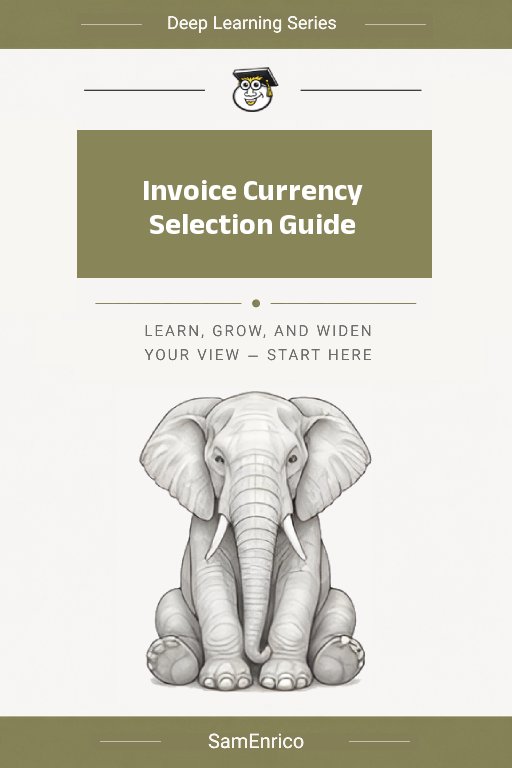
Invoice Currency Selection Guide
Choose invoice currency (USD, EUR, or local) to mi
by Gant Bibi
Choose invoice currency (USD, EUR, or local) to minimize conversion costs and shift FX risk. Negotiate currency clauses that benefit African exporters in volatile markets.
Formats
About this book
Free sample
Chapter 1: The Silent Tax--–- The container ship had already left Mombasa when Ahmed received the payment confirmation. Fifty thousand dollars, net sixty days, just as the contract stated. He calculated his profit: after buying the tea from smallholder farmers, after packaging, after shipping, after paying his twelve employees, he would clear about 8,000 US dollars. Not a fortune, but enough to reinvest, to grow.Thirty days later, he checked his bank balance. The dollars had arrived, converted automatically to Kenyan shillings.
But instead of the expected 5.8 million shillings (based on the 145-shilling rate at invoicing), he saw 5.1 million. A difference of 700,000 shillings—roughly 5,400 dollars. Vanished. Not to taxes. Not to shipping delays.
Not to quality disputes. To something Ahmed had never considered when he signed the contract: the currency itself.The Kenyan shilling had depreciated 12 percent against the dollar during those sixty days. Every day he waited, his profit bled. By the time the money arrived, his 8,000-dollar margin had become 2,600 dollars. He had worked for two months to make less than his lowest-paid employee earned in a week.This is not a story about bad luck.
It is a story about the silent tax—the invisible leakage of value that happens when African exporters default to invoicing in US dollars without understanding the cost of that choice.The Default That Costs You Everything Walk into any small business owner's office from Lagos to Nairobi to Johannesburg, and ask what currency they use for international sales. Ninety percent will say "US dollars." Ask why, and they will pause. Because that is what everyone does. Because buyers ask for it. Because the bank said so.
Because it feels safe.The US dollar feels safe because it is stable against other major currencies. The euro moves slowly. The British pound moves slowly. But for an African exporter whose costs are in naira, rand, cedi, or shilling, the dollar is not stable at all. What matters is not the dollar's stability against the euro.
What matters is the dollar's movement against your local currency. And on that front, the past decade has been a…
This is the end of the free sample. Get the eBook to keep going. Buy now
Contents
- Chapter 1
- Chapter 2
- Chapter 3
- Chapter 4
- Chapter 5
- Chapter 6
- Chapter 7
- Chapter 8
- Chapter 9
- Chapter 10
- Chapter 11
- Chapter 12
Details
- Author
- Gant Bibi
- Publisher
- SamEnrico
- Language
- English
- Genre
- Non-Fiction, Business Brief, Pricing Strategy
- Released
- 2026-05-30
- Pages (approx.)
- 125
- Available as
- eBook, Audiobook

Read better in the ZLOADR app
Your eBooks on your phone or tablet. Sign in with your SamEnrico account and start reading.
More by Gant Bibi
 Interruption-Proof Coding GuideGant Bibi$11.99
 Strategic Rest for High AchieversGant Bibi$11.99
 Work Addiction in High AchieversGant Bibi$11.99
 Self Hypnosis for Sports ParentsGant Bibi$11.99
 The Silk Scrolls of Dunhuang: Preserving a Lost Cultural TreasureGant Bibi$11.99
 How to Produce Air Purifier AccessoriesGant Bibi$11.99
 SnowmobilingGant Bibi$11.99
 A Beginners Guide to Modern Art (Volume 1)Gant Bibi$11.99
You may also like
 Fiverr Package Pricing Strategy GuideFletcher Orlando$11.99
 Upwork Fixed Price vs HourlyBrant Kori$11.99
 Price Justification Writing TacticsMuir Bree$11.99
 Fiverr Package Pricing ManualCoulter Trang$11.99
 Demand Elasticity ApplicationsBeaty Danita$11.99
 Two Part Tariff AnalysisCastle Mandi$11.99
 Values And Mission Alignment Value Based Pricing Strategy GuideVela Roseann$11.99
 Price Discrimination StrategiesStock Pamala$11.99
 Inflationary Pricing Model GuideCaron Jen$11.99
 Upwork Hourly vs FixedAli Joline$11.99
 Consumer Surplus CaptureChan Vernice$11.99
 Fiverr Tiered Pricing StrategyGoldman Rosamond$11.99