
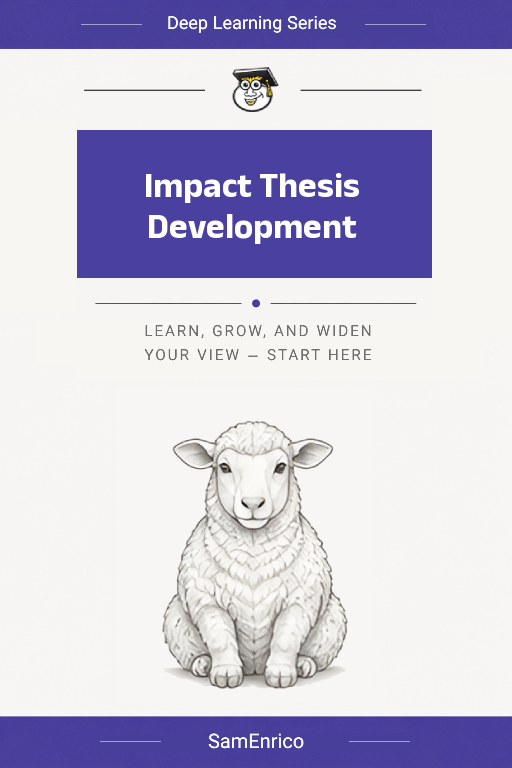
Non-FictionStartup GuideSocial Enterprise
Impact Thesis Development eBook
Develop a compelling impact thesis for your pitch.
by Luff Corene
Develop a compelling impact thesis for your pitch. Problem, solution, and change theory.
Formats
Free sample
Chapter 1: The Warm Glow Trap--Why Good Intentions Kill Good Investments The year was 2017, and Sarah had done everything right.She had left her six-figure consulting job to start a clean water social enterprise. She had raised $2.3 million from impact investors who wept during her pitch—genuine tears, the kind you cannot fake. She had installed 450 water filtration systems across rural Uganda. She had hired a thirty-person team. She had been profiled in a major sustainability publication under the headline “The Millennial Saving a Million Lives.”Eighteen months later, her company was bankrupt.Not because the technology failed.
Not because the team was incompetent. Not because the market was too small.Because 87 percent of those 450 filtration systems were sitting unused. Broken. Forgotten.And Sarah had never bothered to check.She had measured everything that was easy to measure: dollars raised, systems installed, villagers trained. She had celebrated every output like a victory.
But she had never asked the one question that separates impact from theater: So what?So what if you installed 450 filters? Are people drinking clean water?So what if you trained 5,000 farmers? Did their yields increase?So what if you taught 10,000 children? Can they read?Sarah’s investors had funded a story, not a thesis. They had felt the warm glow of doing good without demanding the cold rigor of proving change.
And when the glow faded, they were left with broken filters and a very expensive lesson.This book exists because of Sarah. And because of the thousands of founders, funders, and dreamers like her who confuse motion with progress, activity with impact, and intentions with results.You are about to learn a different way.The Billion-Dollar Graveyard of Good Intentions Let us begin with an uncomfortable truth.The global impact investing market now exceeds $1.2 trillion in assets under management. Tens of thousands of social enterprises have launched. Millions of pages of pitch decks have been written. And yet, by conservative estimates, 65 percent of impact-focused startups fail within five years.Not because they run out of money.
Not because the problem was trivial.Because they cannot answer a single, devastating question when an investor finally asks it: “Prove it.”Prove that your solution causes the change you claim.Prove that the change would not have happened anyway.Prove that you are not just counting your own activity while the world stays stubbornly, tragically the same.This is the gap this book exists to close.Most impact theses are not theses at all. They are stories dressed in data’s clothing. They feature heroic founders, desperate beneficiaries, elegant solutions, and happy endings. They make audiences cry. They win pitch competitions.
They raise money.And then they fail.Because stories are not science. Narratives are not evidence. And warm feelings are not a strategy for changing the world.The Warm Glow Bias: A Psychological Trap The “warm glow” is a well-documented phenomenon in behavioral economics. First named by economist James Andreoni in 1989, it describes the satisfaction people derive from the act of giving itself, independent of whether their giving actually helps.In other words: people feel good when they do good things—even if the “good things” accomplish nothing.This is not a character flaw. It is a feature of human psychology.
Our brains reward us for prosocial behavior regardless of outcome. We get a dopamine hit from donating to a charity, even if that charity is ineffective. We feel virtuous when we fund a social enterprise, even if its impact thesis is untested. The act of trying to help feels almost as good as the act of actually helping.This creates a catastrophic incentive misalignment in impact investing.Investors want to feel good. Founders want to raise money.
Both parties are rewarded for producing emotionally resonant stories, not rigorous, falsifiable theses. The investor gets the warm glow. The founder gets the check. And the beneficiaries—the actual human beings the enterprise was supposed to serve—get nothing.Or worse, they get harmed.Consider the microfinance disaster in Andhra Pradesh, India, in 2010. Dozens of microfinance institutions had raised billions of dollars based on a simple, beautiful thesis: “If we lend small amounts to poor women, they will start businesses, escape poverty, and repay their loans.” The story was irresistible.
The warm glow was blinding.The reality was different. Over-lending led to over-indebtedness. Loan officers used coercive collection tactics. Multiple borrowers defaulted. And in the worst cases, borrowers committed suicide rather than face the shame of unpaid debts.The thesis was never tested.
The assumptions were never stress-tested. The counterfactual—what would have happened without these loans?—was never asked. Everyone was too busy feeling good to ask whether they were actually doing good.This is the warm glow trap. And this book is your escape route.Charity vs. Impact: A Distinction That Matters Before we go any further, we must establish a foundational distinction that will echo through every subsequent chapter.Charity measures what you give.
Impact measures what changes.Charity asks: How many meals did we serve? How many children did we teach? How many wells did we drill?Impact asks: Did those meals reduce malnutrition rates? Did those children learn to read? Did those wells remain operational six months later?This is not an argument against charity.
Charity saves lives. Charity is necessary. Charity is noble.But charity is not impact investing.Impact investing requires a causal claim. It requires the assertion that your specific intervention caused a specific change in human welfare. And causal claims demand evidence.
They demand counterfactuals. They demand falsifiability.This book uses a precise, five-layer model to distinguish between different types of measurement. You will encounter this model repeatedly, so internalize it now:Inputs → The resources you deploy: capital, staff, technology, time.Activities → What you do with those resources: training sessions, loan disbursements, filter installations.Outputs → The direct products of your activities: number of people trained, number of loans given, number of filters installed.Outcomes → The behavioral changes resulting from your outputs: trainees adopting new techniques, borrowers expanding their businesses, villagers actually drinking clean water.Impact → The ultimate welfare changes resulting from those outcomes: increased income, reduced disease, improved literacy.Most failed impact theses collapse because they mistake outputs for impact. They celebrate the filter installed rather than the water drunk. They celebrate the training completed rather than the practice changed.
They celebrate the loan disbursed rather than the business grown.This is not a semantic quibble. It is the difference between a persuasive pitch and a provable thesis.The Falsifiability Imperative Here is a sentence that will change how you think about impact: If your thesis cannot be proven wrong, it cannot be proven right.This is the principle of falsifiability, borrowed from the philosopher of science Karl Popper. For a claim to be scientific—for it to count as knowledge rather than opinion—there must exist a possible observation that would contradict it.“All swans are white” is falsifiable because a single black swan would disprove it.“My intervention reduces poverty” is not falsifiable unless you specify what evidence would count against it. What level of poverty reduction would you accept as proof? What would you do if poverty increased?
If you cannot answer these questions, your thesis is not a hypothesis. It is a hope.Consider the difference between these…
This is the end of the free sample. Get the eBook to keep going. Buy now
About this book
Details
- Author
- Luff Corene
- Publisher
- SamEnrico
- Language
- English
- Genre
- Non-Fiction, Startup Guide, Social Enterprise
- Released
- 2026-06-01
- Pages (approx.)
- 146
- Available as
- eBook, Audiobook

Read better in the ZLOADR app
Your eBooks on your phone or tablet. Sign in with your SamEnrico account and start reading.
More by Luff Corene
 Travel Influencer EnvyLuff Corene$11.99
 Elizabeth Mary Queen ScotsLuff Corene$11.99
 Burnout Prevention for Graduate StudentsLuff Corene$11.99
 Voice Actor In Living ColorLuff Corene$11.99
 The Sabriye Tenberken Blind EducatorLuff Corene$11.99
 Whitney Houston: The VoiceLuff Corene$11.99
 The Beast of Gévaudan: France's Bloody ShadowLuff Corene$11.99
 Understanding Zimmerman–laband SyndromeLuff Corene$17.99
 Freelance Bookkeeping Annual CycleLuff Corene$12.99
 Ultimate Handbook Guide to Callao : (Peru) Travel GuideLuff Corene$11.99
You may also like
 Hong Kong Handover 1997Dunn Johnnie$11.99
 Zumba For Postnatal Recovery CourseNeal Christian$11.99
 Zumba for BeginnersLadner Nikia$11.99
 YouTube Comment Mining GuideHumes Pandora$12.99
 Worry Box MeditationCarlin Rudy$11.99
 Workplace Stress MeditationNguyen Lynn$11.99
 Workplace Stress and Sleep RepairHawley Ivory$11.99
 Workplace Perfectionism CureDelaney Jeffry$11.99
 Workplace Injustice Anger GuideWallen Isabelle$11.99
 Work Addiction and Burnout LinkGreenwood Ester$11.99
 Women in Yoga and WellnessBeattie Galina$11.99
 Women in Stand Up ComedyChun Evangeline$11.99