
Non-FictionSelf-HelpSupplement Psychology
Hypnotic Caffeine Sensitivity eBook
Enhance or reduce caffeine effects on performance
Enhance or reduce caffeine effects on performance using hypnotic suggestion.
Formats
Free sample
Chapter 1: The Expectation Effect--If you were given a cup of decaffeinated coffee but told it contained a potent dose of caffeine, your heart would begin to race within twenty minutes. Your hands might tremble slightly. Your attention would sharpen. You might even feel the familiar rush of alertness that millions of people chase every morning. And yet your bloodstream would contain no caffeine at all.This is not science fiction.
It is not wishful thinking. It is the placebo effect—one of the most rigorously documented phenomena in all of medicine—and it reveals something extraordinary about the relationship between your brain and the drugs you put into your body. What you expect to happen often becomes what actually happens, regardless of the physical reality of the substance you consumed.Now consider the reverse. If you were given a strong espresso but told it was decaf, you might feel nothing at all. No rush.
No alertness. Perhaps even a touch of sleepiness. The caffeine would still be binding to your adenosine receptors, still triggering dopamine release, still activating your adrenal glands. But your conscious experience of those events—the only experience that matters to you—could be entirely absent.This is the nocebo effect, the dark twin of placebo, and it explains why two people drinking the exact same coffee from the exact same pot can have completely opposite experiences. One feels focused, energized, and euphoric.
The other feels jittery, anxious, and regrets the decision for hours. The difference is not primarily in their livers or their genes, though those matter. The difference is primarily in their minds.This book argues a simple and provocative thesis: your sensitivity to caffeine is not fixed. It is not determined solely by your genetics or your tolerance or the number of cups you drink each day. Your sensitivity is a dial, and you can learn to turn it up or down using the single most powerful tool available to the human nervous system: hypnotic suggestion.But before we can teach you how to turn that dial, we must first understand why it exists in the first place.
We must understand why expectation is not just a psychological curiosity but a biological signal, why your brain cannot reliably distinguish between a drug and your belief about that drug, and why most books on caffeine have been asking the wrong question entirely.The Caffeine Paradox Caffeine is the world's most widely consumed psychoactive substance. Approximately ninety percent of adults in North America consume it daily, typically in the form of coffee, tea, soda, or energy drinks. Global coffee consumption alone exceeds two billion cups per day. If caffeine were regulated like the stimulant it is, it would be one of the most widely used drugs on the planet. But because it is legal, cheap, and culturally embedded in everything from morning rituals to afternoon meetings, we rarely stop to consider how strange it actually is.The strangeness reveals itself when you look at how differently the same dose affects different people.
A single espresso—roughly sixty to eighty milligrams of caffeine—can send one person into a state of focused flow for hours while sending another person into a spiral of anxiety, sweating palms, and a pounding heart that will not settle until lunchtime. One person drinks coffee at eight PM and sleeps like a baby. Another person drinks green tea at two PM and lies awake until three in the morning.Most people assume this variability is genetic. They are not wrong, but they are not entirely right either.The Genetics of Metabolism The most important genetic factor in caffeine response is a gene called CYP1A2, which produces an enzyme responsible for breaking down approximately ninety-five percent of the caffeine you consume. This gene comes in two common variants.
People with the "fast" variant (sometimes called "fast metabolizers") produce large quantities of the CYP1A2 enzyme, allowing them to clear caffeine from their bloodstream quickly. Their half-life—the time it takes for the body to eliminate half of a given dose—is typically two to three hours. They can drink coffee in the afternoon without disturbing their sleep. They rarely experience jitters or anxiety from normal doses.People with the "slow" variant produce much less of the enzyme. Their half-life extends to five, six, or even eight hours.
A morning coffee still lingers in their system at bedtime. They are more likely to experience anxiety, insomnia, rapid heartbeat, and even mildly elevated blood pressure from the same dose that leaves a fast metabolizer unaffected.This genetic difference is real and significant. Several large-scale studies have confirmed that slow metabolizers have higher rates of caffeine-induced insomnia and anxiety. Some research has even suggested—though not conclusively proven—that slow metabolizers may have slightly higher cardiovascular risks associated with high caffeine intake, while fast metabolizers may actually experience cardiovascular benefits from moderate consumption.If you have ever wondered why your friend can drink an espresso after dinner and you cannot, CYP1A2 is likely the answer. It is a biological fact of your body, as real as your eye color or your height.But here is where the story gets interesting.
And here is where most books stop, leaving you with the impression that your caffeine response is simply a matter of genetic luck.Why Genetics Is Only Half the Story If genetics were the whole story, then giving caffeine to a slow metabolizer would always produce anxiety, and giving caffeine to a fast metabolizer would never produce anxiety. But that is not what happens in real life. Fast metabolizers can experience panic attacks from caffeine. Slow metabolizers can drink coffee their entire lives without ever feeling jittery. Something else is at work.That something else is expectation.Consider a classic study from the early 2000s, in which researchers gave participants a beverage they were told contained caffeine.
In reality, half the beverages contained caffeine and half contained none. But the participants did not know which was which. The researchers then measured alertness, reaction time, and subjective energy levels.The results were striking. Participants who believed they had consumed caffeine—regardless of whether they actually had—reported significantly higher alertness and energy than those who believed they had consumed a placebo. Their reaction times improved.
Their mood brightened. And these effects were not small. In some measures, the expectation effect was as large as the pharmacological effect of a genuine dose of caffeine.Even more remarkably, participants who received actual caffeine but were told it was a placebo reported less alertness than those who received no caffeine but were told it was real. Their expectation overrode the drug.This is not a fluke or an isolated finding. The placebo and nocebo effects have been documented in hundreds of studies across dozens of drugs and conditions.
Placebo painkillers trigger real endorphin release. Placebo antidepressants produce real changes in brain activity. Placebo stimulants produce real increases in heart rate and blood pressure. Your brain does not wait to see what is actually in your bloodstream before deciding how to feel. It makes a prediction based on your expectations, and then it shapes your physiology to match that…
This is the end of the free sample. Get the eBook to keep going. Buy now
About this book
Details
- Author
- Toliver Anette
- Publisher
- SamEnrico
- Language
- English
- Genre
- Non-Fiction, Self-Help, Supplement Psychology
- Released
- 2026-06-10
- Pages (approx.)
- 155
- Available as
- eBook, Audiobook

Read better in the ZLOADR app
Your eBooks on your phone or tablet. Sign in with your SamEnrico account and start reading.
More by Toliver Anette
 Colombian Cartel WomenToliver Anette$11.99
 Social Entrepreneur Corporate PartnerToliver Anette$11.99
 Downsize to College TownToliver Anette$11.99
 Chronic Stress Heart Disease ConnectionToliver Anette$11.99
 Neptune’s Gambit: The Billionaire’s Lost Treasure HuntToliver Anette$11.99
 Icebound Ingenuity: The Arctic Gateway Bridge and the Engineers Who Defied the Frozen NorthToliver Anette$11.99
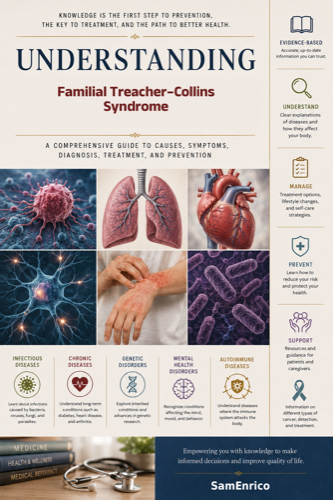 Understanding Familial Treacher–Collins SyndromeToliver Anette$17.99
 Relationship Capital in Online MarketsToliver Anette$11.99
 UAE VAT Exempt SuppliesToliver Anette$12.99
 Strategy Meeting Best Practices for ExecutivesToliver Anette$12.99
 How to Become a CasterToliver Anette$11.99
You may also like
 Hong Kong Handover 1997Dunn Johnnie$11.99
 Zumba For Postnatal Recovery CourseNeal Christian$11.99
 Zumba for BeginnersLadner Nikia$11.99
 YouTube Comment Mining GuideHumes Pandora$12.99
 Worry Box MeditationCarlin Rudy$11.99
 Workplace Stress MeditationNguyen Lynn$11.99
 Workplace Stress and Sleep RepairHawley Ivory$11.99
 Workplace Perfectionism CureDelaney Jeffry$11.99
 Workplace Injustice Anger GuideWallen Isabelle$11.99
 Work Addiction and Burnout LinkGreenwood Ester$11.99
 Women in Yoga and WellnessBeattie Galina$11.99
 Women in Stand Up ComedyChun Evangeline$11.99