
Non-FictionBusiness BriefHigh Yield
High Yield Bond Risks eBook
Teaches earning income from junk bonds while manag
Teaches earning income from junk bonds while managing default risk.
Formats
Free sample
Chapter 1: The Yield Mirage...–- The year is 1990. Drexel Burnham Lambert, the investment bank that built an empire on high-yield “junk” bonds, collapses in the largest bankruptcy in Wall Street history at that time. Headlines scream that the junk bond market is dead—a speculative fever dream that finally broke. A young portfolio manager named Howard Marks, sitting in his office at TCW, watches his phone ring off the hook. Clients are demanding to sell everything.
“Get us out of junk,” one says, “before we lose everything.”Marks does not sell. Instead, he buys. Over the next eighteen months, as the economy recovers from a mild recession, his high-yield portfolio returns over 40%. The “dead” market roars back to life.This scene—panic, disgust, and then spectacular recovery—has repeated itself roughly once a decade. 2008.
2020. 2022. Each time, the same narrative plays out: investors swear off high-yield bonds forever, only to be lured back by yields that seem too good to pass up. And each time, the fundamental misunderstanding persists.That misunderstanding is simple, and it is the subject of this chapter: most investors use the word “junk” as an emotional label rather than a technical term. They treat high-yield bonds as lottery tickets—either they pay off big or they blow up.
But the data tells a very different story. Over the 42-year period from 1980 to 2022, a diversified portfolio of U.S. high-yield bonds returned an average of 8.7% annually, outperforming investment-grade corporate bonds (5.9%) and long-term Treasuries (4.8%) by a wide margin. This was not achieved without pain—the asset class lost 26% in 2008 and 11% in 2022—but the long-term trajectory has been relentlessly upward.This chapter dismantles the pejorative term “junk” and replaces it with the proper financial term: speculative-grade. You will learn precisely what high-yield bonds are, how they differ from investment-grade debt, and why the distinction between “fallen angels” and “original issue” high-yield bonds matters for your portfolio.
You will walk through the market’s turbulent history, not as a dry timeline, but as a series of lessons about how risk and reward have actually behaved. And you will see, with real numbers, why the long-term return advantage of high-yield bonds over safer assets is not a coincidence—it is the market’s honest price for bearing a specific, manageable set of risks that the rest of this book will teach you to control.Let us begin by defining our terms. Because you cannot manage what you cannot name.What Exactly Is a “Junk Bond”? A Taxonomy of Speculative-Grade Debt The first thing to understand is that “junk” is not a formal financial classification. It is a colloquialism, and a misleading one at that.
The correct term is high-yield bond, or more technically, speculative-grade bond. These are bonds rated below a certain threshold by independent credit rating agencies.The two dominant rating agencies in the United States are S&P Global Ratings and Moody’s Investors Service. (Fitch is a third, smaller player.) They use slightly different lettering systems, but the mapping is straightforward.S&P and Fitch rate bonds from AAA (highest quality, safest) down to D (default). The cutoff between investment grade (considered safe enough for banks, pension funds, and insurance companies to hold without special capital charges) and speculative grade (considered risky enough to warrant higher yields and regulatory scrutiny) is BBB-. Anything rated BBB- or above is investment grade.
Anything rated BB+ or below is high-yield.Moody’s uses a similar system but with different letters: Baa3 and above is investment grade; Ba1 and below is high-yield.S&P/Fitch Rating Moody’s Equivalent Category Typical Default Rate (10-year cumulative)AAA to BBB-Aaa to Baa3Investment Grade
This is the end of the free sample. Get the eBook to keep going. Buy now
About this book
Details
- Author
- Hargrove Elodia
- Publisher
- SamEnrico
- Language
- English
- Genre
- Non-Fiction, Business Brief, High Yield
- Released
- 2026-06-12
- Pages (approx.)
- 140
- Available as
- eBook, Audiobook

Read better in the ZLOADR app
Your eBooks on your phone or tablet. Sign in with your SamEnrico account and start reading.
More by Hargrove Elodia
 Self Doubt Athletic Performance GuideHargrove Elodia$11.99
 Inherited Career ExpectationsHargrove Elodia$11.99
 Distraction Proof Home Office GuideHargrove Elodia$11.99
 Anger in Long Term RelationshipsHargrove Elodia$11.99
 Low Carb Budget Meal PlanHargrove Elodia$11.99
 John Lee Hooker BoogieHargrove Elodia$11.99
 Earplugs Sleep Memory BoostHargrove Elodia$11.99
 The Last King of the Golden Triangle: Khun Sa's Shadow EmpireHargrove Elodia$11.99
 The Bombay Spy Game: Cricket, Espionage, and the Birth of India's Sporting RevolutionHargrove Elodia$11.99
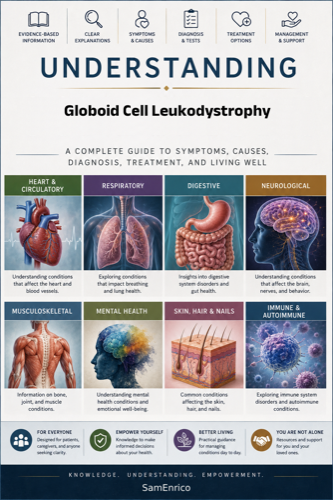 Understanding Globoid Cell LeukodystrophyHargrove Elodia$11.99
 WIPO Madrid International ClassesHargrove Elodia$12.99
 Latin American Coding PathwaysHargrove Elodia$12.99
You may also like
 Hong Kong Handover 1997Dunn Johnnie$11.99
 Zumba For Postnatal Recovery CourseNeal Christian$11.99
 Zumba for BeginnersLadner Nikia$11.99
 YouTube Comment Mining GuideHumes Pandora$12.99
 Worry Box MeditationCarlin Rudy$11.99
 Workplace Stress MeditationNguyen Lynn$11.99
 Workplace Stress and Sleep RepairHawley Ivory$11.99
 Workplace Perfectionism CureDelaney Jeffry$11.99
 Workplace Injustice Anger GuideWallen Isabelle$11.99
 Work Addiction and Burnout LinkGreenwood Ester$11.99
 Women in Yoga and WellnessBeattie Galina$11.99
 Women in Stand Up ComedyChun Evangeline$11.99