
Non-FictionSelf-HelpReciprocity
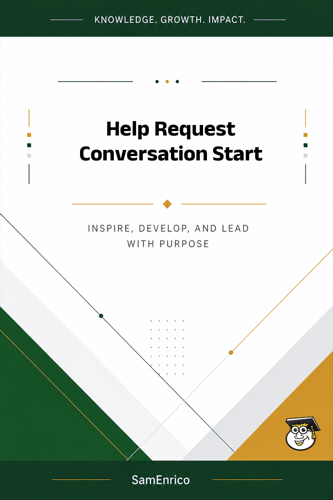
Help Request Conversation Start eBook
Ask small favors as non threatening way to initiat
Ask small favors as non threatening way to initiate interaction.
Formats
Free sample
Chapter 1: The Borrowed Book...--–- In the winter of 1736, a young printer and publisher in Philadelphia found himself in an impossible situation. His name was Benjamin Franklin, and he had just been appointed Clerk of the Pennsylvania Assembly. The problem was not the work itself—Franklin was nothing if not industrious. The problem was a fellow legislator, a powerful and well-connected gentleman who had taken an instant disliking to Franklin. No one could explain the animosity.
It was not based on policy, on a slight, or on any measurable disagreement. The man simply did not like Franklin, and he made no effort to hide it. He spoke against Franklin in chambers, voted against his proposals, and refused to acknowledge him in hallways. For months, Franklin tried everything he knew to win the man over. He complimented the man's speeches.
He voted in favor of the man's bills. He smiled, he nodded, he deferred. Nothing worked. The man's coldness remained absolute.Then Franklin tried something that made no sense at all. He asked his rival for a favor.Not a large favor.
Not a desperate plea for forgiveness or a groveling request for mercy. Franklin asked to borrow a book. Specifically, he had heard that the man owned a rare and obscure volume from his personal library—a book that Franklin had long wanted to read but could not find anywhere in the colonies. So Franklin wrote the man a brief, polite note. He explained that he was working on a project and had heard that the man possessed this particular book.
Would he be willing to lend it to Franklin for just a few days?The man responded immediately. He sent the book over with his own servant, along with a warm note expressing his pleasure at being asked. A week later, Franklin returned the book with a gracious thank-you note, careful to mention how helpful it had been. And something extraordinary happened. The next time Franklin saw his rival in the assembly chamber, the man approached him.
Not to argue. Not to insult. To speak. To ask Franklin about his work. To offer a suggestion.
To be, for the first time, civil. Within months, the man became not just an ally but a friend. He invited Franklin to his home. He supported Franklin's initiatives. He remained a loyal supporter for the rest of Franklin's political career.All because Franklin asked to borrow a book.The Mechanism That Defies Logic What happened in that Philadelphia assembly chamber was not a miracle.
It was not luck, charm, or Franklin's legendary wit. It was a predictable, replicable, and deeply counterintuitive psychological mechanism that has since been studied, measured, and confirmed by decades of social science research. Psychologists call it the Ben Franklin Effect. And it reveals something fundamental about human nature that most people get exactly backwards.Here is what most people believe about asking for help: when you ask someone for a favor, you put them in a position of power over you. You reveal weakness.
You create an imbalance. The other person, being rational and self-interested, will resent you for imposing on them. They will like you less because you have cost them something. This belief is so widespread, so deeply embedded in our cultural assumptions about independence and self-reliance, that it feels like common sense. Do not bother people.
Do not impose. Earn your way. Give before you take.This belief is wrong.The Ben Franklin Effect works in the opposite direction. When you ask someone for a small, non-threatening favor, that person does not like you less. They like you more.
Not in spite of the favor, but because of it. The mechanism is cognitive dissonance, one of the most powerful and well-documented phenomena in the history of psychology. Cognitive dissonance is the uncomfortable mental state that occurs when a person holds two contradictory beliefs, values, or perceptions at the same time. The human brain cannot tolerate prolonged dissonance. It will twist itself into knots to resolve the contradiction, often by rewriting the person's beliefs to match their actions.Here is how it works in the context of a favor.
Imagine you are the person being asked. Someone approaches you—a stranger, a colleague, an acquaintance—and asks you for something small. A pen. A recommendation. Two minutes of your time.
You agree. You perform the favor. Now your brain is holding two pieces of information. First: "I am a smart, discerning person who does not waste my time on people I dislike." Second: "I just did a favor for that person." These two facts clash. If you disliked the person, why would you have helped them?
The brain resolves the dissonance by changing the first belief: "I must like that person. Otherwise, why would I have helped them?" The favor does not create resentment. It creates affinity.This is not speculation. It is experimental fact. In a landmark study published in 1969, psychologists Jon Jecker and David Landy brought subjects into a laboratory and had them participate in a competitive task where they could win money.
After the task, a researcher approached one group of subjects and asked them for a favor: would they please return the money they had won? The researcher explained that the funds for the experiment had run out, and he was using his own personal money to continue the study. The return of the winnings would be a personal favor to him. A second group of subjects was not asked for a favor. A third group was approached by a different person—not the researcher—and asked to return the money.
Then all subjects were asked to rate how much they liked the researcher. The results were striking. The subjects who had done the researcher a personal favor rated him significantly more likable than the subjects who had not been asked. Even more striking, they rated him more likable than the subjects who had been asked to return the money by a third party. Doing a favor for someone made the subjects like that person more.The Ben Franklin Effect has been replicated in dozens of studies across multiple cultures.
It works with small favors and large ones. It works with strangers and with acquaintances. It works even when the person doing the favor is consciously aware of the effect. The mechanism operates below the level of conscious reasoning. Your brain rewrites your feelings about a person based on your actions toward them, whether you want it to or not.Why Most People Never Ask If the Ben Franklin Effect is so powerful and so well documented, why do most people avoid asking for favors?
Why do we suffer in silence, struggle alone, and miss countless opportunities for connection, collaboration, and friendship? The answer lies in a mismatch between our intuitive psychology and the actual psychology of human interaction.Our brains evolved to detect threat. For most of human history, asking for help from a stranger or a rival was genuinely dangerous. It signaled weakness to an enemy. It exposed vulnerability to someone who might exploit it.
It created an opening for betrayal. The cost of being wrong about a request for help could be injury, expulsion…
This is the end of the free sample. Get the eBook to keep going. Buy now
About this book
Details
- Author
- Reinhardt Oma
- Publisher
- SamEnrico
- Language
- English
- Genre
- Non-Fiction, Self-Help, Reciprocity
- Released
- 2026-06-09
- Pages (approx.)
- 149
- Available as
- eBook, Audiobook

Read better in the ZLOADR app
Your eBooks on your phone or tablet. Sign in with your SamEnrico account and start reading.
More by Reinhardt Oma
 The Nobel JourneyReinhardt Oma$11.99
 The Passive Aggressive Coworker GuideReinhardt Oma$11.99
 Mobile Game Addiction RecoveryReinhardt Oma$11.99
 Gamer Loyalty Program AdoptionReinhardt Oma$11.99
 The Day the Sky Burned: The Great Michigan Fireball of 1965Reinhardt Oma$11.99
 Understanding Pulmonary SequestrationReinhardt Oma$17.99
 How to Start a Ornaments Made of Glass Business (Beginners Guide)Reinhardt Oma$11.99
 Webinar Marketing One Page PlanReinhardt Oma$12.99
 Express Entry Common Mistakes GuideReinhardt Oma$12.99
 Fingerprint AnalystReinhardt Oma$11.99
You may also like
 Hong Kong Handover 1997Dunn Johnnie$11.99
 Zumba For Postnatal Recovery CourseNeal Christian$11.99
 Zumba for BeginnersLadner Nikia$11.99
 YouTube Comment Mining GuideHumes Pandora$12.99
 Worry Box MeditationCarlin Rudy$11.99
 Workplace Stress MeditationNguyen Lynn$11.99
 Workplace Stress and Sleep RepairHawley Ivory$11.99
 Workplace Perfectionism CureDelaney Jeffry$11.99
 Workplace Injustice Anger GuideWallen Isabelle$11.99
 Work Addiction and Burnout LinkGreenwood Ester$11.99
 Women in Yoga and WellnessBeattie Galina$11.99
 Women in Stand Up ComedyChun Evangeline$11.99