
Harvard Extension Technology Platform
Courses via Zoom, Canvas LMS, with recorded lectur
by Knoll Xuan
Navigate Canvas, Zoom, and HES's digital learning tools effectively.
Formats
About this book
Free sample
Chapter 1: The Equity Mandate--–- In the summer of 2019, before the pandemic forced every university online, the Harvard Extension School was already running a quiet experiment. While most of higher education treated online learning as a second-class delivery mechanism—a way to squeeze more tuition dollars from remote students without fundamentally changing pedagogy—a small team at HES had been asking a different question: What if we designed every classroom, from the ground up, to serve three distinct populations simultaneously, with no single group receiving preferential treatment?The answer became HELIX, Harvard's proprietary hybrid learning model. And the first thing its architects discovered was that most of what the edtech industry called "Hy Flex" was not actually flexible at all. It was, in practice, a series of compromises that left someone out.This chapter reframes the entire conversation. It argues that technology is neutral, but design is political.
Every decision you make—where to place the camera, how to moderate chat, whether to record a breakout room—sends a message about which students matter. The Harvard Extension Technology Platform is not a collection of tools. It is a philosophy of equitable access, operationalized through the deliberate integration of Zoom, Canvas, and recorded lectures.If you take away only one idea from this book, let it be this: Equity is not a feature you add at the end. It is the foundation upon which everything else is built.The Three Modalities Problem Every course built on the HES Trinity must serve three distinct student populations simultaneously. Understanding their different needs, constraints, and patterns of engagement is the first step toward intentional design.The In-Person Student These students sit in a physical classroom.
They see the instructor's body language without video compression. They can raise a hand and receive immediate acknowledgment. They overhear side conversations before class begins. They have, in short, the richest bandwidth of interaction.But they also have constraints. They commute.
They pay for parking or public transit. They cannot rewind a confusing statement unless someone in the room asks for clarification. They are bound by a specific time…
This is the end of the free sample. Get the eBook to keep going. Buy now
Contents
- Chapter 1
- Chapter 2
- Chapter 3
- Chapter 4
- Chapter 5
- Chapter 6
- Chapter 7
- Chapter 8
- Chapter 9
- Chapter 10
- Chapter 11
- Chapter 12
Details
- Author
- Knoll Xuan
- Publisher
- SamEnrico
- Language
- English
- Genre
- Non-Fiction, Student's Shortcut, Tech, Student's Shortcut, EdTech
- Released
- 2026-05-29
- Pages (approx.)
- 160
- Available as
- eBook, Audiobook

Read better in the ZLOADR app
Your eBooks on your phone or tablet. Sign in with your SamEnrico account and start reading.
More by Knoll Xuan
 Emotional Flooding Relationship GuideKnoll Xuan$11.99
 Eisenhower For Graduate StudentsKnoll Xuan$11.99
 The Angry Parent Cooling CornerKnoll Xuan$11.99
 Persuasive Compliance ProgramKnoll Xuan$11.99
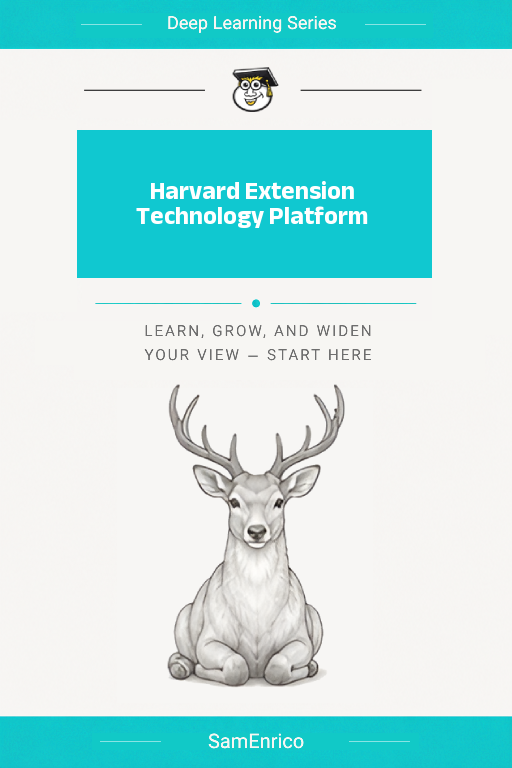 Harvard Extension Technology PlatformKnoll Xuan$12.99
 Emotion Podcasts ListKnoll Xuan$11.99
 Assertiveness for Survivors of AbuseKnoll Xuan$11.99
 Gwalior Fort CaptureKnoll Xuan$11.99
 Compliment Filter RetrainingKnoll Xuan$11.99
 Ben Horowitz HardKnoll Xuan$11.99
 The Timbuktu Scholars: Guardians of the Mathematical UniverseKnoll Xuan$11.99
 The Philosopher Kings of Axum: Wisdom and Empire in Ancient AfricaKnoll Xuan$11.99