
Hands Shake Protocol eBook
Stop visible trembling during presentations with m
Stop visible trembling during presentations with muscle tension techniques.
Formats
Free sample
Chapter 1: The Glass of Water--–- The water was still when I set it down. I remember that. Crystal glass, condensation beading on the outside, the little silver pitcher beside it reflecting the conference room lights. I had practiced this moment forty-seven times in my hotel room. Pick up the glass.
Pause. Take a sip. Smile. Continue. Simple.
Automatic. Something a child could do.Forty-seven times, my hand had been steady.But this was not my hotel room. This was a boardroom on the forty-second floor of a Manhattan high-rise. Two hundred people had flown in for this presentation. Investors.
Partners. My entire professional future, distilled into twelve minutes of speaking and one gesture that should have been invisible.I reached for the glass.My hand didn't shake. It danced.The tremor started in my wrist—that fine, high-frequency oscillation that feels like a tuning fork has been pressed against your radius. By the time my fingers touched the glass, the shake had amplified. I watched, helpless, as my thumb and forefinger closed around the rim.
The water inside the glass began to move. Not a ripple. A slosh. The kind of violent disturbance that draws every eye in the room.Ice cubes clicked against the crystal like warning bells.Someone in the front row—a venture capitalist whose name I had memorized from a dozen Linked In stalking sessions—looked at my hand, then at my eyes, and smiled. Not a kind smile.
A knowing smile. The smile of someone who had just seen you reveal exactly what you were trying to hide.I set the glass down without drinking. The water continued to tremble for three full seconds after my hand released it.For the remaining nine minutes of my presentation, I kept both hands flat on the lectern. I did not gesture. I did not point.
I did not reach for the clicker to advance my slides. I stood frozen, a statue of shame, while my carefully rehearsed words emerged from a mouth I could no longer feel.That night, I googled "how to stop hands from shaking during presentation" for the forty-eighth time. The results were always the same. Deep breathing. Positive affirmations.
Imagine the audience naked. Beta blockers. More practice. More water. Less caffeine.I had tried all of it.None of it worked.What I did not know that night—what I would spend the next three years learning—is that I had been fighting the wrong war.
I had been trying to relax my way out of a problem that requires tension. I had been using psychology to solve a physics problem. And I had been following advice designed for people with butterflies when I had something entirely different: the freeze response.This book is not about butterflies.This book is about what happens when your nervous system decides that two hundred people staring at you is a life-threatening emergency. This book is about the visible, humiliating, career-damaging tremor that no amount of deep breathing can stop. And this book is the first one that will tell you the truth that changed everything for me:You cannot think your way out of a tremor.
But you can muscle your way out.The Two States Most Speakers Cannot Distinguish Let me ask you a question. When you say you get "nervous" before a presentation, what exactly do you feel?If your answer includes any of the following, you are experiencing the freeze response, not simple nervousness:Your hands shake visibly when you try to gesture or hold an object Your voice cracks or trembles no matter how much you clear your throat Your lips quiver when you try to smile You feel a wave of heat or cold wash over your body Your heart pounds so hard you can see your shirt move You experience tunnel vision or a sensation of unreality These are not "butterflies." These are the physiological hallmarks of an adrenaline dump—the same response your body would have if you were facing a predator rather than a Power Point slide.The distinction matters more than almost anything else in this book. Most public speaking advice conflates two fundamentally different physiological states. Let me separate them clearly.State One: Butterflies (Low-Grade Arousal)Butterflies are what you feel in your stomach before a first date, a job interview, or a friendly presentation to colleagues you trust. The sensation is localized.
Your stomach flips. You feel a little lightheaded. But your hands remain steady. Your voice remains steady. You can function.
Butterflies are simply your body saying "this matters" without impairing your performance. They usually subside within sixty seconds of starting.State Two: The Freeze Response (High-Grade Arousal)The freeze response is what happens when your sympathetic nervous system decides you are in mortal danger. Adrenaline and cortisol flood your bloodstream. Blood vessels in your extremities constrict, redirecting flow to your large muscle groups (because your body assumes you need to run or fight). Your heart rate spikes to 120 beats per minute or higher.
Your fine motor skills degrade. And because your hands are controlled by small stabilizer muscles that require precise oxygen delivery, they are the first to go.The freeze response does not subside on its own. It requires intervention. And the interventions most commonly recommended—deep breathing, positive self-talk, visualization—are not designed for this level of arousal.Here is the hard truth: if you are experiencing the freeze response, no amount of telling yourself to "calm down" will work. Your amygdala (the brain's threat detector) has already overridden your prefrontal cortex (the seat of rational thought).
You cannot reason with your own biology in real time. The window for cognitive intervention has closed the moment the adrenaline hits your bloodstream.This is why you have tried everything and nothing has worked. You have been using butterfly solutions for a freeze response problem.The Ironic Process Theory: Why Trying Not to Shake Makes You Shake More There is a psychological phenomenon that explains why your attempts to stop shaking have actually made the problem worse. It is called ironic process theory, and it was first described by psychologist Daniel Wegner in 1987.Here is how it works.Your brain has two systems that work together to control your thoughts and actions. The first system is the intentional operating system.
This is the conscious part of your mind that decides what you want to do. "I want to stop shaking," you tell yourself. "I want to hold this glass steady."The second system is the ironic monitoring system. This system works automatically, below the level of conscious awareness, to check whether you are succeeding at your goal. "Am I shaking?" it asks.
"Is my hand steady yet?"Here is the cruel trick: the ironic monitoring system cannot tell the difference between thinking about shaking and actually shaking. When you try very hard not to shake, your ironic monitor becomes hyperactive. It scans for any sign of tremor. And when it finds one—even a micro-tremor that no one else could see—it flags it as a failure, which increases your anxiety, which triggers more adrenaline, which makes you shake more.You have experienced this. You feel…
This is the end of the free sample. Get the eBook to keep going. Buy now
About this book
Details
- Author
- Hammond Helen
- Publisher
- SamEnrico
- Language
- English
- Genre
- Non-Fiction, Mental Wealth, Physical Symptoms
- Released
- 2026-06-05
- Pages (approx.)
- 136
- Available as
- eBook, Audiobook

Read better in the ZLOADR app
Your eBooks on your phone or tablet. Sign in with your SamEnrico account and start reading.
More by Hammond Helen
 Sudden Departure Stakeholder Update GuideHammond Helen$11.99
 Cannabis Recovery AffirmationsHammond Helen$11.99
 Uber Airport Wait StrategyHammond Helen$11.99
 Irregular Rhythm WorkbookHammond Helen$11.99
 China SAMR Merger BlocksHammond Helen$11.99
 The Creative Aging Brain GuideHammond Helen$11.99
 The Sobriety Contract WorkbookHammond Helen$11.99
 Spouse Memorial IdeasHammond Helen$11.99
 The Green War: Chaco's Forgotten Conflict of Blood and SoilHammond Helen$11.99
 The Unbreakable Symphony: How a Blind Pianist Composed the Soundtrack of Olympic GloryHammond Helen$11.99
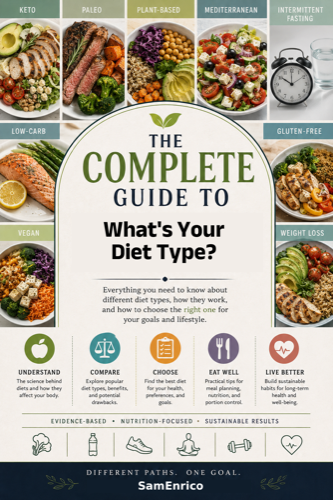 The Complete Guide to What's Your Diet Type?Hammond Helen$11.99
 NYC Pop-Up Sales Tax GuideHammond Helen$12.99