
Non-FictionInformativeEducational
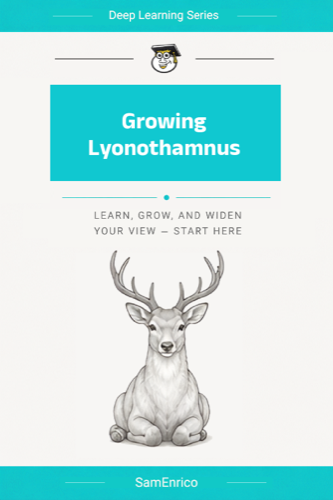
Growing Lyonothamnus eBook
This publication, published by SamEnrico, covers G
by Mendez May
This publication, published by SamEnrico, covers Growing Lyonothamnus
Formats
Free sample
Chapter 1: The Last Survivor...–- Before the first European botanists ever laid hands on a specimen of Lyonothamnus, before it received its Latin name, before it was ever planted in a single garden, this tree had already survived the apocalypse. Not the apocalypse of human imagination—no fire, flood, or famine of biblical proportion—but the slow, indifferent apocalypse of climate change, competition, and geological time. While mammoths roamed California and saber-toothed cats stalked the coastal valleys, Lyonothamnus flourished across the mainland. Then, somewhere between the Pliocene and the Pleistocene, the world shifted. Summers grew longer and drier.
New trees evolved faster, competed harder, and claimed territory. One by one, the ironwood populations on the mainland blinked out. By the time humans first crossed the land bridges into the Americas, Lyonothamnus had already retreated to its last redoubts: the wind-scoured, fog-shrouded, rocky slopes of the Channel Islands. This is not a tree that learned to thrive everywhere. It is a tree that learned to survive in one place, perfectly and precisely, and then waited.The story of growing Lyonothamnus in a garden is not a story of conquest or domestication.
It is a story of negotiation. You cannot force this tree to grow where it does not wish to grow. You cannot trick it with fertilizer or coddle it with excessive water or bully it with pruning shears. What you can do is understand where it came from, what it needs, and why those needs are so specific. Then, and only then, can you become a steward of one of the most remarkable living fossils in the North American flora.The Weight of Deep Time To understand Lyonothamnus, you must first understand the scale of its loneliness in the plant kingdom.
This genus is what botanists call monotypic—it contains only one living species, Lyonothamnus floribundus, which itself divides into two subspecies. In an era of hyper-specific taxonomy where every minor variation earns a new name, a monotypic genus is a botanical declaration of isolation. Lyonothamnus has no close living relatives. Its nearest cousins, whatever they once were, have vanished entirely from the Earth. It stands alone, the last of its evolutionary lineage, a single candle flickering at the end of a long, dark hall.Fossil evidence tells a startling story.
Paleobotanists have identified Lyonothamnus leaves and fruits in Miocene and Pliocene deposits across California, Nevada, and even as far east as Colorado. Twenty million years ago, these trees were not rare endemics clinging to offshore islands. They were a significant component of the western North American forest, growing alongside oaks, maples, and sequoias in a landscape that was warmer and more seasonal than today's but still far wetter than modern coastal California. The leaves from these fossils are nearly identical to those of the living tree, a testament to evolutionary stability. Lyonothamnus found a winning formula early and stuck with it.Then came the drying.
The uplift of the Sierra Nevada and the Coast Ranges, the cooling of the Pacific Ocean, and the establishment of the Mediterranean climate pattern that defines modern California all conspired against the ironwood. The summers that arrived three million years ago were longer, hotter, and almost entirely rainless. Many trees adapted by developing deeper root systems, smaller leaves, or drought-deciduous habits. Others simply moved—migrating south or east in pursuit of favorable conditions. Lyonothamnus did neither effectively.
It was too specialized for the ancient climate and not plastic enough to adapt quickly to the new one. Mainland populations shattered into isolated fragments, then winked out entirely.The Channel Islands became the ark. Separated from the mainland by rising sea levels after the last glacial maximum, the small populations of ironwood that survived on Santa Cruz, Santa Rosa, and San Clemente (and reportedly on Catalina, though this is debated among botanists) were cut off from the competition and pathogens that had finished off their mainland kin. In this island refuge, the species stabilized. It did not diversify into new forms—it simply persisted, generation after generation, on rocky slopes where few other trees could gain a foothold.This evolutionary backstory is not merely academic trivia.
It is the key to everything that follows in this book. When you plant a Lyonothamnus in your garden, you are not planting a generalist. You are planting a specialist that evolved for a very specific set of conditions: rocky, fast-draining soils; mild, wet winters; dry, fog-moderated summers; and the absence of intense root competition. Ignore these conditions, and the tree will die slowly or quickly, but it will die. Respect them, and you will have a tree that outlives you, your children, and perhaps your grandchildren.The Great Split: Two Subspecies, One Legacy Before you can grow Lyonothamnus, you must know which one you are growing.
The genus divides cleanly into two subspecies, and the horticultural world has very strong opinions about both.The Workhorse: Lyonothamnus floribundus ssp. aspleniifolius This is the ironwood you will find in nurseries—if you can find it at all. Known commonly as the Fern-leaf Ironwood or Santa Cruz Island Ironwood, this subspecies is the one that captures the imagination of gardeners and landscape architects. Its leaves are the first giveaway: they are compound, deeply lobed, and so finely divided that they truly resemble the fronds of a fern. Each leaflet is narrow, dark green on the upper surface, paler and slightly glaucous beneath, and arranged in a feathery pattern along the stem.
Crush a leaf between your fingers, and you will release a sharp, resinous fragrance—clean, almost medicinal, with hints of pine and bay laurel. This is not a subtle scent; it announces itself.The bark of ssp. aspleniifolius is perhaps its most dramatic ornamental feature. As the tree matures, the outer bark peels away in long, thin, vertical strips, revealing a smooth, polished surface underneath that ranges from deep cinnamon to mahogany red. The effect is reminiscent of Arbutus menziesii (Pacific madrone) or Prunus serrula (Tibetan cherry), but on a larger, more architectural scale.
In the wild, old specimens can develop trunks that look less like wood and more like sculpted metal—twisted, fluted, and gleaming in the afternoon light.The flowers arrive in summer, typically June or July, in flat-topped clusters called corymbs. Each individual flower is small, perhaps a quarter-inch across, with five white petals and a prominent central cluster of stamens. But the collective display is striking: a mature tree can produce hundreds of these clusters, creating a foam of white against the dark green foliage. The flowers are not strongly fragrant, but they are attractive to a wide range of native pollinators, including bumblebees, solitary bees, and several species of flies and beetles.In cultivation, ssp. aspleniifolius reaches 30 to 50 feet in height and 15 to 25 feet in width.
The form is typically upright and somewhat oval in youth, becoming more irregular and open with age. Some specimens develop a single, dominant trunk; others branch low and form a multi-stemmed, vase-shaped silhouette. Both forms are acceptable in gardens, as we will discuss in later chapters, and each offers a different aesthetic.The Rarity: Lyonothamnus floribundus ssp. floribundus If ssp. aspleniifolius is the star of the show, ssp.
floribundus is the elusive understudy that almost never takes the stage. Known simply as the Catalina Ironwood (though its presence…
This is the end of the free sample. Get the eBook to keep going. Buy now
About this book
Details
- Author
- Mendez May
- Publisher
- SamEnrico
- Language
- English
- Genre
- Non-Fiction, Informative, Educational
- Released
- 2026-05-11
- Pages (approx.)
- 145
- Available as
- eBook, Audiobook

Read better in the ZLOADR app
Your eBooks on your phone or tablet. Sign in with your SamEnrico account and start reading.
More by Mendez May
 The MBSR for Tinnitus ReliefMendez May$11.99
 No More Mr. AngryMendez May$11.99
 Medical Residency MentorshipMendez May$11.99
 Altitude Sickness PreventionMendez May$11.99
 Self Esteem After Missing PromotionMendez May$11.99
 Private Antitrust DamagesMendez May$11.99
 Pollen and Spore ForensicMendez May$11.99
 Assertiveness For MediatorsMendez May$11.99
 Barrymore Dynasty - John BarrymoreMendez May$11.99
 The Velvet Revolution: How a Secretive Chinese Designer Toppled the Luxury IndustryMendez May$11.99
 The Samurai of Rugby: Japan's Unlikely World Cup Triumph (1987-2000)Mendez May$11.99
 Frozen Genius: The Arctic Theorem That Changed Mathematics ForeverMendez May$11.99
You may also like
 Hong Kong Handover 1997Dunn Johnnie$11.99
 Zumba For Postnatal Recovery CourseNeal Christian$11.99
 Zumba for BeginnersLadner Nikia$11.99
 YouTube Comment Mining GuideHumes Pandora$12.99
 Worry Box MeditationCarlin Rudy$11.99
 Workplace Stress MeditationNguyen Lynn$11.99
 Workplace Stress and Sleep RepairHawley Ivory$11.99
 Workplace Perfectionism CureDelaney Jeffry$11.99
 Workplace Injustice Anger GuideWallen Isabelle$11.99
 Work Addiction and Burnout LinkGreenwood Ester$11.99
 Women in Yoga and WellnessBeattie Galina$11.99
 Women in Stand Up ComedyChun Evangeline$11.99