
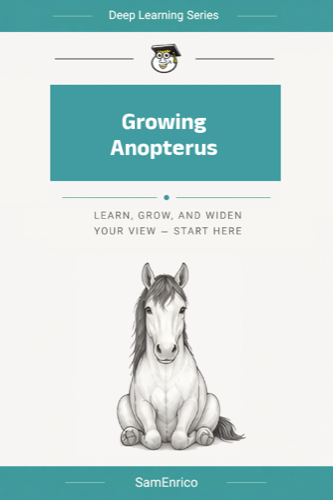
Non-FictionInformativeEducational
Growing Anopterus
This publication, published by SamEnrico, covers G
This publication, published by SamEnrico, covers Growing Anopterus
Formats
About this book
Free sample
Chapter 1: The Living Fossil--–- The first thing you need to understand about Anopterus is that it has no business existing in your garden. It belongs to a world that largely disappeared thirty million years ago, when the ancient supercontinent of Gondwana fractured and drifted apart, carrying its living cargo toward separate destinies. Australia, Antarctica, and South America each took fragments of the same temperate rainforest flora, and those fragments evolved in isolation. Anopterus stayed behind on the Australian plate, and there it remained, unseen by European eyes until the 1840s, when a Scottish-born naturalist named William Mac Leay collected the first specimens from the rainforests of the Mc Pherson Range, straddling the border of what is now Queensland and New South Wales. He sent them to London, where John Lindley—one of the great botanists of the Victorian era—examined the leaves and flowers and realized he was looking at something genuinely new.
Lindley named the genus Anopterus from the Greek words ano (upward or above) and pteron (wing), a reference to the winged seeds that distinguish this genus from its close relatives in the Escalloniaceae family.But Lindley made a mistake that would confuse gardeners for more than a century. He described only one species, Anopterus macleayanus, named after its discoverer. He had no idea that a second species existed on the island of Tasmania, separated by Bass Strait and by hundreds of kilometers of ocean that had drowned the land bridge connecting Tasmania to the mainland around twelve thousand years ago. That second species—Anopterus glandulosus, the Tasmanian laurel—would not be formally described until 1861, and even then, botanists argued for decades about whether it was truly distinct from its mainland cousin. The confusion persists to this day.
Walk into any specialist nursery that carries Anopterus, and you will find customers asking for "the Tasmanian one" or "the mainland one" as if they were the same plant with different postcodes. They are not. Understanding the difference between these two species is the single most important factor in whether you will succeed or fail as an Anopterus grower.Two…
This is the end of the free sample. Get the eBook to keep going. Buy now
Contents
- Chapter 1
- Chapter 2
- Chapter 3
- Chapter 4
- Chapter 5
- Chapter 6
- Chapter 7
- Chapter 8
- Chapter 9
- Chapter 10
- Chapter 11
- Chapter 12
Details
- Author
- Faulk Jeannetta
- Publisher
- SamEnrico
- Language
- English
- Genre
- Non-Fiction, Informative, Educational
- Released
- 2026-06-02
- Pages (approx.)
- 109
- Available as
- eBook, Audiobook

Read better in the ZLOADR app
Your eBooks on your phone or tablet. Sign in with your SamEnrico account and start reading.
More by Faulk Jeannetta
 Bipolar Disorder Self Talk GuideFaulk Jeannetta$11.99
 Stress Fibromyalgia Pain GuideFaulk Jeannetta$11.99
 Step Eleven Nightly Review Meditation CourseFaulk Jeannetta$11.99Step Eleven Nightly Review Meditation CourseFaulk Jeannetta$11.99
 Active Listening SkillsFaulk Jeannetta$11.99
 Ranked Mode Competitive AddictionFaulk Jeannetta$11.99
 Sabbatical Negotiation GuideFaulk Jeannetta$11.99
 ER Doctor Burnout RescueFaulk Jeannetta$11.99
 Suicide Loss and ExerciseFaulk Jeannetta$11.99
 The Golden Architects of Great Zimbabwe: Stones of MajestyFaulk Jeannetta$11.99
 The Silk Road of Song: The Forgotten Poets of the Yuan DynastyFaulk Jeannetta$11.99
 How to Produce a MinecartFaulk Jeannetta$11.99
You may also like
 Hong Kong Handover 1997Dunn Johnnie$11.99
 Zumba For Postnatal Recovery CourseNeal Christian$11.99
 Zumba for BeginnersLadner Nikia$11.99
 YouTube Comment Mining GuideHumes Pandora$12.99
 Worry Box MeditationCarlin Rudy$11.99
 Workplace Stress MeditationNguyen Lynn$11.99
 Workplace Stress and Sleep RepairHawley Ivory$11.99
 Workplace Perfectionism CureDelaney Jeffry$11.99
 Workplace Injustice Anger GuideWallen Isabelle$11.99
 Work Addiction and Burnout LinkGreenwood Ester$11.99
 Women in Yoga and WellnessBeattie Galina$11.99
 Women in Stand Up ComedyChun Evangeline$11.99