
Non-FictionInformativeEducational
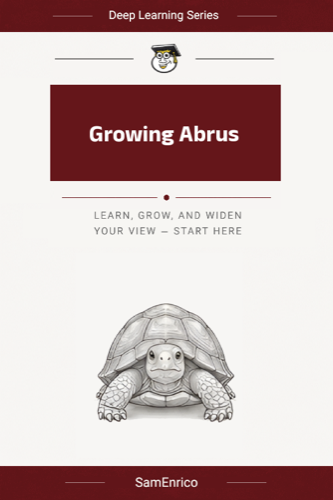
Growing Abrus
This publication, published by SamEnrico, covers G
by Razo Ronna
This publication, published by SamEnrico, covers Growing Abrus
Formats
About this book
Free sample
Chapter 1: The Devil’s Beads--– In the winter of 2019, a small padded envelope arrived in my mailbox. No return address. No note. Just a faint rattle from within, like dry beans in a child’s toy. I slit the tape with a kitchen knife and tipped the contents onto my palm.
Five seeds. Each one no larger than a ladybug, yet impossibly vivid—a glossy, blood-red oval capped with a perfect black circle, as if painted by a miniature hand centuries ago. I had never seen anything so beautiful and so unsettling at the same time. I didn't know it then, but those five seeds would consume three years of my life, cost me a small fortune in safety equipment, and very nearly kill me.That is the nature of Abrus precatorius. It seduces before it destroys.Known colloquially as the rosary pea, jequirity bean, crab’s eye, or gunja in Sanskrit, this unassuming vine produces what many botanists consider the most beautiful poisonous seed in the world.
The contrast is deliberate—nature’s warning colors are often its most alluring. The red attracts birds, which eat the seeds and disperse them over vast distances. The black spot, or hilum, marks where the seed once attached to the pod. Together, they form an image that has inspired jewelry, prayer beads, musical instruments, and, inevitably, poisonings both accidental and intentional for thousands of years.This book is not a celebration of danger. It is not a thrill-seeker’s manual or a clandestine guide to extracting toxins.
It is, instead, a horticultural biography of a plant that demands respect on a level that few others do. To grow Abrus precatorius is to enter into a contract with risk—a contract that requires you to understand exactly what you are handling, why it matters, and how to do so without hurting yourself, your family, your livestock, or your local ecosystem.Let me be clear from the first page: every seed must be treated as toxic regardless of whether the coat appears intact. This is not hyperbole. It is the foundation upon which all safe cultivation…
This is the end of the free sample. Get the eBook to keep going. Buy now
Contents
- Chapter 1
- Chapter 2
- Chapter 3
- Chapter 4
- Chapter 5
- Chapter 6
- Chapter 7
- Chapter 8
- Chapter 9
- Chapter 10
- Chapter 11
- Chapter 12
Details
- Author
- Razo Ronna
- Publisher
- SamEnrico
- Language
- English
- Genre
- Non-Fiction, Informative, Educational
- Released
- 2026-05-18
- Pages (approx.)
- 144
- Available as
- eBook, Audiobook

Read better in the ZLOADR app
Your eBooks on your phone or tablet. Sign in with your SamEnrico account and start reading.
More by Razo Ronna
 Crisis Legal Hold OutbreakRazo Ronna$11.99
 BDC Dividend Investing HandbookRazo Ronna$11.99
 Sleep Recovery BurnoutRazo Ronna$11.99
 Fitness Gym Memory CircuitRazo Ronna$11.99
 The Foster Care BabysitterRazo Ronna$11.99
 Infant Death Grief WorkbookRazo Ronna$11.99
 French Resistance Sabotage OperationsRazo Ronna$11.99
 DoorDash Acceptance Rate GuideRazo Ronna$11.99
 The Flying Finn: Paavo Nurmi’s Unstoppable Olympic ReignRazo Ronna$11.99
 Trollheim’s Forgotten Spire: The Architect of the Mountain GiantsRazo Ronna$11.99
 How to Produce Window Valances and CornicesRazo Ronna$11.99
 How to Produce Mattock and Pickaxe HandlesRazo Ronna$11.99
You may also like
 Hong Kong Handover 1997Dunn Johnnie$11.99
 Zumba For Postnatal Recovery CourseNeal Christian$11.99
 Zumba for BeginnersLadner Nikia$11.99
 YouTube Comment Mining GuideHumes Pandora$12.99
 Worry Box MeditationCarlin Rudy$11.99
 Workplace Stress MeditationNguyen Lynn$11.99
 Workplace Stress and Sleep RepairHawley Ivory$11.99
 Workplace Perfectionism CureDelaney Jeffry$11.99
 Workplace Injustice Anger GuideWallen Isabelle$11.99
 Work Addiction and Burnout LinkGreenwood Ester$11.99
 Women in Yoga and WellnessBeattie Galina$11.99
 Women in Stand Up ComedyChun Evangeline$11.99