
Non-FictionBusiness BriefEco-Compliance
FSC Certification Export Guide eBook
Get Forest Stewardship Council certification for w
Get Forest Stewardship Council certification for wood and paper exports. Sustainable forestry standards.
Formats
Free sample
Chapter 1: The New Export Landscape...--–- It begins not in a forest, but at a shipping container terminal. Rotterdam, to be precise—the largest port in Europe. Somewhere among the endless stacks of corrugated steel, forty containers of premium plywood from Southeast Asia sit under a grey Dutch sky. They have been there for six months. The wood is legally harvested.
The export permits are in order. The buyer, a major German furniture retailer, is ready to pay. Yet the containers remain sealed, accumulating storage fees of €12,000 per day.The problem is not the wood. The problem is the paperwork. Or more precisely, the absence of a specific piece of documentation that until five years ago almost no one in the timber trade had ever heard of.
The exporter cannot prove, to the satisfaction of European customs authorities, that every tree in every container came from a forest managed according to the standards of the Forest Stewardship Council. Without that proof, the retailer will not accept delivery. Without that acceptance, the containers will not move. Without that movement, the exporter will lose the shipment, the buyer, and possibly the business.This is not a hypothetical scenario. It happened.
And it is happening, in various forms, across dozens of ports on three continents, as the global timber trade undergoes the most fundamental transformation since the invention of the chainsaw.The era of simply cutting trees, loading them onto a ship, and selling them to the highest bidder is over. It ended quietly, not with a single dramatic announcement but with a cascade of regulations, corporate commitments, and consumer expectations that have collectively turned voluntary sustainability standards into de facto mandatory trade requirements. The Forest Stewardship Council (FSC) certification, once a niche marketing tool for environmentally conscious brands, has become the price of entry for exporting wood and paper products to the European Union, the United Kingdom, Japan, and an increasing number of North American buyers.This chapter sets the stage for everything that follows. It explains why FSC certification has shifted from optional to essential, how new regulations like the European Union Deforestation Regulation (EUDR) are reshaping global supply chains, what price premiums certified products actually command, and what happens to companies that fail to adapt. By the end of this chapter, you will understand that FSC certification is not merely an environmental exercise—it is a strategic business imperative for market access, risk management, and long-term survival in the international timber trade.The Collapse of the "Cut and Ship" Model For most of the twentieth century, the international timber trade operated on a remarkably simple model.
A forest owner in Indonesia, Brazil, or Canada harvested trees. A sawmill processed them into lumber, plywood, or pulp. An exporter loaded the product onto a container ship. An importer in Europe, the United States, or Japan paid for it. The only documentation required was a bill of lading, a commercial invoice, and perhaps a phytosanitary certificate.
Legality was assumed unless proven otherwise.That model has collapsed. The primary cause is not environmental activism, though activism played a role. The primary cause is regulation—specifically, the European Union Deforestation Regulation (EUDR), which took full effect in 2024 after a transition period that began in 2021. The EUDR requires any company placing wood products—along with cattle, cocoa, coffee, oil palm, rubber, and soy—on the EU market to prove three things with absolute certainty.First, the products did not come from land that was deforested after December 31, 2020. This is not a vague aspiration.
It is a hard deadline. Any tree harvested from land cleared after that date is illegal to import into the EU, regardless of how sustainably the remaining forest is managed.Second, the products were produced in accordance with all applicable laws of the country of origin. This includes not only forestry laws but also tax laws, labor laws, land tenure laws, and environmental regulations. A single violation anywhere in the supply chain can render an entire shipment non-compliant.Third, the importer has exercised due diligence to verify both of the above. Due diligence is not a passive check-the-box exercise.
It requires collecting geolocation coordinates of every plot of land where the timber was harvested, analyzing satellite imagery to confirm no deforestation occurred, and maintaining chain of custody documentation that traces the product from forest to factory to port.The EUDR is not the only regulation reshaping the trade. The United Kingdom, despite leaving the European Union, maintains its own Timber Regulations (UKTR), which operate on a similar principle of due diligence but with different risk categories. The United States Lacey Act, originally passed in 1900 to combat wildlife trafficking and amended in 2008 to include plants and plant products, prohibits the import of any wood harvested in violation of the laws of the country of origin. Unlike the EUDR, the Lacey Act does not prohibit deforestation per se—only illegal deforestation—but because many timber-exporting countries have laws protecting certain forests, the practical effect is similar.What makes these regulations genuinely transformative is not their individual requirements but their cumulative effect. An exporter selling the same product to buyers in Germany, the United Kingdom, and the United States must satisfy three different legal regimes simultaneously.
Each requires different documentation. Each defines "compliance" differently. Each imposes different penalties for failure. And increasingly, each is enforced with a rigor that would have been unthinkable a decade ago.The Role of FSC in the New Regulatory Landscape Where does FSC certification fit into this picture? Not as a substitute for legal compliance, but as an extraordinarily efficient tool for demonstrating it.
The EUDR explicitly references certification schemes, including FSC, as a means of demonstrating "negligible risk" of deforestation. Certification alone is not automatic compliance—a point emphasized throughout this book—but a valid FSC certificate, combined with geospatial data and a due diligence statement, significantly reduces the burden of proof on the importer.The reason is structural. FSC certification already requires many of the elements that the EUDR demands. The FSC Chain of Custody standard (FSC-STD-40-004) requires certificate holders to maintain records tracing wood from certified forests to final products. The FSC Controlled Wood standard requires risk assessments for five categories of unacceptable material, including illegal harvest and conversion of natural forests.
The FSC Forest Management standard requires management plans that include maps of forest boundaries, harvest blocks, and protected areas—exactly the kind of geospatial data that EUDR demands.In other words, an exporter with a valid FSC certificate has already done most of the work required for EUDR compliance. The remaining gap is relatively small: converting existing maps into the specific geolocation coordinate format (latitude/longitude polygons) that the EUDR requires, and generating a satellite-based deforestation analysis for the cutoff date. Chapter 9 of this book provides step-by-step instructions for exactly that process.For the UK Timber Regulations, the fit is even tighter. The UK government has designated FSC certification as acceptable evidence of due diligence for low-risk countries (Category A). For higher-risk countries (Category B), FSC certification is not sufficient alone but is treated as strong evidence that can be supplemented with additional documentation.For the US Lacey Act, FSC certification is not mentioned in the statute itself…
This is the end of the free sample. Get the eBook to keep going. Buy now
About this book
Details
- Author
- Sexton Clarissa
- Publisher
- SamEnrico
- Language
- English
- Genre
- Non-Fiction, Business Brief, Eco-Compliance
- Released
- 2026-05-30
- Pages (approx.)
- 122
- Available as
- eBook, Audiobook

Read better in the ZLOADR app
Your eBooks on your phone or tablet. Sign in with your SamEnrico account and start reading.
More by Sexton Clarissa
 Beginner Mindfulness for EmpathsSexton Clarissa$11.99
 Billy Graham Evangelism LegacySexton Clarissa$11.99
 The First 30 Days GuideSexton Clarissa$11.99
 The Complicated Grief Writing GuideSexton Clarissa$11.99
 The Slack Communication MasterySexton Clarissa$11.99
 The Silk Road Gambit: The Merchant Prince Who Outwitted the MongolsSexton Clarissa$11.99
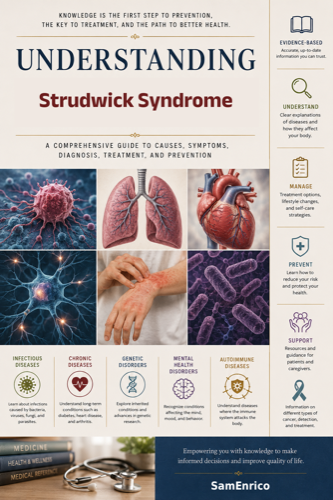 Understanding Strudwick SyndromeSexton Clarissa$17.99
 Courier DeliverooSexton Clarissa$11.99
 Social Media Generations ReportSexton Clarissa$12.99
 How to Start a Call Centres Working on a Fee or Contract Basis Business (Beginners Guide)Sexton Clarissa$11.99
You may also like
 Hong Kong Handover 1997Dunn Johnnie$11.99
 Zumba For Postnatal Recovery CourseNeal Christian$11.99
 Zumba for BeginnersLadner Nikia$11.99
 YouTube Comment Mining GuideHumes Pandora$12.99
 Worry Box MeditationCarlin Rudy$11.99
 Workplace Stress MeditationNguyen Lynn$11.99
 Workplace Stress and Sleep RepairHawley Ivory$11.99
 Workplace Perfectionism CureDelaney Jeffry$11.99
 Workplace Injustice Anger GuideWallen Isabelle$11.99
 Work Addiction and Burnout LinkGreenwood Ester$11.99
 Women in Yoga and WellnessBeattie Galina$11.99
 Women in Stand Up ComedyChun Evangeline$11.99