
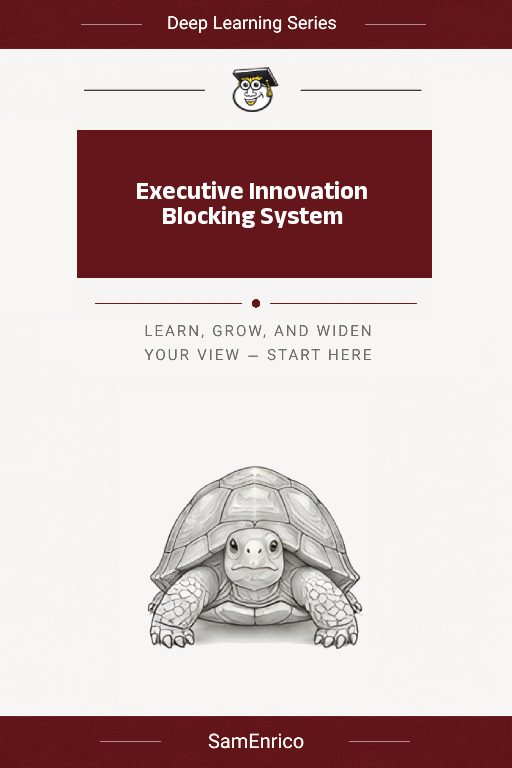
Non-FictionProfessional's Cheat SheetInnovation Management
Executive Innovation Blocking System eBook
Protects time for blue-sky thinking, new product d
Protects time for blue-sky thinking, new product development, and competitive analysis, driving future growth.
Formats
Free sample
Chapter 1: The Yes Trap--Most leaders believe they are drowning in problems when, in fact, they are drowning in solutions.Walk into almost any corporate headquarters and you will hear the same complaint echoing from the executive suite to the breakroom: “We don’t have enough good ideas.” The product team says it. The marketing team says it. The board of directors certainly says it. And because they believe they suffer from a scarcity of ideas, they do what seems logical: they beg for more. They launch innovation challenges.
They install digital suggestion boxes. They hold all-hands brainstorming sessions where the only rule is “no bad ideas.”But here is the truth that no one wants to admit: the problem has never been a lack of ideas. The problem is an excess of them.I have spent the last decade studying how executives allocate attention, capital, and talent toward future growth. I have sat in strategy rooms where twenty-seven projects were labeled “top priority.” I have watched CEOs nod enthusiastically at ninety-minute pitch decks for ideas that directly contradicted the strategy they had approved three months earlier. I have seen brilliant, exhausted leaders say “yes” to yet another initiative because they couldn’t bear the discomfort of saying “no.”And I have watched companies die from it.Not quickly.
Not dramatically. But slowly, quietly, in the way that organizations always die: not from a single catastrophic failure, but from a thousand small distractions that collectively strangle the future.This chapter introduces the central paradox that the entire Executive Innovation Blocking System is built upon. It is a simple paradox, but one that most leaders find genuinely uncomfortable to confront. Here it is:The more you say yes to good ideas, the less room you have for great ones.The more you protect the present, the more you sacrifice the future.The more you try to make everyone happy, the faster you guarantee that no one will be.The Invention of the “Yes” Culture To understand why we became addicted to saying yes, we have to go back to the early days of the modern innovation movement. In the 1990s and early 2000s, a wave of books and consultants convinced corporate America that the primary enemy of innovation was bureaucracy.
The argument was compelling, because it was partially true. Hierarchies kill ideas. Approval matrices strangle speed. Risk aversion turns potential breakthroughs into incremental nothingness.In response, companies swung hard in the opposite direction. They flattened hierarchies.
They embraced “radical candor.” They adopted the mantra that became the unofficial slogan of a generation of leaders: “Say yes, and figure it out later.”Google’s “20% time” policy was born from this philosophy. So was Amazon’s “disagree and commit.” So was Netflix’s famous culture deck, which celebrated “freedom and responsibility” above almost everything else. These were not bad ideas. In fact, for companies of a certain size and stage, they were exactly the right ideas.But here is what no one noticed at the time: those policies worked not because they said yes to everything, but because they said yes to a very specific set of things that aligned with a very clear strategy. Google’s 20% time produced Gmail and Ad Sense because the company had an ironclad strategic filter underneath the experimental freedom.
The freedom existed within constraints, not outside of them.Somewhere along the way, we forgot the constraints. We kept the freedom. And we ended up with a mess.The Resource Fluidity Fallacy Let me introduce a concept that will appear throughout this book: Resource Fluidity. It sounds academic, but it is actually quite simple. Resource Fluidity is the ability to move capital, talent, and attention away from low-impact projects and toward high-impact opportunities.
That is it. Nothing more.Here is why Resource Fluidity matters: in a static organization, resources get stuck. The marketing budget is locked in for the year. The engineering team is already allocated to three “must-deliver” projects. The executive’s calendar is booked solid for the next two weeks with meetings that were scheduled last month.
Nothing moves. Nothing changes. And when a genuinely new opportunity appears, there is simply no room to pursue it.The traditional response to this problem has been to add more resources. Hire more people. Increase the budget.
Buy more software. But that approach has a hidden cost: it treats the symptom, not the disease. Adding resources without first creating resource fluidity is like pouring water into a cracked bucket. The new people will simply get assigned to the same old meetings. The new budget will get absorbed by the same old projects.
The new software will become just another channel for the same old interruptions.The only way to create genuine resource fluidity is to remove things. To stop doing what is not essential. To decline the good so that you have room for the great.And that requires a system for saying no.The Anatomy of a Bad Yes Not all yeses are created equal. Some yeses are obviously destructive. Approving a project that has a negative net present value.
Agreeing to a partnership that dilutes your brand. Hiring someone who is clearly a cultural misfit. These are the easy noes. They require almost no courage, because the consequences of saying yes are immediately visible.The dangerous yeses are the ones that look good on the surface.Consider a typical Tuesday morning in the life of a senior product executive. Her team has just completed a customer feedback survey.
The results are generally positive, but there is one consistent piece of feedback: “We wish the reporting dashboard had a dark mode option.”It is a reasonable request. A dark mode dashboard would take approximately two weeks of engineering time to build. It would make a subset of customers happier. It might even reduce churn by a fraction of a percent.So the executive says yes.What is the cost of that yes? On the surface, two weeks of engineering time and a small amount of product management attention.
But here is what the executive does not see: those two weeks of engineering time were originally allocated to a new feature that could open an entirely new market segment. That feature would have taken eight weeks to build. By shifting two weeks to dark mode, the executive has just delayed the market-opening feature by two weeks.Now add five more “small” yeses over the course of the quarter. Suddenly, the market-opening feature is delayed by ten weeks. By the time it launches, a competitor has beaten you to market.
The opportunity is gone. And no one can point to a single bad decision. Every yes was individually defensible. But collectively, they killed your future.This is the anatomy of a bad yes. It is not a yes to something obviously wrong.
It is a yes to something that is merely good—and therefore indistinguishable, in the moment, from something that is great.The Defense vs. Creation Litmus Test If every good idea feels defensible, how do you decide which ones to decline? The answer lies in a simple question that you can ask about any proposed project, feature, or initiative:Does this idea…
This is the end of the free sample. Get the eBook to keep going. Buy now
About this book
Details
- Author
- Grossman Florance
- Publisher
- SamEnrico
- Language
- English
- Genre
- Non-Fiction, Professional's Cheat Sheet, Innovation Management
- Released
- 2026-05-29
- Pages (approx.)
- 125
- Available as
- eBook, Audiobook

Read better in the ZLOADR app
Your eBooks on your phone or tablet. Sign in with your SamEnrico account and start reading.
More by Grossman Florance
 Priority Habits Long Term GuideGrossman Florance$11.99
 German Immigrant IndustrialistsGrossman Florance$11.99
 Human Growth Hormone HistoryGrossman Florance$11.99
 Grading Comment Bank BuilderGrossman Florance$11.99
 ABCDE for New Managers GuideGrossman Florance$11.99
 The Frozen Symphony: The Day the Music Died in AntarcticaGrossman Florance$11.99
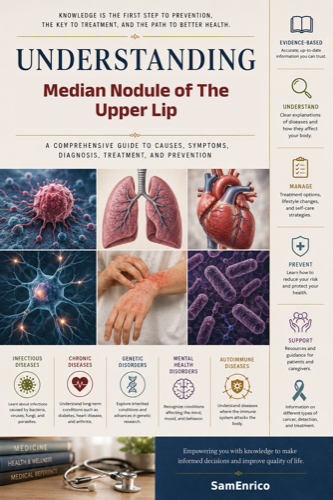 Understanding Median Nodule of The Upper LipGrossman Florance$17.99
 India Raise Promotion PathGrossman Florance$12.99
 Private InvestigatorGrossman Florance$11.99
 How to Become a Net WasherGrossman Florance$11.99
You may also like
 Hong Kong Handover 1997Dunn Johnnie$11.99
 Zumba For Postnatal Recovery CourseNeal Christian$11.99
 Zumba for BeginnersLadner Nikia$11.99
 YouTube Comment Mining GuideHumes Pandora$12.99
 Worry Box MeditationCarlin Rudy$11.99
 Workplace Stress MeditationNguyen Lynn$11.99
 Workplace Stress and Sleep RepairHawley Ivory$11.99
 Workplace Perfectionism CureDelaney Jeffry$11.99
 Workplace Injustice Anger GuideWallen Isabelle$11.99
 Work Addiction and Burnout LinkGreenwood Ester$11.99
 Women in Yoga and WellnessBeattie Galina$11.99
 Women in Stand Up ComedyChun Evangeline$11.99