
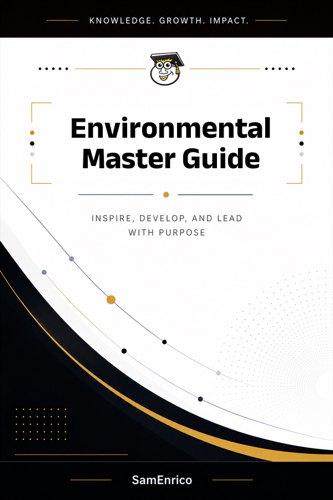
Non-FictionHealth & WellnessComplete
Environmental Master Guide eBook
Complete reference for toxins and prevention.
Complete reference for toxins and prevention.
Formats
Free sample
Chapter 1: The Chemical Self...--Imagine opening your medicine cabinet and finding a bottle labeled "Chronic Fatigue – Take as needed." Or reaching for a prescription called "Infertility Solution" with a note that says "May take 20 years to work." Absurd, right? We don't expect single pills to undo decades of damage. Yet most of us live as if our bodies are immune to the slow, silent accumulation of industrial chemicals we encounter every single day – in our water, our food, the furniture we sit on, and the air we breathe.This chapter introduces the central problem of environmental health: you are not who you think you are. The body you inhabit today is not the body you were born with. It is a living archive – a biological scrapbook of every chemical exposure, every meal, every breath, and every product you have applied to your skin since the day you were born.
This is not metaphor. It is measurable, testable, and increasingly, it is the difference between thriving and merely surviving.We live in what environmental health scientists call the "chemical soup" – a world saturated with over 80,000 synthetic compounds invented since World War II. Before 1945, the vast majority of chemicals humans encountered were natural: plant alkaloids, minerals, animal fats, and simple combustion products. Today, the average person carries traces of hundreds of synthetic chemicals in their blood, urine, and fat tissue – including compounds that did not exist when your grandparents were born. Some of these chemicals, like DDT and PCBs, were banned decades ago yet remain inside you because they simply do not break down.
Others, like PFAS (per- and polyfluoroalkyl substances), are so persistent that scientists call them "forever chemicals" – and they now contaminate global rainwater, Arctic ice, and the placentas of pregnant women worldwide.The purpose of this chapter is to fundamentally shift how you understand your own body. By the time you finish reading, you will no longer see chronic illness as a random tragedy or bad luck. You will see it as a predictable outcome of cumulative exposure – and more importantly, you will understand that prevention is not only possible but practical. This is not about fear. It is about awakening to a reality that medicine has been slow to accept: our environment is writing the story of our health, and we have the power to become the authors.The 80,000-Question Problem Let us start with a simple question: How many synthetic chemicals do you think have been tested for long-term human safety before entering the market?The answer, if you are optimistic, might be "most of them." The correct answer is far more disturbing.Since the end of World War II, the global chemical industry has produced approximately 80,000 to 100,000 synthetic compounds for commercial use – pesticides, plastics, flame retardants, solvents, cosmetic preservatives, food additives, and industrial lubricants, among others.
These chemicals are in your carpet, your mattress, your non-stick frying pan, your shampoo, your takeout container, your children's pajamas, and the receipt you crumple and throw away after buying groceries.Under the Toxic Substances Control Act of 1976 in the United States – a law that remained largely unchanged for forty years – existing chemicals were "grandfathered in" without safety testing. Of the 62,000 chemicals on the market when the law passed, only a handful were ever evaluated for human health effects. The Environmental Protection Agency (EPA) has successfully required testing for fewer than 200 of those chemicals. The rest were simply assumed safe.The European Union takes a different approach. Under the REACH regulation (Registration, Evaluation, Authorisation and Restriction of Chemicals), manufacturers must provide safety data before a chemical can be marketed.
As a result, the EU has banned or restricted over 1,400 chemicals from cosmetics alone. The United States has banned eleven.This regulatory gap is not an academic footnote. It is the reason you can walk into any drugstore and buy a shampoo containing phthalates – chemicals linked to male reproductive birth defects, lowered sperm count, and early puberty in girls – while that same product cannot be sold in Paris or Berlin. It is the reason your tap water may contain PFAS, and no law requires your water utility to test for them or tell you they are there. It is the reason your child's pajamas are treated with flame retardants that accumulate in human tissue and lower IQ – because a California flammability standard written in 1975 assumed children played near open flames.The chemical soup is not an accident.
It is the predictable result of a regulatory system that puts the burden of proof on public health rather than on industry. And until that changes – which may take decades – the burden falls on you.The Body Burden: You Are a Walking Archive Here is where the story becomes personal.When you encounter a chemical – whether by drinking contaminated water, breathing polluted air, eating pesticide-treated food, or absorbing phthalates through a lotion on your skin – your body attempts to remove it. The liver processes it. The kidneys filter it. The intestines excrete it.
This is happening constantly, silently, efficiently.But not all chemicals are eliminated.Some molecules are lipophilic – fat-loving. They do not dissolve in water, which means your kidneys cannot flush them out through urine. Instead, they dissolve in fat. Your body, detecting a foreign molecule it cannot eliminate, tucks it away in adipose tissue (body fat), bone marrow, and organs where it will cause the least immediate harm. This is called bioaccumulation, and it is the single most important concept in environmental medicine.Consider DDT, a pesticide banned in the United States in 1972.
If you were born before 1972, you were exposed to DDT through food, air, and perhaps direct contact. Fifty years later, DDT and its breakdown product DDE are still detectable in your fat tissue. They have a half-life in humans of approximately eight to ten years. That means if you had one hundred units of DDT in your body at age twenty, you would have fifty units at age thirty, twenty-five at age forty, and twelve-point-five at age fifty. You will likely die with DDT in your body, even though you have not been exposed in decades.The same is true for PCBs (polychlorinated biphenyls), banned in 1979, still present in everyone alive during their use.
For PBDE flame retardants, phased out starting in 2004, still present. For PFAS, still being manufactured today, present in 99 percent of American blood samples tested by the CDC.This is your body burden – the total accumulation of synthetic chemicals stored in your tissues. It varies from person to person based on where you grew up, what you ate, what job you worked, what products you used, and your genetics. But everyone reading this book carries a body burden. And that burden is not inert.The Dose Makes the Poison – A Dangerous Half-Truth The sixteenth-century physician Paracelsus famously wrote, "It is the dose that makes the poison." His meaning was straightforward: any substance can be toxic at a high enough dose, and even a dangerous substance is harmless at a low enough dose.
For acute poisoning – drinking bleach, inhaling chlorine gas, eating a handful of rat poison – this principle holds true.For chronic, low-dose exposure to mixtures of chemicals, it is dangerously misleading.Here is why. Toxicologists…
This is the end of the free sample. Get the eBook to keep going. Buy now
About this book
Details
- Author
- Heck Jackeline
- Publisher
- SamEnrico
- Language
- English
- Genre
- Non-Fiction, Health & Wellness, Complete
- Released
- 2026-06-05
- Pages (approx.)
- 160
- Available as
- eBook, Audiobook

Read better in the ZLOADR app
Your eBooks on your phone or tablet. Sign in with your SamEnrico account and start reading.
More by Heck Jackeline
 Breaking the Big Win MythHeck Jackeline$11.99
 Vata Pacifying Healing SystemHeck Jackeline$11.99
 Self Talk for Grief GuideHeck Jackeline$11.99
 The Anger and Mindfulness GuideHeck Jackeline$11.99
 Flash Sale CompulsionHeck Jackeline$11.99
 Bait and Switch NightmareHeck Jackeline$11.99
 The Iron Titans: Carnegie, Rockefeller, and the Birth of Modern IndustryHeck Jackeline$11.99
 The Day the Sky Whispered: The Mystery of the 2018 Michigan UFO SwarmHeck Jackeline$11.99
 Agoraphobia ExplainedHeck Jackeline$11.99
 How to Start a Edible Tallow Production Business (Beginners Guide)Heck Jackeline$11.99
 A Collector's Handbook to the Ford Corsair 120eHeck Jackeline$11.99
 How to Produce Tattooing MachinesHeck Jackeline$11.99
You may also like
 Hong Kong Handover 1997Dunn Johnnie$11.99
 Zumba For Postnatal Recovery CourseNeal Christian$11.99
 Zumba for BeginnersLadner Nikia$11.99
 YouTube Comment Mining GuideHumes Pandora$12.99
 Worry Box MeditationCarlin Rudy$11.99
 Workplace Stress MeditationNguyen Lynn$11.99
 Workplace Stress and Sleep RepairHawley Ivory$11.99
 Workplace Perfectionism CureDelaney Jeffry$11.99
 Workplace Injustice Anger GuideWallen Isabelle$11.99
 Work Addiction and Burnout LinkGreenwood Ester$11.99
 Women in Yoga and WellnessBeattie Galina$11.99
 Women in Stand Up ComedyChun Evangeline$11.99