
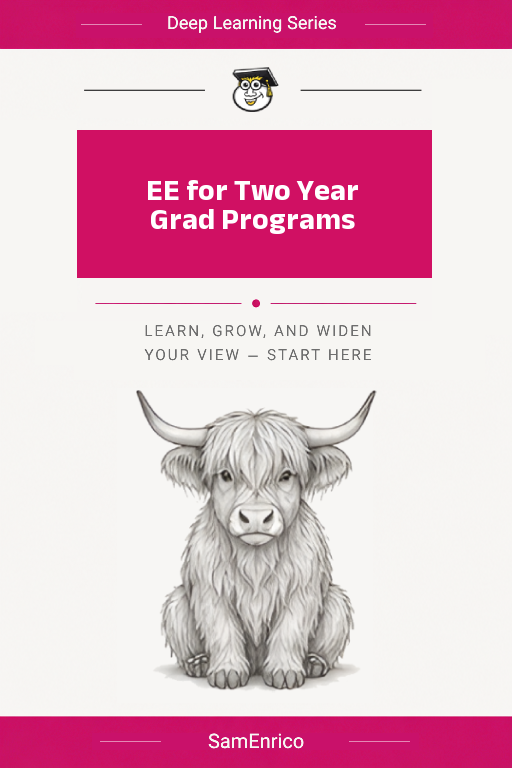
Non-FictionStudent's ShortcutTwo Year Programs
EE for Two Year Grad Programs eBook
Leverage two-year diplomas and associate degrees f
Leverage two-year diplomas and associate degrees for maximum Canadian education points and PGWP length.
Formats
Free sample
Chapter 1: The 22-Point Lie--You have been told, probably by well-meaning people, that a four-year university degree is the only respectable path to Canadian permanent residence. You have heard that a two-year college diploma is a backup option, a consolation prize, or at best a stepping stone to a "real" degree. You might have even been advised by immigration consultants to avoid diplomas altogether because they "don't score enough points."Every single word of that advice is wrong. And the people giving it to you either have not done the math, or they have a financial incentive to push you toward longer, more expensive programs. This chapter is going to show you the real numbers.
And once you see them, you will never look at a two-year diploma the same way again.The 22-point gap between a two-year diploma and a four-year degree is not a canyon. It is a crack. A crack you can close with a few months of work or a slightly better language test score. And when you learn how to stack credentials, you will not just close the gap. You will reverse it.
You will outscore the degree holder while spending less money and less time.Welcome to the truth about the two-year advantage.The Raw Numbers That Change Everything Let us start with the only thing that matters in Express Entry: the points. Every other argument about prestige, reputation, or "what employers want" is noise. The immigration system is a points game. Learn the points, win the game.A two-year diploma or associate degree from a Canadian institution is worth 98 core human capital points. That is the number.
Not 90. Not 85. Not "somewhere around there." Ninety-eight points. Write that number down somewhere you can see it.A four-year bachelor's degree from a Canadian institution is worth 120 core human capital points.The difference between these two numbers is 22 points. That is it.
Twenty-two points separate a two-year diploma from a four-year degree in the most important scoring category of the entire Express Entry system.Now let me put those 22 points into perspective for you. One year of full-time Canadian work experience gives you 40 points. A sibling who is a permanent resident or citizen of Canada gives you 15 points. Improving your English test scores from CLB 7 to CLB 9 gives you an additional 50 points in the skill transferability category. A spouse with CLB 4 in English gives you 20 points.The point is not that 22 points is nothing.
The point is that 22 points is small. It is manageable. It is the kind of gap that can be closed with a few months of strategic effort rather than two additional years of tuition and living expenses.And yet, the immigration industry treats this 22-point gap as if it were an unbridgeable chasm. Consultants point to the 98-point diploma and the 120-point degree and say, "See? The degree is better." They do not tell you that the gap disappears the moment you add a one-year certificate.
They do not tell you that the gap disappears the moment you work for an extra six months. They do not tell you because they either do not know, or they profit from longer programs, or they have simply never done the math.We have done the math. And the math says the two-year diploma is not a second-class credential. It is a foundation for something better.The Stack That Changes Everything Now we get to the part that makes some consultants uncomfortable. The part that will make some readers think I am making things up.
But the numbers are public. You can verify them yourself on the IRCC website.If you complete a two-year diploma and then complete a one-year certificate, your education category changes. You are no longer a "person with a two-year diploma." You become a "person with two or more certificates, diplomas, or degrees."This category is worth 128 core human capital points.Let me say that again. One hundred and twenty-eight points.Compare that to the four-year degree. The bachelor's degree is worth 120 points.
The two credentials combined are worth 128 points. That is an eight-point advantage for the diploma-and-certificate holder over the bachelor's degree holder.Read that sentence one more time. A student who completes a two-year diploma and then a one-year certificate has a higher core education score than a student who completes a four-year bachelor's degree.The diploma path outscored the degree path by eight points. And the diploma path took three years total compared to four years for the degree. You saved one year of tuition and living expenses.
You earned higher education points. And you started accumulating Canadian work experience one year earlier.There is no trick here. There is no loophole that IRCC is about to close. This is the published point grid that has been in place for years. The reason most guides do not tell you about this is simple: they are generalist guides.
They are written for everyone. They assume the reader has a degree because most of their readers are degree holders. They do not optimize for the two-year graduate because the two-year graduate is not their primary audience.This book is your audience.The Point Stacking Clarification No One Else Provides Before we go further, I need to address a potential point of confusion. In Chapter 6, you will read about skill transferability points. Those are different from core human capital points.
They add together. They do not replace each other.Let me show you what I mean. Your core human capital points for education come from your credentials. That is where the 128 points for two or more credentials lives. Your skill transferability points come from combinations of your education and your language ability.
That is where the 50 points for a diploma plus CLB 9 lives.These are additive. You get both. The 128 and the 50 are not alternatives. They stack.So if you have two credentials and CLB 9 in English, you receive 128 core education points plus 50 skill transferability points, for a combined 178 points from education and language alone. That is before adding points for age, Canadian work experience, spousal factors, or anything else.This is the math that most guides get wrong.
They treat the CRS as if you pick one category and ignore the others. You do not. You add them all together.The Cost Advantage That Changes Lives Let us talk about money because immigration is not just about points. It is about survival. It is about having enough money to pay your tuition, feed yourself, keep a roof over your head, and not go insane from financial stress while you navigate a complex immigration system.The average international tuition for a two-year diploma at a Canadian college ranges from 15,000to15,000 to 15,000to18,000 per year depending on the program and province.
Multiply that by two years, and you are looking at 30,000to30,000 to 30,000to36,000 total for the diploma.Now add the one-year certificate that gives you the two-credentials boost. Another 15,000to15,000 to 15,000to18,000. Total for the stack: 45,000to45,000 to 45,000to54,000.Now compare that to a four-year bachelor's degree at a Canadian university. The average international tuition for a bachelor's degree ranges from 20,000to20,000 to 20,000to40,000 per year depending on the program and university. The University…
This is the end of the free sample. Get the eBook to keep going. Buy now
About this book
Details
- Author
- Stephen Nelda
- Publisher
- SamEnrico
- Language
- English
- Genre
- Non-Fiction, Student's Shortcut, Two Year Programs
- Released
- 2026-05-29
- Pages (approx.)
- 134
- Available as
- eBook, Audiobook

Read better in the ZLOADR app
Your eBooks on your phone or tablet. Sign in with your SamEnrico account and start reading.
More by Stephen Nelda
 Malaysian Green Incentives HandbookStephen Nelda$11.99
 Norway Electric Car Tax ExemptionStephen Nelda$11.99
 Sustainable Weight Loss CookbookStephen Nelda$11.99
 Innocence Project Indiana CasesStephen Nelda$11.99
 The Frozen Summit: How a Forgotten Explorer Conquered the Alps and Redefined AntarcticaStephen Nelda$11.99
 The Manchurian Candidate: The CIA's Secret Cold War ExperimentsStephen Nelda$11.99
 How to Become a Insole ReinforcerStephen Nelda$11.99
 PDP For EducatorsStephen Nelda$12.99
 Understanding Chromosome 2, Trisomy 2pter P24Stephen Nelda$17.99
 Demolition DerbyStephen Nelda$11.99
You may also like
 Hong Kong Handover 1997Dunn Johnnie$11.99
 Zumba For Postnatal Recovery CourseNeal Christian$11.99
 Zumba for BeginnersLadner Nikia$11.99
 YouTube Comment Mining GuideHumes Pandora$12.99
 Worry Box MeditationCarlin Rudy$11.99
 Workplace Stress MeditationNguyen Lynn$11.99
 Workplace Stress and Sleep RepairHawley Ivory$11.99
 Workplace Perfectionism CureDelaney Jeffry$11.99
 Workplace Injustice Anger GuideWallen Isabelle$11.99
 Work Addiction and Burnout LinkGreenwood Ester$11.99
 Women in Yoga and WellnessBeattie Galina$11.99
 Women in Stand Up ComedyChun Evangeline$11.99