
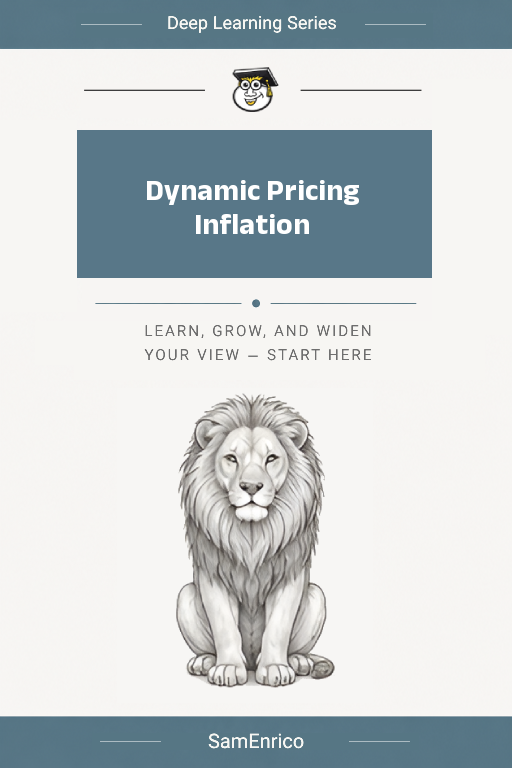
Non-FictionBusiness BriefMacroeconomic Adaptation
Dynamic Pricing Inflation
Use dynamic pricing algorithms during inflationary
Use dynamic pricing algorithms during inflationary periods. Real-time adjustment based on market conditions.
Formats
About this book
Free sample
Chapter 1: The Lag Effect--In the spring of 1923, a waiter in Berlin would bring the check to a customer’s table, and before the customer could reach for their wallet, the price of the meal had already increased. This was not a trick of memory or a misprint. Germany was in the grip of hyperinflation, and the Reichsmark was losing value so quickly that restaurants literally changed their menus multiple times per day. Waiters carried chalk to rewrite prices mid-meal. Factory workers were paid twice daily and given half-hour breaks to run to market and spend their currency before it became worthless by afternoon.One century later, most business leaders read about the Weimar Republic as a historical curiosity—a cautionary tale from a distant, chaotic era.
“That could never happen here,” they tell themselves. “We have central banks now. We have algorithms. We have modern supply chains.”But here is the uncomfortable truth: while hyperinflation of that magnitude remains rare, the dynamic of rapid, unpredictable cost increases is not rare at all. Between 2021 and 2023, global supply chains experienced their own kind of hyperinflation—not in broad currency terms, but in specific, critical inputs.
Container shipping costs from Shanghai to Los Angeles rose 1,000 percent. Lumber prices tripled in six months, then crashed, then rose again. Semiconductor lead times stretched from eight weeks to over a year. And through it all, most companies did exactly what their grandparents’ companies did in the 1970s oil crisis: they waited. They waited for quarterly reviews.
They waited for annual price list updates. They waited for competitors to move first. And while they waited, their margins evaporated.This book is about why waiting is no longer a viable strategy. It is about how the convergence of digital technology, behavioral economics, and macroeconomic volatility has created a new imperative: adaptive, algorithm-driven pricing that responds to market conditions in real time. But before we can build the solution, we must understand the full depth of the problem.
And the problem begins with a simple, devastating concept that we will call the Lag Effect.The Mathematics of Waiting Imagine you…
This is the end of the free sample. Get the eBook to keep going. Buy now
Contents
- Chapter 1
- Chapter 2
- Chapter 3
- Chapter 4
- Chapter 5
- Chapter 6
- Chapter 7
- Chapter 8
- Chapter 9
- Chapter 10
- Chapter 11
- Chapter 12
Details
- Author
- Mckinnon Shawnna
- Publisher
- SamEnrico
- Language
- English
- Genre
- Non-Fiction, Business Brief, Macroeconomic Adaptation
- Released
- 2026-05-30
- Pages (approx.)
- 134
- Available as
- eBook, Audiobook

Read better in the ZLOADR app
Your eBooks on your phone or tablet. Sign in with your SamEnrico account and start reading.
More by Mckinnon Shawnna
 NVC In Restorative Justice HandbookMckinnon Shawnna$11.99
 LBO Term Sheet AnatomyMckinnon Shawnna$11.99
 Forgiving Parents Who Hurt YouMckinnon Shawnna$11.99
 Metta For Dying And DeathMckinnon Shawnna$11.99
 The One Minute Breath ResetMckinnon Shawnna$11.99
 Silent Ledger: The Collapse of the Medici BankMckinnon Shawnna$11.99
 Understanding Smith–fineman–Myers SyndromeMckinnon Shawnna$17.99
 30 Day Pricing ChallengeMckinnon Shawnna$12.99
 How to Start a Accumulator Business (Beginners Guide)Mckinnon Shawnna$11.99
 Technical Support EngineerMckinnon Shawnna$11.99
You may also like
 Hong Kong Handover 1997Dunn Johnnie$11.99
 Zumba For Postnatal Recovery CourseNeal Christian$11.99
 Zumba for BeginnersLadner Nikia$11.99
 YouTube Comment Mining GuideHumes Pandora$12.99
 Worry Box MeditationCarlin Rudy$11.99
 Workplace Stress MeditationNguyen Lynn$11.99
 Workplace Stress and Sleep RepairHawley Ivory$11.99
 Workplace Perfectionism CureDelaney Jeffry$11.99
 Workplace Injustice Anger GuideWallen Isabelle$11.99
 Work Addiction and Burnout LinkGreenwood Ester$11.99
 Women in Yoga and WellnessBeattie Galina$11.99
 Women in Stand Up ComedyChun Evangeline$11.99