
Non-FictionSelf-HelpTime Management
Daily Time Blocking Method eBook
Teaches how to divide your day into focused work s
Teaches how to divide your day into focused work sessions for each task.
Formats
Free sample
Chapter 1: The Attention Siege--–- You are under attack right now. Not from a visible enemy, but from something far more insidious: a constant, low-grade assault on your attention. Before you finish this sentence, your phone will buzz. Your email chime will sound. A Slack notification will appear.
A coworker will tap your shoulder. Or—most dangerously—your own mind will wander to the grocery list, the unpaid bill, the argument you had yesterday, the meeting you are dreading tomorrow.This is not a personal failing. It is the defining condition of modern knowledge work.The average office worker checks email seventy-seven times per day. The average smartphone user touches their phone over two thousand times per day. The average employee spends only eleven minutes on any given task before being interrupted, and after each interruption, it takes over twenty minutes to fully refocus.
Do the math on that. If you are interrupted just five times in a day, you have lost nearly two hours not to the interruptions themselves, but to the recovery from them.Two hours. Every day. Gone.And here is the cruelest part: you blame yourself. You think you lack willpower.
You think you are lazy. You think if you just tried harder, you could resist the siren call of the inbox. But willpower is not the solution, because the problem is not a lack of discipline. The problem is that you are fighting a war on a battlefield designed for you to lose.Every notification, every ping, every badge icon is engineered by teams of behavioral psychologists working for trillion-dollar companies whose business model depends on capturing your attention and selling it to advertisers. You are not failing against your own weakness.
You are failing against the combined forces of Silicon Valley's finest minds, who have spent billions learning exactly how to make you look at your phone.The only way to win this war is to stop fighting it on their terms. You need a fortress. You need walls. You need a system that does not rely on your willpower because it removes the temptation entirely.That system is time blocking. And it begins by accepting a radical truth: you cannot multitask.The Grand Illusion of Doing Everything at Once Let me tell you about a study that changed how I think about work.
Researchers at Stanford University asked a simple question: are people who multitask actually better at it? They recruited a group of heavy multitaskers—people who regularly juggled multiple streams of information, who had five browser tabs open while watching television while answering texts. And they compared them to a group of light multitaskers—people who preferred to do one thing at a time.The results were stunning. The heavy multitaskers were worse at everything. They were worse at filtering irrelevant information.
They were worse at switching between tasks. They were worse at maintaining focus. They were worse at remembering what they had just done. In every single metric, the people who claimed to be skilled at multitasking were actually less skilled than those who never practiced it at all.Why? Because multitasking is not a skill you can improve with practice.
It is a cognitive illusion. What your brain is actually doing is called task switching, and every switch comes with a price.Imagine you are driving a car. You accelerate to sixty miles per hour. Then you hit the brakes, come to a complete stop, and accelerate back to sixty. Now imagine doing that every three minutes for an entire day.
How far would you get? How much gas would you burn? How exhausted would you feel at the end?That is your brain on multitasking.When you switch from writing a report to answering an email and back to the report, your brain performs a three-step sequence. First, it must disengage from the report—saving your progress, your mental model of the argument, your place in the flow. Second, it must activate the context for the email—who sent it, what they want, what you need to say.
Third, when you return to the report, it must reactivate everything it saved. Each step costs time. Each step costs mental energy. And each step leaves behind something insidious called attention residue.Attention Residue: The Ghost in Your Brain The term "attention residue" comes from researcher Sophie Leroy, who discovered something remarkable about how our brains handle incomplete tasks. When you switch away from a task before completing it, your brain does not fully let go.
A portion of your cognitive resources remains attached to that unfinished task, hovering in the background like a ghost, consuming processing power even as you try to focus on something else.Leroy's experiments were simple but devastating. She asked participants to work on a task, interrupted them before they could finish, and then measured their performance on a completely different task. The result? Participants performed significantly worse on the second task—not because it was harder, but because their brains were still partially occupied by the first task. They had attention residue.Here is the terrifying part: the effect persisted even when the interruption was trivial.
Even a two-second interruption left measurable residue. Even checking your email for five seconds—just glancing at the subject line—leaves a mental fingerprint that reduces your cognitive capacity for the next several minutes.Now multiply that effect across a typical workday. You check your phone. You glance at Slack. You answer a quick question.
You peek at the news. Each of these micro-interruptions seems harmless on its own. But collectively, they are drowning you in attention residue. You are never fully present. You are never fully focused.
You are operating at 60 percent capacity, wondering why you feel so tired and accomplished so little.The mathematician and philosopher Blaise Pascal once wrote that "all of humanity's problems stem from man's inability to sit quietly in a room alone." He was writing in the seventeenth century, but he might as well have been describing the open-plan office in 2026. We have lost the ability to sit with a single task and nothing else. And that loss is destroying our productivity, our creativity, and our peace of mind.The Two Kinds of Work That Will Change Your Life Cal Newport, a computer science professor at Georgetown University, coined a distinction that will serve as the backbone of this entire book. He divided all professional work into two categories: Deep Work and Shallow Work.Deep Work is professional activity performed in a state of distraction-free concentration that pushes your cognitive capabilities to their limit. These efforts create new value, improve your skill, and are hard to replicate.
Examples include writing a book, analyzing a complex dataset, designing a software architecture, learning a difficult skill, or strategizing a product launch. Deep Work is uncomfortable. It requires sustained focus. It feels like effort. It is also the only work that truly matters for your career and your sense of accomplishment.Shallow Work is logistical, low-value activity often performed while distracted.
These tasks tend not to create much new value and are easy to replicate. Examples include answering emails, scheduling meetings, filing expenses, moving files…
This is the end of the free sample. Get the eBook to keep going. Buy now
About this book
Details
- Author
- Ricker Florentina
- Publisher
- SamEnrico
- Language
- English
- Genre
- Non-Fiction, Self-Help, Time Management
- Released
- 2026-06-06
- Pages (approx.)
- 143
- Available as
- eBook, Audiobook

Read better in the ZLOADR app
Your eBooks on your phone or tablet. Sign in with your SamEnrico account and start reading.
More by Ricker Florentina
 Menopause Supplement Safety GuideRicker Florentina$11.99
 First Time Parents After FiftyRicker Florentina$11.99
 Technology Boundaries CoupleRicker Florentina$11.99
 Personal Branding for SpeakersRicker Florentina$11.99
 Time Blocking for Remote WorkersRicker Florentina$11.99
 Meeting Speaker Limit RuleRicker Florentina$11.99
 Authenticity HypnosisRicker Florentina$11.99
 The Hammer and the Harp: Philip II and the Golden Symphony of SpainRicker Florentina$11.99
 Escape from Abidjan: The Tunnel That Shook Côte d'IvoireRicker Florentina$11.99
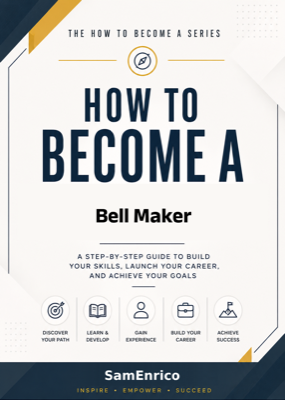 How to Become a Bell MakerRicker Florentina$11.99
 Exploring Engraving: Incised Metal & WoodRicker Florentina$11.99
 Launch Week Action PlanRicker Florentina$12.99
You may also like
 Hong Kong Handover 1997Dunn Johnnie$11.99
 Zumba For Postnatal Recovery CourseNeal Christian$11.99
 Zumba for BeginnersLadner Nikia$11.99
 YouTube Comment Mining GuideHumes Pandora$12.99
 Worry Box MeditationCarlin Rudy$11.99
 Workplace Stress MeditationNguyen Lynn$11.99
 Workplace Stress and Sleep RepairHawley Ivory$11.99
 Workplace Perfectionism CureDelaney Jeffry$11.99
 Workplace Injustice Anger GuideWallen Isabelle$11.99
 Work Addiction and Burnout LinkGreenwood Ester$11.99
 Women in Yoga and WellnessBeattie Galina$11.99
 Women in Stand Up ComedyChun Evangeline$11.99