
Non-FictionForecast & OutlookCybersecurity
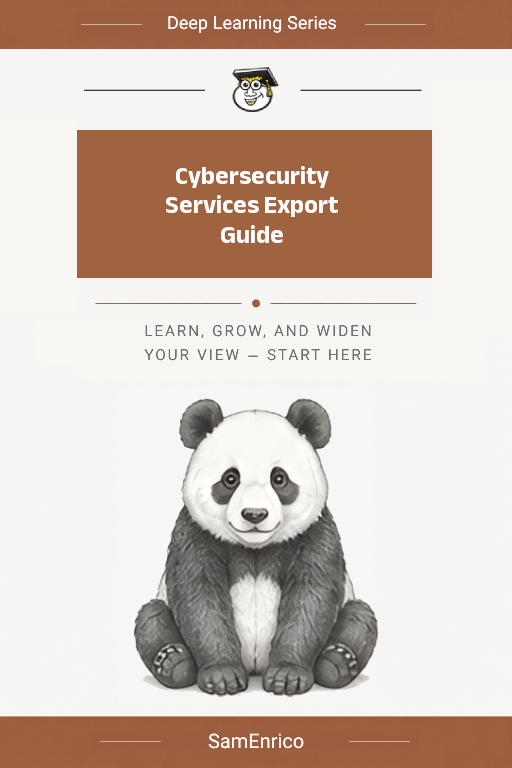
Cybersecurity Services Export Guide eBook
Analyze managed security services, penetration tes
Analyze managed security services, penetration testing, and compliance consulting for Western clients.
Formats
Free sample
Chapter 1: The Trust Deficit--–- The conference room in Frankfurt had floor-to-ceiling windows overlooking the Main River. On one side of the table sat the Chief Information Security Officer of a German multinational bank. On the other side sat the founder of a seventy-person cybersecurity firm from Bangalore. The Indian firm had better technology, faster response times, and a price point thirty percent lower than any local European competitor. They had flown eight thousand kilometers for this meeting.
They lost the deal in the first fifteen minutes. Not because of their technical capabilities. Because the CISO asked two questions they could not answer: "What is your liability cap under German law?" and "Can you provide evidence of your last SOC 2 audit?" The founder later told his team, "We didn't lose to a better company. We lost to a trust deficit we didn't even know existed."This scene repeats itself thousands of times every year. Cybersecurity firms in Mumbai, Manila, Warsaw, São Paulo, and Istanbul have world-class talent, advanced tooling, and competitive pricing.
They fail to win Western contracts not because they lack skill, but because they lack a systematic approach to building trust across legal, financial, and cultural boundaries. The gap between technical capability and Western buyer confidence is the single greatest barrier to export success. And it is entirely bridgeable.The global cybersecurity workforce gap stands at approximately four million unfilled positions as of 2025, according to ISC². Western enterprises are desperate for talent. They cannot hire enough local people.
They are actively looking for qualified remote providers. The demand is real, urgent, and growing. Yet most non-Western cybersecurity firms struggle to convert that demand into revenue. The reason is simple: selling cybersecurity services across borders is fundamentally different from selling them locally. Local clients trust you because they know you, they know your reputation, or they know someone who has worked with you.
Western clients have none of that context. They must trust you based on documents, certifications, insurance policies, and contracts alone. This is the trust deficit.This book is the first comprehensive guide to closing that deficit. It is not a technical manual. It does not teach penetration testing, SOC operations, or compliance auditing.
It assumes you already have those skills. Instead, it teaches you how to package, price, protect, and sell those services to clients in the United States, Canada, the United Kingdom, the European Union, Australia, and other Western markets. It covers the specific requirements of managed security services, penetration testing, and compliance consulting. It provides templates, checklists, decision matrices, and step-by-step roadmaps. And it begins here, with a clear-eyed assessment of the market you are trying to enter.The Myth of the Price Advantage Many cybersecurity firms outside Western markets believe their primary competitive advantage is price.
They assume that lower labor costs translate directly into a winning value proposition. This assumption is wrong. Dangerous, expensive, and provably false.Consider the economics of a Western CISO's decision-making process. The average cost of a data breach in the United States in 2024 was $4.88 million, according to IBM's Cost of a Data Breach Report. A single ransomware incident can cost a mid-sized enterprise millions in downtime, forensics, legal fees, regulatory fines, and reputational damage.
The CISO's primary job is to prevent these outcomes. When that CISO evaluates a potential vendor, the question is not "How cheap is this service?" The question is "Does this service reduce my risk of a multimillion-dollar incident?" Price is a secondary consideration. Trust is primary.A thirty percent price discount means nothing if the CISO suspects the vendor might produce unreliable reports, fail to detect an active breach, or cause a compliance violation. The potential downside of a bad vendor relationship dwarfs any possible savings. Western CISOs are not incentivized to save money.
They are incentivized to avoid disaster. This is why the lowest-priced bidder rarely wins enterprise cybersecurity contracts. The winning bidder is almost always the one that presents the most credible evidence of reliability, competence, and legal accountability.This does not mean pricing is irrelevant. It means pricing must be positioned as a benefit of efficiency, not a signal of desperation. A firm that charges fifty dollars per hour signals that it cannot command higher rates, which signals that it may lack certifications, insurance, or references.
A firm that charges two hundred dollars per hour but provides a detailed statement of work, a clear liability cap, and evidence of SOC 2 compliance signals professionalism and stability. The higher price builds trust. The lower price erodes it.The Three Drivers of Western Demand Understanding why Western enterprises outsource cybersecurity is essential to positioning your services correctly. Three major forces drive this demand, and each creates a specific opportunity for exporters.The first driver is the talent shortage. The cybersecurity workforce gap is not distributed evenly.
Western countries have the most unfilled positions because they have the most regulated industries, the most digitized economies, and the most aggressive threat landscapes. A bank in New York, a hospital in London, and an energy utility in Frankfurt all need security professionals they cannot hire. They are forced to look elsewhere. This creates demand for remote SOC analysts, virtual CISOs, and offshore penetration testers. But it is demand with conditions.
The client still needs to believe that a remote analyst in another country understands their regulatory environment, speaks their language fluently, and will be available during their business hours.The second driver is regulatory pressure. Every major Western economy has increased cybersecurity regulations in the past five years. The European Union's NIS2 Directive扩大了 to eighteen critical sectors. The United States Securities and Exchange Commission now requires disclosure of material cybersecurity incidents within four business days. Payment Card Industry Data Security Standard version four point zero requires continuous testing rather than annual assessments.
Each new regulation creates a compliance burden that existing internal teams cannot absorb. This drives demand for gap analysis, compliance consulting, policy writing, and audit preparation services. But again, with conditions. The client needs to believe that a consulting firm in another country understands the nuances of their specific regulatory framework – not just the general requirements, but the enforcement trends, the common findings, and the expectations of local regulators.The third driver is the twenty-four seven requirement. Cyberattacks do not respect business hours.
A SOC that operates only nine to five Monday through Friday is useless. Building an internal twenty-four seven SOC requires hiring three shifts of analysts, which most mid-sized enterprises cannot afford. They outsource to providers that can offer follow-the-sun coverage. This creates demand for managed security services from firms in time zones that can cover the overnight hours of Western markets. A firm in India can monitor systems while a US-based client sleeps.
A firm in Brazil can cover the early morning hours before European teams arrive. This is a genuine competitive advantage. But it requires operational maturity – documented handoff procedures, clear escalation paths, and reliable communication protocols.The Home Country Classification One of the most common mistakes in export strategy is treating all "non-Western" firms as identical. A cybersecurity firm in Poland faces very different legal and logistical challenges than a firm in India, which faces different challenges than…
This is the end of the free sample. Get the eBook to keep going. Buy now
About this book
Details
- Author
- Mccracken Earnestine
- Publisher
- SamEnrico
- Language
- English
- Genre
- Non-Fiction, Forecast & Outlook, Cybersecurity
- Released
- 2026-06-01
- Pages (approx.)
- 141
- Available as
- eBook, Audiobook

Read better in the ZLOADR app
Your eBooks on your phone or tablet. Sign in with your SamEnrico account and start reading.
More by Mccracken Earnestine
 Moon Phobia Selenophobia GuideMccracken Earnestine$11.99
 Call of Duty Addiction GuideMccracken Earnestine$11.99
 Doctor Suicide Attempt Survivor GuideMccracken Earnestine$11.99
 Depreciation for Retail EquipmentMccracken Earnestine$11.99
 The Stress Autoimmune Disease LinkMccracken Earnestine$11.99
 The Raven’s Lament: How the Trickster Brought the First DawnMccracken Earnestine$11.99
 Understanding Marie–unna Congenital HypotrichosisMccracken Earnestine$17.99
 Manager Training For Remote ReviewsMccracken Earnestine$12.99
 Multi-dimensional Turing Machine OperatorMccracken Earnestine$11.99
 How to Become a SelectorMccracken Earnestine$11.99
You may also like
 Hong Kong Handover 1997Dunn Johnnie$11.99
 Zumba For Postnatal Recovery CourseNeal Christian$11.99
 Zumba for BeginnersLadner Nikia$11.99
 YouTube Comment Mining GuideHumes Pandora$12.99
 Worry Box MeditationCarlin Rudy$11.99
 Workplace Stress MeditationNguyen Lynn$11.99
 Workplace Stress and Sleep RepairHawley Ivory$11.99
 Workplace Perfectionism CureDelaney Jeffry$11.99
 Workplace Injustice Anger GuideWallen Isabelle$11.99
 Work Addiction and Burnout LinkGreenwood Ester$11.99
 Women in Yoga and WellnessBeattie Galina$11.99
 Women in Stand Up ComedyChun Evangeline$11.99