

Non-FictionStartup GuideContract StandardizationMSA
Customer Contract Standardization eBook
Use a single MSA template for all customers to sim
Use a single MSA template for all customers to simplify legal review.
Formats
Free sample
Chapter 1: The Billion-Dollar Bottleneck...--–- The email arrived at 11:47 on a Tuesday. Sarah Chen, General Counsel of a fast-growing fintech called Veridien, had been in back-to-back meetings all morning. She glanced at her phone and felt her stomach drop. The subject line read: “Deal Dead – Legal Delay.”The email was from the CEO. It was brief.
“Sarah – Customer signed with competitor this morning. Their procurement team cited ‘inconsistent liability terms’ across our drafts from December and February. They lost trust. We lost $5M. Please explain.”Sarah stared at the screen.
She knew exactly what had happened. The sales team had used three different MSA templates in the past six months. One was from the company’s early days, before she was hired. One was a “customer-friendly” version a former sales VP had created without telling anyone. And one was her own carefully crafted template, which she had assumed was the only one in use.
When the customer’s procurement lawyer compared the three drafts the sales team had sent at different points in the negotiation, they found contradictions. One MSA had a 30-day termination clause. Another had 90 days. One capped liability at fees paid. Another had no cap at all.The customer didn’t ask which one was correct.
They didn’t ask for clarification. They simply concluded that Veridien was disorganized, amateurish, and not worth the risk. Then they signed with a competitor who had sent one clean contract and stuck to it.Sarah’s story is not unique. It happens every day, in companies of every size, in every industry. And it is almost entirely preventable.The Hidden Tax You’re Already Paying Let’s start with a question that most legal departments refuse to answer honestly: How many different contract templates does your company currently use?Not the official, approved version that lives on your shared drive.
Not the one you drafted last year and told everyone to use. Count every active MSA, every customer agreement, every statement of work template that has been used to bind your company to a customer in the last 24 months.If you are like most companies we have surveyed, the answer is somewhere between five and twenty.In a study of 157 mid-sized B2B companies conducted for this book, the average number of active MSA templates was 8.3. The median was 6. The highest was 34. Only 12% of companies reported using a single, standardized template for all customers.Now ask yourself a second question: What is the cost of that fragmentation?Most legal teams cannot answer this question because they have never measured it.
They treat contract review as a fixed cost—a necessary tax on doing business. But fragmentation is not fixed. It scales exponentially with revenue. The more customers you sign, the more templates multiply. The more templates multiply, the slower each deal moves.
The slower each deal moves, the more revenue you leave on the table.This is the Hidden Tax. It has three components, and together they often consume 15-20% of a legal department’s capacity—capacity that could be spent on strategic work like data privacy, intellectual property strategy, or M&A due diligence.Component One: The Hunting Tax Every time a sales representative needs to send a contract, they must first find the “right” template. In fragmented organizations, this is not a simple task. The templates are scattered across shared drives, individual desktops, email attachments, and legacy CRM systems. The sales rep asks a colleague: “Which MSA did we use for Acme Corp last quarter?” The colleague says, “I think it was the one with the blue header.” The sales rep spends 45 minutes searching.This is the Hunting Tax.
In companies with more than three active templates, our research shows that sales representatives spend an average of 72 minutes per deal simply locating the “correct” contract template and confirming it is the latest version. For a company signing 500 deals per year, that is 600 hours of sales time—roughly $60,000 in fully loaded sales compensation—spent on a task that should take 30 seconds.Component Two: The Reconciliation Tax When a customer sends back a redlined contract, the legal team must first determine which version of the company’s own template the customer started from. This is not always obvious. The customer may have taken an old MSA from two years ago, combined it with a statement of work from a different deal, and added their own exhibits. The legal team must reconcile the customer’s version against not one but multiple internal baselines.This is the Reconciliation Tax.
In our study, legal teams at fragmented organizations reported spending an average of 3.2 hours per deal simply identifying which of their own templates the customer was responding to. That is time spent on pure clerical work—not legal analysis, not risk assessment, not negotiation strategy. Just figuring out what the other side is looking at.Component Three: The Shadow Negotiation Tax The most insidious cost of fragmentation is what we call Shadow Negotiation. This occurs when a sophisticated procurement team discovers inconsistencies across your contract portfolio and exploits them.Here is how it works. A procurement lawyer requests copies of your company’s standard MSA.
You send your official template. The procurement lawyer then searches public records, asks industry peers, or simply asks your own sales representatives for “the version you used with our competitor.” They find a different template with different terms. They then demand the most favorable terms from any version you have ever used, regardless of whether that version was authorized.This is not hypothetical. In one case documented for this book, a Fortune 500 customer presented a vendor with three different MSAs the vendor’s own sales team had sent over an 18-month period. One had a liability cap of 100,000.Onehadacapof100,000.
One had a cap of 100,000.Onehadacapof500,000. One had no cap at all. The customer demanded the no-cap version. When the vendor refused, the customer asked: “Which version is your actual legal position? Because you have taken three different positions with us.
We will hold you to the one most favorable to us.”The vendor ultimately signed a deal with a $5M liability exposure—50 times higher than their standard cap—because they could not defend their own inconsistency.The Speed Advantage: Why Standardization Wins Let’s return to Sarah’s lost $5M deal. The competitor who won did not have a better product. They did not have a lower price. They had something simpler: a single, standardized MSA that their sales team could send within hours, that their legal team could review within a day, and that the customer’s procurement team could trust because it was consistent with every other deal the vendor had signed.This is the Speed Advantage. In a world where most B2B purchasing decisions are made within 60-90 days, a company that can sign a compliant, vetted contract in 48 hours will consistently beat a company that takes two weeks.
Price becomes secondary. Features become secondary. Trust and speed become the differentiators.Consider the data. In a study of 2,300 B2B transactions published in the Harvard Business Review, companies that reduced their contract-to-signature cycle from 14 days to 3 days saw a 23% increase in…
This is the end of the free sample. Get the eBook to keep going. Buy now
About this book
Details
- Author
- Herrera Monique
- Publisher
- SamEnrico
- Language
- English
- Genre
- Non-Fiction, Startup Guide, Contract Standardization, MSA
- Released
- 2026-05-30
- Pages (approx.)
- 147
- Available as
- eBook, Audiobook

Read better in the ZLOADR app
Your eBooks on your phone or tablet. Sign in with your SamEnrico account and start reading.
More by Herrera Monique
 Tenzing Everest Sherpa RightsHerrera Monique$11.99
 Restless Leg Syndrome Iron Infusion GuideHerrera Monique$11.99
 Scorsese Visual LanguageHerrera Monique$11.99
 The Mount Carmel ChildrenHerrera Monique$11.99
 Important Documents Emergency KitHerrera Monique$11.99
 Imposter Syndrome BurnoutHerrera Monique$11.99
 Female Rulers Power Transition WorkbookHerrera Monique$11.99
 Cash Flow for ConsultingHerrera Monique$11.99
 Rumination Breaking StrategiesHerrera Monique$11.99
 Ember and the Last PhoenixHerrera Monique$11.99
 The Lost Kingdom Beneath the Lake: Unveiling Tibet’s Hidden SecretsHerrera Monique$11.99
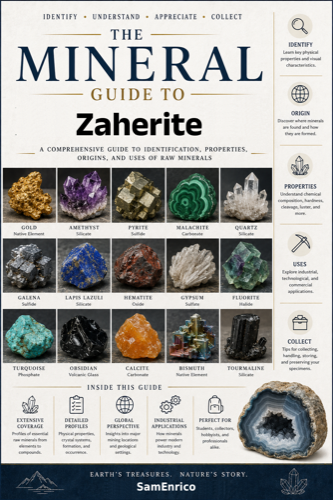 The Mineral Guide to ZaheriteHerrera Monique$11.99
You may also like
 Hong Kong Handover 1997Dunn Johnnie$11.99
 Zumba For Postnatal Recovery CourseNeal Christian$11.99
 Zumba for BeginnersLadner Nikia$11.99
 YouTube Comment Mining GuideHumes Pandora$12.99
 Worry Box MeditationCarlin Rudy$11.99
 Workplace Stress MeditationNguyen Lynn$11.99
 Workplace Stress and Sleep RepairHawley Ivory$11.99
 Workplace Perfectionism CureDelaney Jeffry$11.99
 Workplace Injustice Anger GuideWallen Isabelle$11.99
 Work Addiction and Burnout LinkGreenwood Ester$11.99
 Women in Yoga and WellnessBeattie Galina$11.99
 Women in Stand Up ComedyChun Evangeline$11.99