
Non-FictionSelf-HelpCollaboration
Creative Collaboration Boost eBook
Partner with others to spark ideas and break isola
by Cave Flor
Partner with others to spark ideas and break isolation.
Formats
Free sample
Chapter 1: The Collaboration Lie--–- Every creative breakthrough you have ever admired was a lie. Not the breakthrough itself—that part was real. The lie is the story we tell about how it happened. The lone genius toiling in isolation, struck by a bolt of inspiration, emerging from the attic with a masterpiece. The programmer coding through the night, fueled by coffee and solitude, who single-handedly changed the world.
The artist, the inventor, the writer, the entrepreneur—alone, brilliant, and utterly self-sufficient.This image is one of the most seductive and destructive myths in modern work. It sells movies, glorifies biographies, and makes for excellent motivational posters. But it is, by every measure of historical and organizational research, completely wrong. And your belief in this myth is quietly killing your best ideas.The Invention That Wasn't Invented Alone Consider the light bulb. The standard story credits Thomas Edison as the solitary genius who, after thousands of failed experiments, finally illuminated the world.
The reality is almost the opposite. Edison did not work alone; he ran what was essentially a research laboratory in Menlo Park, New Jersey—a "invention factory" populated by dozens of machinists, scientists, and craftsmen. He called them his "muckers." They included Francis Upton, a trained mathematician who did most of the theoretical work on the bulb's electrical system; Charles Batchelor, a master mechanic who built the prototypes; and John Kruesi, who machined the first practical model. Edison was a brilliant synthesizer, a tireless experimenter, and a master of self-promotion. But he was not a lone genius.
He was the leader of a dense network of collaborators.The same pattern holds for nearly every breakthrough you can name. The i Phone emerged from a cross-functional team of engineers, designers, and software developers—hundreds of people arguing, iterating, and building on each other's work. The discovery of the structure of DNA was a race between teams, not individuals; even the famous duo of Watson and Crick relied heavily on the X-ray crystallography data produced by Rosalind Franklin (and shared without her permission, a cautionary tale about collaboration ethics we will revisit in Chapter 5). The Manhattan Project was thousands of scientists working in parallel, including Enrico Fermi, Richard Feynman, J. Robert Oppenheimer, and Leo Szilard—none of whom could have built the bomb alone.
Pixar films, consistently praised for their creative originality, are produced through a rigorous collaborative process called the "Braintrust," where unfinished work is shown to a group of peers who offer brutally honest, unsolicited feedback.The research is equally clear. A study of more than 1.5 million patent applications over four decades found that the proportion of patents granted to solo inventors has fallen from over 50 percent to less than 10 percent. The most cited, most valuable patents are almost always the product of teams. Another study of more than 20,000 scientific papers found that the number of authors per paper has doubled in the past thirty years, and that multi-authored papers receive significantly more citations than single-authored ones. The data is unambiguous: collaboration produces more novel, more impactful work than solitary effort.So why do we cling to the myth?
Because it flatters us. The idea that we could, if we just worked harder and longer alone, produce something brilliant—that is an appealing fantasy. It requires nothing of others. It asks only that we double down on our own effort. But effort alone is not enough.
Effort without outside input is just spinning wheels in a room that smells like stale coffee.The Hidden Cost of Your Isolation Let me tell you something you already know but may not have named. You have been stuck on a problem recently. Maybe it is a work project, a creative block, a strategic question, or even a personal decision. You have turned it over in your mind dozens of times. You have made lists, diagrams, spreadsheets.
You have stayed late, come in early, worked through weekends. And you are still stuck.Here is what is happening: you are trapped in an echo chamber of one. Your brain, for all its remarkable capabilities, has a fundamental limitation. It cannot see its own blind spots. The very neural pathways that make you efficient at processing familiar information also make it difficult to perceive alternatives.
Once you have thought about a problem in a certain way, those pathways become deeper, more entrenched, harder to escape. This is called cognitive entrenchment, and it is the enemy of creativity. The only reliable antidote is an outside perspective—someone who does not share your assumptions, your history with the problem, or your emotional investment in a particular solution.This is not a weakness. It is a feature of how human brains work. We are pattern-recognition machines.
That pattern recognition is what allows us to walk without falling, speak without conjugating verbs consciously, and drive a car while listening to a podcast. But the same machinery that makes daily life possible makes creative breakthroughs difficult. To break a pattern, you need someone who is not inside it.Consider a simple experiment conducted by researchers at the University of Illinois. They gave participants a classic problem: you have a candle, a box of thumbtacks, and a book of matches. Your task is to attach the candle to a corkboard wall so that it burns without dripping wax on the floor.
Most people try to tack the candle directly to the board (it falls), or melt wax to glue it (it fails), or light the matches to hold it (impossible). The solution is to empty the thumbtack box, tack the box to the board, and place the candle inside it. But most people cannot see this because they suffer from "functional fixedness"—they see the box only as a container for tacks, not as a potential candle holder.When participants attempted this problem alone, only about 20 percent solved it within a time limit. But when participants were allowed to watch someone else—even a stranger—attempt a different version of the problem first, the success rate jumped to over 60 percent. They did not need the other person to give them the answer.
They just needed to see a different approach to loosen their own fixed thinking.Your isolation is not making you more productive. It is making you more entrenched. Every hour you spend alone on a stuck problem is an hour you could have spent getting unstuck through a five-minute conversation with someone who sees things differently.The Pixar Braintrust: How Collaboration Actually Works Perhaps no organization has studied creative collaboration more intentionally than Pixar Animation Studios. Over three decades, Pixar has produced a string of critical and commercial hits—Toy Story, Finding Nemo, The Incredibles, Up, Inside Out—with a consistency that defies the typical boom-and-bust cycle of creative industries. Their secret is not better animators, bigger budgets, or superior technology.
Their secret is a collaborative process called the Braintrust.The Braintrust is a group of roughly eight to twelve senior directors, writers, and producers who meet every few months to watch a film in progress. The rules are simple and counterintuitive. First, the filmmaker presents the current version of the film—unfinished, rough, often embarrassing. Second, the Braintrust members…
This is the end of the free sample. Get the eBook to keep going. Buy now
About this book
Details
- Author
- Cave Flor
- Publisher
- SamEnrico
- Language
- English
- Genre
- Non-Fiction, Self-Help, Collaboration
- Released
- 2026-06-07
- Pages (approx.)
- 151
- Available as
- eBook, Audiobook

Read better in the ZLOADR app
Your eBooks on your phone or tablet. Sign in with your SamEnrico account and start reading.
More by Cave Flor
 The Yelling ApologyCave Flor$11.99
 Group Mentorship Program DesignCave Flor$11.99
 The MBSR for Clergy GuideCave Flor$11.99
 Lawyer Active Listening GuideCave Flor$11.99
 Hand Gesture Avoidance GuideCave Flor$11.99
 Redgrave DynastyCave Flor$11.99
 Basketball Injury PreventionCave Flor$11.99
 Short Stature Childhood WorthCave Flor$11.99
 The Billionaire’s Shadow: How Warren Buffett’s Secretive Right-Hand Man Built an EmpireCave Flor$11.99
 The Battle of the Euphrates Delta: The First Environmental WarCave Flor$11.99
 Ragnarok Unbound: The Wolf's Howl at the End of DaysCave Flor$11.99
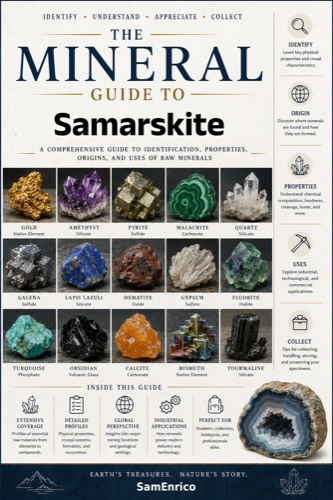 The Mineral Guide to SamarskiteCave Flor$11.99
You may also like
 Hong Kong Handover 1997Dunn Johnnie$11.99
 Zumba For Postnatal Recovery CourseNeal Christian$11.99
 Zumba for BeginnersLadner Nikia$11.99
 YouTube Comment Mining GuideHumes Pandora$12.99
 Worry Box MeditationCarlin Rudy$11.99
 Workplace Stress MeditationNguyen Lynn$11.99
 Workplace Stress and Sleep RepairHawley Ivory$11.99
 Workplace Perfectionism CureDelaney Jeffry$11.99
 Workplace Injustice Anger GuideWallen Isabelle$11.99
 Work Addiction and Burnout LinkGreenwood Ester$11.99
 Women in Yoga and WellnessBeattie Galina$11.99
 Women in Stand Up ComedyChun Evangeline$11.99