
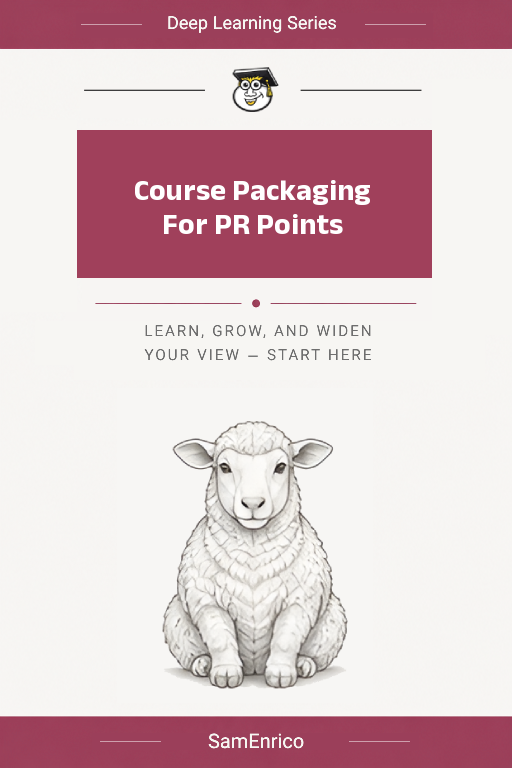
Course Packaging For PR Points eBook
Combine bachelor and master degrees to meet 2 year
Combine bachelor and master degrees to meet 2 year study requirement with additional qualifications.
Formats
Free sample
Chapter 1: The Single-Degree Trap--Every year, thousands of international students complete their bachelor’s degrees with dreams of permanent residency. They have done everything right—they studied hard, learned English or French, gained local work experience, and followed the rules. Yet when they submit their Express Entry profiles or Skill Select applications, they receive a rude awakening. Their scores are too low. Their invitations never come.
Their visas expire. And they go home.This is not a story of failure. It is a story of outdated strategy.The immigration systems of Canada and Australia were not designed for the world we live in today. When points-based immigration first emerged, a bachelor’s degree was considered a premium credential. It signaled advanced education, employability, and the potential for economic contribution.
But as global competition for skilled workers has intensified, and as millions of international graduates have flooded the pools, the value of a single degree has been systematically devalued.Today, holding only one degree is not a weakness—but it is no longer a strength. In both the Canadian Comprehensive Ranking System and the Australian points test, single-degree applicants face an uphill battle that grows steeper with every passing year. The solution is not to study longer in a single program or to work harder at low-skilled jobs. The solution is to understand a hidden mechanism built into both systems: the power of educational stacking.This chapter reveals why one degree is now a liability, how the points systems punish single-credential holders, and what you must do to escape the single-degree trap before it is too late.The Canadian Reality: Why 434 Is the New 400Canada’s Express Entry system is the most transparent and competitive immigration pathway for skilled workers in the world. Every two weeks, Immigration, Refugees and Citizenship Canada issues invitations to apply for permanent residence to candidates with the highest Comprehensive Ranking System scores.
In theory, anyone with a score above the cutoff receives an invitation. In practice, the cutoff has climbed steadily year after year.Consider a typical international graduate. She is 29 years old. She holds a three-year bachelor’s degree from a university in her home country. She completed a one-year Post-Graduation Certificate in Canada.
She worked for one year in a skilled occupation—say, as a marketing coordinator or administrative officer. Her English is excellent: CLB 9 across all four abilities, meaning IELTS scores of 7.5 to 9.0. She has no Canadian family connections, no provincial nomination, and no French language skills.What is her CRS score?The calculation is straightforward. She earns 100 points for her age, the maximum for candidates between 20 and 29. She earns 120 points for her bachelor’s degree—not for the one-year certificate, because the system takes the highest single credential, not the combination.
She earns 124 points for her English: 31 points for each of the four abilities at CLB 9. She earns 40 points for one year of Canadian skilled work experience. Her core human capital total is 384 points.Under Skill Transferability, she earns 25 points for having a bachelor’s degree and CLB 9 English, and another 25 points for having a bachelor’s degree and one year of Canadian work experience. That adds 50 points. She has no Canadian education bonus because her one-year certificate does not count unless it is the only credential she holds—and even then, a single one-year certificate without a bachelor’s yields only 90 core points, a far worse outcome.Her final total is 434 points.In the current Express Entry environment, where cutoffs routinely exceed 500, 434 points is a death sentence.
She will never receive an invitation. Her Post-Graduation Work Permit will expire. She will be forced to leave Canada.Now imagine an identical candidate. Same age, same work experience, same language scores. The only difference is the order of his credentials.
He completed his three-year bachelor’s degree first—anywhere in the world—and then completed his one-year Canadian certificate afterward. That simple reversal changes everything.Because he holds “two or more certificates, diplomas, or degrees, with one being for a program of three or more years,” his core education points jump from 120 to 128. His Skill Transferability points double from 25 to 50 in each category because the system recognizes the combination of multiple credentials with language and work experience. He also earns 15 additional points for having completed a Canadian credential of one to two years.His total is 507 points.The difference between these two candidates is 73 points. In the world of Express Entry, that is the difference between deportation and citizenship.
The first candidate never receives an invitation. The second candidate receives an invitation within weeks of entering the pool.This is the single-degree trap. It is not about intelligence, effort, or merit. It is about understanding how the system evaluates educational combinations. A one-year certificate by itself is almost worthless for immigration purposes.
A one-year certificate added to a three-year bachelor’s degree is transformative.Why the System Was Designed This Way To understand why multiple credentials are so heavily rewarded, we must understand the philosophy behind points-based immigration. Both Canada and Australia use their systems to select immigrants who will contribute economically over the long term. Research has consistently shown that educational attainment is one of the strongest predictors of labor market success, but the relationship is not linear.A candidate with a bachelor’s degree and a one-year diploma is not simply a bachelor’s degree holder plus something extra. She is a different category of candidate entirely. The combination signals adaptability, commitment to continuous learning, and the ability to succeed in multiple academic environments.
These traits correlate strongly with higher earnings, faster career progression, and lower rates of unemployment.Moreover, a candidate who has completed two credentials—particularly when one was completed in Canada—has demonstrated the ability to navigate the local education system, build networks, and integrate into society. These are precisely the attributes that immigration systems seek to reward.The Canadian and Australian systems have operationalized this research through specific point allocations. In Canada, the jump from 120 to 128 core points for multiple credentials is modest, but the real benefit comes in Skill Transferability, where the combination unlocks maximum points that are otherwise unattainable. In Australia, the Australian Study Requirement bonus of 5 points is available only to those who complete at least two academic years of study, and the regional study bonus further rewards those who complete their programs outside major metropolitan areas.These design choices are not arbitrary. They reflect deliberate policy decisions to encourage educational stacking as a pathway to economic integration.
The single-degree trap exists because the system was built to reward exactly what the trap punishes: the failure to stack.The Australian Equivalent: Why 65 Points Is Not Enough Australia’s points test operates on a different scale but follows the same logic. The minimum pass mark is 65 points, but actual invitation rounds for popular occupations require 85 points or higher. A candidate with a single three-year bachelor’s degree from an overseas university, one year of Australian work experience, and Proficient English (IELTS 7.0 across all bands) scores approximately 60 to 65 points—barely eligible and almost never invited.Add a one-year Australian master’s degree to that same candidate, and the points jump dramatically. The master’s degree alone adds 15…
This is the end of the free sample. Get the eBook to keep going. Buy now
About this book
Details
- Author
- Hitchcock Lakia
- Publisher
- SamEnrico
- Language
- English
- Genre
- Non-Fiction, Student's Shortcut
- Released
- 2026-05-27
- Pages (approx.)
- 152
- Available as
- eBook, Audiobook

Read better in the ZLOADR app
Your eBooks on your phone or tablet. Sign in with your SamEnrico account and start reading.
More by Hitchcock Lakia
 Small Chest AcceptanceHitchcock Lakia$11.99
 Confusion Technique Self Trance GuideHitchcock Lakia$11.99
 LGBTQ Dream Journaling GuideHitchcock Lakia$11.99
 AI Slide Thumbnail GeneratorHitchcock Lakia$11.99
 Retailer Recall Response GuideHitchcock Lakia$11.99
 Lagos Pop Up Market EntryHitchcock Lakia$11.99
 Slovak AI Research CommercializationHitchcock Lakia$11.99
 Fasting Glucose ControlHitchcock Lakia$11.99
 Bella Abzug HatHitchcock Lakia$11.99
 The Queen and the Rebel: A Forbidden Affair That Shook an EmpireHitchcock Lakia$11.99
 The Quantum Whisperers: Decoding the Andes' Hidden SignalsHitchcock Lakia$11.99
 The Ghost Particle: How Neutrinos Defied the UniverseHitchcock Lakia$11.99
You may also like
 Hong Kong Handover 1997Dunn Johnnie$11.99
 Zumba For Postnatal Recovery CourseNeal Christian$11.99
 Zumba for BeginnersLadner Nikia$11.99
 YouTube Comment Mining GuideHumes Pandora$12.99
 Worry Box MeditationCarlin Rudy$11.99
 Workplace Stress MeditationNguyen Lynn$11.99
 Workplace Stress and Sleep RepairHawley Ivory$11.99
 Workplace Perfectionism CureDelaney Jeffry$11.99
 Workplace Injustice Anger GuideWallen Isabelle$11.99
 Work Addiction and Burnout LinkGreenwood Ester$11.99
 Women in Yoga and WellnessBeattie Galina$11.99
 Women in Stand Up ComedyChun Evangeline$11.99