
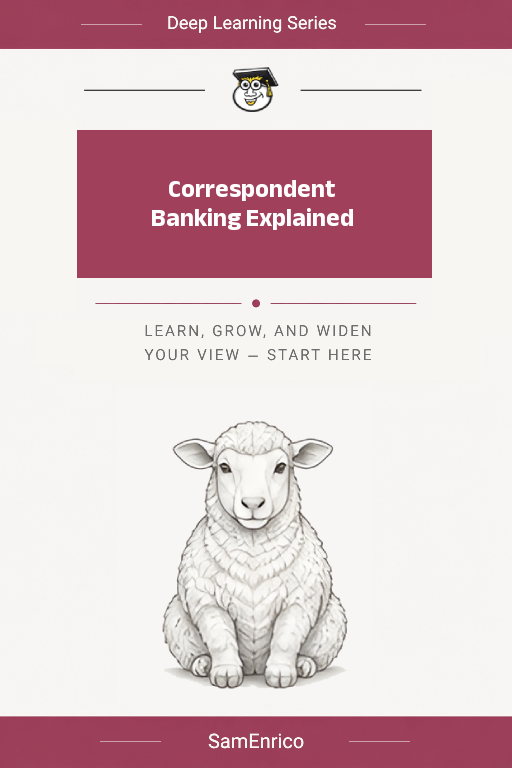
Non-FictionBusiness BriefCorrespondent BankingIntermediary Fees
Correspondent Banking Explained eBook
Navigate the correspondent banking maze that slows
Navigate the correspondent banking maze that slows African cross border payments and find alternative routes that bypass traditional intermediaries.
Formats
Free sample
Chapter 1: The Rose That Wilted--The rose auction in Naivasha, Kenya, runs like a Swiss watch. Every morning at six, fresh-cut roses arrive from the shores of Lake Naivasha, where volcanic soil and equatorial sun produce some of the finest blooms on earth. Buyers from Amsterdam, Dubai, and Tokyo bid in real time. Within hours, those roses are packed into refrigerated containers and flown to flower auctions in Aalsmeer, the Netherlands, where they are repackaged and shipped to florists across Europe. The entire journey, from Kenyan farm to Dutch auction house, takes less than forty-eight hours.The payment for those roses takes eleven days.This is the first thing you need to understand about correspondent banking in Africa: the physical supply chain has become faster, more reliable, and more efficient than the financial supply chain that pays for it.
In 2023, a Kenyan flower exporter we will call Wanjiku Roses received a €200,000 order from a Dutch importer. The roses arrived on time. The importer confirmed receipt. Then the payment disappeared into a maze of correspondent banks, intermediary fees, compliance checks, and outright rejections. Eleven days later, after three separate SWIFT messages, two failed settlement attempts, and a cumulative 7.2 percent loss to fees and unfavorable exchange rates, Wanjiku Roses received €185,600.
The roses had wilted in value before the money ever arrived.This is not a story about fraud. It is not a story about incompetence. It is a story about a global financial infrastructure that was built for one world and is being asked to serve another. The correspondent banking system that moves money across borders today was designed in the 1970s, formalized through SWIFT in the 1980s, and optimized for high-volume, low-friction corridors between New York, London, Frankfurt, and Tokyo. It works beautifully for a German automaker paying a Japanese parts supplier.
It works poorly, and often not at all, for a Kenyan farmer selling roses to a Dutch buyer.The difference is not technology. It is architecture. And that architecture, as this chapter will show, has created a maze from which African businesses, banks, and individuals are desperately trying to escape.The Textbook Version: How Correspondent Banking Is Supposed to Work Before we can understand why the system fails Africa, we must understand how it is supposed to work. The textbook version of correspondent banking is elegant in its simplicity. Two banks that do not share a direct relationship use a third bank as an intermediary.
The importer's bank in Amsterdam maintains an account—called a Nostro account, from the Latin for "ours"—with a correspondent bank in London. The exporter's bank in Nairobi maintains a separate Nostro account with the same London correspondent. When money moves from Amsterdam to Nairobi, it flows through the London correspondent, which debits one Nostro account and credits the other.The entire transaction is mediated by SWIFT, the Society for Worldwide Interbank Financial Telecommunication. SWIFT does not move money. It moves messages.
Think of it as the email system for banks: a standardized set of instructions that tells Bank A to tell Bank B to tell Bank C to move funds from Account X to Account Y. The most common message for cross-border payments is MT103, a twenty-seven-field instruction that includes the sender, the recipient, the amount, the currency, and the fees. When a bank sends an MT103, it expects a corresponding MT199 or MT202 response confirming settlement.In a perfect world, this process takes one to two days. The importer's bank sends an MT103 to its London correspondent. The London correspondent sends an MT202 to the Nairobi bank's correspondent.
The Nairobi bank credits the exporter's account. Settlement happens through a real-time gross settlement system like CHIPS in New York or TARGET2 in Europe. The fees are transparent: typically 20to20 to 20to50 per transaction, plus a small spread on the exchange rate. The risk of failure is low because the banks know each other, have established credit lines, and follow common compliance standards.This is the system described in every textbook on international finance. It is the system that moves trillions of dollars daily between developed economies.
And it bears almost no resemblance to the system that African businesses actually experience.The African Reality: A Dollar's Journey from Lagos to Shanghai To understand the gap between textbook and reality, follow a single dollar. Not a million dollars. Not a trade finance letter of credit. One dollar. Better yet, follow a $10,000 invoice from a textile manufacturer in Lagos, Nigeria, to a fabric supplier in Shanghai, China.
This is a real transaction that happens thousands of times a day. Here is what actually occurs.The Nigerian manufacturer, which we will call Lagos Textiles, has an account with a Nigerian bank. That bank, like most Nigerian banks, has lost several correspondent relationships over the past decade. It used to have a direct Nostro account with Deutsche Bank in New York. Deutsche Bank closed that relationship in 2018 as part of a broader de-risking exercise.
Now the Nigerian bank maintains a single correspondent relationship with a regional consolidator in London, which in turn has a relationship with a US clearing bank.The Shanghai supplier has an account with a Chinese bank. That Chinese bank has a direct Nostro relationship with the same US clearing bank. In theory, the payment should flow from Lagos to London to New York to Shanghai. That is three hops. In practice, it is more.When Lagos Textiles initiates the payment, its Nigerian bank sends an MT103 to its London consolidator.
The London consolidator, which aggregates payments from dozens of African banks, holds the message for four to six hours while it batches transactions. Batching reduces costs but introduces delay. The consolidator then sends the payment to its US clearing bank. The US clearing bank, upon receiving the instruction, runs a compliance check. Because the payment originated in Nigeria—a jurisdiction with a history of high-profile fraud cases, including the $100 million Nigerian oil scam that involved forged letters of credit—the US bank places the transaction on manual review.Manual review takes twenty-four to forty-eight hours.
During that time, the US bank may request additional documentation: proof of the underlying trade, identity of the ultimate beneficial owners, confirmation that the textile manufacturer is not on any sanctions list. The Nigerian bank, which is eight time zones away, must respond within a narrow window. If it fails to respond in time, the transaction is rejected. If it responds but the documentation is incomplete, the transaction is rejected. If it responds with everything correct but the US bank's compliance officer is having a bad day, the transaction may still be rejected.Assuming the payment survives manual review, the US clearing bank sends an MT202 to the Chinese bank's Nostro account.
Settlement occurs. The Chinese bank credits the Shanghai supplier. Total elapsed time: three to seven days. Total fees: $75 in explicit charges, plus a 3.2 percent spread on the naira-to-dollar-to-yuan conversion, plus whatever float the Nigerian manufacturer lost while its cash was in transit.This is not an edge case. This is the ordinary experience of African cross-border trade.
The difference between the textbook model and the African reality is not a matter of degree; it is a matter of…
This is the end of the free sample. Get the eBook to keep going. Buy now
About this book
Details
- Author
- Bender Rebekah
- Publisher
- SamEnrico
- Language
- English
- Genre
- Non-Fiction, Business Brief, Correspondent Banking, Intermediary Fees
- Released
- 2026-06-01
- Pages (approx.)
- 157
- Available as
- eBook, Audiobook

Read better in the ZLOADR app
Your eBooks on your phone or tablet. Sign in with your SamEnrico account and start reading.
More by Bender Rebekah
 Daily Review for Accountants ManualBender Rebekah$11.99
 Microbiome Allergy ReductionBender Rebekah$11.99Microbiome Allergy ReductionBender Rebekah$11.99
 Female Rulers Public Image ConstructionBender Rebekah$11.99
 Carpool Lane PrivilegeBender Rebekah$11.99
 Smoke Free Fitness CourseBender Rebekah$11.99
 The Trade That Changed the Game: How the 1989 NBA Draft Reshaped Basketball ForeverBender Rebekah$11.99
 The Sapphire Serpent's CurseBender Rebekah$11.99
 Understanding Battaglia–neri SyndromeBender Rebekah$17.99
 Boomer Funeral Preplanning SpendingBender Rebekah$12.99
 10 Ways to Use Chlorella(micro Algae Used As A Supplement) (Recipe Book)Bender Rebekah$11.99
 Insurance RaterBender Rebekah$11.99
You may also like
 Hong Kong Handover 1997Dunn Johnnie$11.99
 Zumba For Postnatal Recovery CourseNeal Christian$11.99
 Zumba for BeginnersLadner Nikia$11.99
 YouTube Comment Mining GuideHumes Pandora$12.99
 Worry Box MeditationCarlin Rudy$11.99
 Workplace Stress MeditationNguyen Lynn$11.99
 Workplace Stress and Sleep RepairHawley Ivory$11.99
 Workplace Perfectionism CureDelaney Jeffry$11.99
 Workplace Injustice Anger GuideWallen Isabelle$11.99
 Work Addiction and Burnout LinkGreenwood Ester$11.99
 Women in Yoga and WellnessBeattie Galina$11.99
 Women in Stand Up ComedyChun Evangeline$11.99