
Non-FictionSelf-HelpProgram Applications
Competitive Program Application Stress Workbook eBook
Manages pressure of med school, law school, or PhD
Manages pressure of med school, law school, or PhD applications.
Formats
Free sample
Chapter 1: The Stress Audit--–- You are holding this workbook for a reason. Maybe you have checked your email seventeen times in the past hour, even though you know no admissions decision will arrive on a Sunday evening. Maybe you just spent twenty minutes rewriting the same sentence in your personal statement, deleted it, then rewrote it exactly as it was before. Maybe you were supposed to study for the LSAT, MCAT, or GRE today, but instead you spent three hours reading forum posts from strangers who claim to have studied fourteen hours a day for six months straight. Or maybe you are simply exhausted—not the kind of exhaustion that sleep fixes, but the bone-deep fatigue of carrying the weight of your own future on your shoulders, day after day, with no clear finish line in sight.None of these things mean you are weak.
They do not mean you are not cut out for medical school, law school, or a Ph D program. They mean you are human, and you are operating inside a system that was not designed with your mental health in mind. The application process for competitive graduate and professional programs is a pressure cooker. It is deliberately exclusionary, arbitrarily opaque, and structurally indifferent to your well-being. That is not paranoia.
That is the reality of a system that receives thousands of applications for a few dozen spots, where committees spend minutes—sometimes seconds—on each file, and where the difference between an acceptance and a waitlist can come down to something as random as which reader happened to review your essays on a Tuesday morning versus a Thursday afternoon.This chapter is not going to tell you to “just relax” or “trust the process.” Those platitudes are useless. Instead, this chapter is going to help you do something much harder and much more useful: name exactly what is stressing you out, distinguish between the stress that helps you and the stress that harms you, and create a personalized map of your own stress signature. By the end of this chapter, you will not be stress-free—that is an impossible goal and a dishonest promise. But you will be stress-literate. You will know what your specific pressure points are, which coping mechanisms from your past are failing you now, and where to focus your limited energy for the greatest return.Let us begin with a question that sounds simple but is surprisingly difficult for high-achieving applicants to answer: What, exactly, are you afraid of?The Two Faces of Stress: Productive Urgency vs.
Toxic Rumination Before you can manage your stress, you have to be able to tell the difference between the kind of stress that helps you perform and the kind that slowly dismantles your ability to function. Psychologists have studied this distinction for decades, and the research is remarkably consistent: not all stress is created equal.Productive urgency is the stress you feel when you have a real deadline, a concrete task, and a clear path forward. Your heart rate increases slightly. Your focus narrows. You stop checking your phone.
You get the work done. Afterward, you feel tired but satisfied—sometimes even proud. Productive urgency has a beginning, a middle, and an end. It is what you felt when you pulled an all-nighter in college to finish a paper and actually got an A. It is what you feel when you have three hours left before an application deadline and you still need to format your CV.
It is uncomfortable, but it is also functional. It evolved to help you survive.Toxic rumination is something else entirely. Toxic rumination is the stress you feel when there is no immediate threat, but your brain acts as if there is. You are not studying, but you are thinking about studying with a sense of dread. You have already submitted your applications, but you are re-reading them for the tenth time, searching for a typo that would prove you are a fraud.
You are lying in bed at 2:00 AM, not because you have work to do, but because your mind is running a simulation of every possible way your application could be rejected. Toxic rumination has no clear endpoint. It feeds on itself. The more you ruminate, the more your brain strengthens the neural pathways that produce rumination, making it easier to ruminate next time.The research on this is stark. Studies on anticipatory stress—the kind of stress you feel before an event, not during it—consistently show that the anticipation is often more distressing than the event itself.
Medical patients awaiting biopsy results report higher anxiety than patients receiving a cancer diagnosis. Test-takers report more fear the week before an exam than during the exam itself. Applicants check portals obsessively for months, but when the decision finally arrives—even a rejection—there is often a strange sense of relief. The waiting was worse than the news.Here is the problem that this entire workbook is built to solve: Most high-achieving applicants cannot tell the difference between productive urgency and toxic rumination while they are experiencing them. They feel a spike of anxiety and assume it means they need to work harder, study longer, or check more forums.
They mistake the feeling of panic for a signal of insufficient effort. This is how brilliant, capable students end up burning out before they even set foot in a classroom.The first step out of that trap is learning to name your stress. Not to eliminate it—but to know what you are dealing with.The Application Stress Inventory (ASI)To help you name your stress, this chapter introduces the Application Stress Inventory, or ASI. This is a 25-item self-assessment designed specifically for applicants to competitive medical, law, and Ph D programs. It is not a clinical diagnostic tool.
It is a mirror.The ASI measures your stress across five domains. Each domain represents a different source of pressure in the application cycle. Most applicants will find that one or two domains dominate their experience, while others are relatively quiet. There is no “bad” profile. The goal is simply to know where your energy is being consumed.Domain One: Standardized Testing The MCAT, LSAT, and GRE are not just tests.
They are rituals of gatekeeping. They consume months of your life. They cost hundreds or thousands of dollars. They come with their own vocabulary, their own culture, and their own mythology. And for many applicants, they are the single greatest source of anticipatory anxiety in the entire process.Questions in this domain include:How often do you think about your upcoming (or past) standardized test with a sense of dread?Do you avoid practicing the section you find most difficult?Have you compared your practice test scores to strangers on the internet?Do you believe your test score will determine your worth as a future professional?If this domain scores high for you, you are not alone.
Standardized testing is uniquely suited to trigger both imposter syndrome (Chapter 2) and the toxic comparison that this workbook explicitly forbids.Domain Two: Personal Narrative The personal statement—or statement of purpose, depending on your program—is the most emotionally volatile part of…
This is the end of the free sample. Get the eBook to keep going. Buy now
About this book
Details
- Author
- Prater Lorilee
- Publisher
- SamEnrico
- Language
- English
- Genre
- Non-Fiction, Self-Help, Program Applications
- Released
- 2026-06-09
- Pages (approx.)
- 152
- Available as
- eBook, Audiobook

Read better in the ZLOADR app
Your eBooks on your phone or tablet. Sign in with your SamEnrico account and start reading.
More by Prater Lorilee
 IRA Contribution Deadline GuidePrater Lorilee$11.99
 Mindfulness For Cancer Pain ReliefPrater Lorilee$11.99
 The Later Termination Support GuidePrater Lorilee$11.99
 Loving Kindness for DialysisPrater Lorilee$11.99
 The Trickster’s Excalibur: Anansi and the Round TablePrater Lorilee$11.99
 Healthcare AssistantPrater Lorilee$11.99
 Excel Economics Final CramPrater Lorilee$12.99
 Ulta Beauty SWOT LibraryPrater Lorilee$12.99
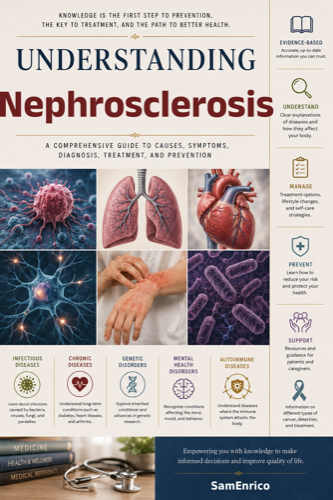 Understanding NephrosclerosisPrater Lorilee$17.99
 How to Become a Drill-press OperatorPrater Lorilee$11.99
You may also like
 Hong Kong Handover 1997Dunn Johnnie$11.99
 Zumba For Postnatal Recovery CourseNeal Christian$11.99
 Zumba for BeginnersLadner Nikia$11.99
 YouTube Comment Mining GuideHumes Pandora$12.99
 Worry Box MeditationCarlin Rudy$11.99
 Workplace Stress MeditationNguyen Lynn$11.99
 Workplace Stress and Sleep RepairHawley Ivory$11.99
 Workplace Perfectionism CureDelaney Jeffry$11.99
 Workplace Injustice Anger GuideWallen Isabelle$11.99
 Work Addiction and Burnout LinkGreenwood Ester$11.99
 Women in Yoga and WellnessBeattie Galina$11.99
 Women in Stand Up ComedyChun Evangeline$11.99