
Non-FictionSelf-HelpSocial Comparison
Compare Yourself Less Guide eBook
Stop comparing grades to classmates.
by Griffin Ivan
Stop comparing grades to classmates.
Formats
Free sample
Chapter 1: The Gold Star Trap...--–- The first time Maya remembered feeling truly stupid, she was seven years old, sitting cross-legged on a classroom rug, and she had just been handed a gold star that felt like a lie.The star was for reading. Maya had finished her book before anyone else—a thin, brightly colored thing about a lost puppy—and her teacher, Mrs. Alvarez, had beamed at her in front of the whole class. "Maya is such a smart reader," she announced, pressing the shiny sticker onto Maya's worksheet. "Everyone look at how quickly Maya finished."Maya did not feel smart.
She felt a cold, sinking dread that she would not learn to name for another ten years. Because she had finished the book by skipping every other page, guessing at the story, and hoping no one would ask her what happened to the puppy. The gold star was for speed, not understanding. But no one asked about understanding. They asked about the star.That was the first time Maya learned that performance mattered more than learning.
It was not the last.This chapter is about that lesson. It is about how well-meaning adults—teachers, parents, coaches, even well-intentioned strangers—accidentally program children to compete for approval rather than to love learning. It is about the "gifted" kid who peaks in elementary school and crumbles at the first sign of difficulty. It is about the student who would rather not try than try and fail. And most of all, it is about the chronic need for external validation—the compulsive checking of grades, the reflexive "What did you get?"—that keeps the comparison trap spring-loaded and waiting.If you have ever felt like Maya felt on that classroom rug, this chapter is for you.The Hidden Curriculum of Praise Let us start with a question that sounds simple but is not: Why do you compare yourself to your classmates?The obvious answer is that school forces you to.
Grades are public or semi-public. Rank is calculated and sometimes posted. Teachers post score distributions. Colleges ask for GPAs. All of that is true, and it matters.
But it is not the whole story.The deeper answer is that you were trained to compare yourself long before you ever set foot in a high school classroom. The training did not happen in a single dramatic moment. It happened in a thousand small moments—the gold star for the fastest reader, the "good job" for the neatest handwriting, the "you're so smart" for the correct answer. Each of these moments was a lesson. And the lesson was this: You are valuable when you perform.
You are lovable when you win.This is what psychologist Carol Dweck, in her landmark book Mindset, calls the "fixed mindset" trap. When adults praise intelligence or talent—"You're so smart!" "You're a natural at math!"—they unintentionally teach children that ability is a fixed trait. Some people have it. Some people do not. And if you have it, you should never, ever risk losing it by trying something hard and failing.The alternative, Dweck found, is to praise effort and strategy.
"You worked really hard on that puzzle." "I love how you tried three different ways to solve that problem before you found one that worked." "You stuck with that even when it got frustrating—that is impressive." This is the "growth mindset" in action: the belief that ability develops through effort, that struggle is not a sign of weakness but a sign of growth, and that failure is not an indictment of who you are but a data point about what you need to work on next.Here is the problem: The fixed mindset is not just an individual belief. It is a system. And the system starts rewarding performance over learning from the very first day of school.Extrinsic vs. Intrinsic: The Death of Curiosity Think back to the last time you genuinely enjoyed learning something for its own sake. Maybe it was a You Tube video about a topic you love.
Maybe it was a Wikipedia rabbit hole that started with one question and ended somewhere completely unexpected. Maybe it was a hobby—learning a guitar chord, figuring out a new recipe, beating a difficult level in a game.What did that feel like? Chances are, it felt different from studying for a test. There was no grade at the end. No one was watching.
You were not competing with anyone. You were just curious.Psychologists call this intrinsic motivation—the drive to do something because it is inherently interesting, enjoyable, or satisfying. Intrinsic motivation is powerful. It fuels creativity, persistence, and deep learning. It is why children learn to walk without a grading system, why toddlers ask "why?" a hundred times in a row, why humans have explored the ocean floor and the surface of Mars.Extrinsic motivation is different.
It is the drive to do something for a reward or to avoid a punishment. Gold stars. Grades. Praise. Detention.
College admissions. Extrinsic motivation works—it gets people to do things they would not otherwise do. But it has a dark side.Decades of research, starting with psychologists Edward Deci and Richard Ryan in the 1970s, have shown that extrinsic rewards can actually kill intrinsic motivation. In one famous study, children who were promised a reward for drawing with markers spent less time drawing on their own later than children who were never offered a reward. The reward had turned play into work.
The message the children learned was not "drawing is fun." It was "drawing is something you do to get a prize."Now apply that to school. Every time you study for a test, you are working for an extrinsic reward: the grade. Every time you compare your score to a classmate's, you are participating in the same system. And over time, the system teaches you something dangerous: Learning is not its own reward. Learning is a competition you win or lose.This is why so many students stop asking "Is this interesting?" and start asking "Will this be on the test?" It is not a personal failing.
It is a trained response.The Gifted Kid Trap Let us talk about the "gifted kid." You know this person. Maybe you are this person.The gifted kid is the one who sailed through elementary school. Reading came easily. Math made sense. Teachers praised them constantly.
Parents bragged about them at family gatherings. They never had to study—not really. They just showed up, paid attention, and got A's.Then something changed. Maybe it was middle school, maybe high school, maybe the first semester of college. The material got harder.
The pace accelerated. For the first time, the gifted kid had to actually work to understand something. And when they tried, something strange happened: They could not do it. Not because they were not smart enough. But because they had never learned how to struggle.This is what Paul Tough, in his book How Children Succeed, calls the problem of "fragile perfectionists." These are students who have coasted on natural ability for so long that they have never developed the skills that…
This is the end of the free sample. Get the eBook to keep going. Buy now
About this book
Details
- Author
- Griffin Ivan
- Publisher
- SamEnrico
- Language
- English
- Genre
- Non-Fiction, Self-Help, Social Comparison
- Released
- 2026-06-08
- Pages (approx.)
- 131
- Available as
- eBook, Audiobook

Read better in the ZLOADR app
Your eBooks on your phone or tablet. Sign in with your SamEnrico account and start reading.
More by Griffin Ivan
 Female Ruler Patronage NetworksGriffin Ivan$11.99
 Mindfulness for PerfectionistsGriffin Ivan$11.99
 Financial Stress for PharmacistsGriffin Ivan$11.99
 The Siege of Leiden: The Drowning That Saved a Nation (1573-1574)Griffin Ivan$11.99
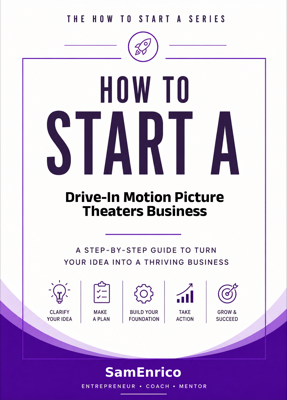 How to Start a Drive-In Motion Picture Theaters BusinessGriffin Ivan$11.99
 How to Produce Auto Title LoansGriffin Ivan$11.99
 Risk Aversion Utility PrimerGriffin Ivan$12.99
 Financial Modeling and Valuation SystemsGriffin Ivan$11.99
You may also like
 Hong Kong Handover 1997Dunn Johnnie$11.99
 Zumba For Postnatal Recovery CourseNeal Christian$11.99
 Zumba for BeginnersLadner Nikia$11.99
 YouTube Comment Mining GuideHumes Pandora$12.99
 Worry Box MeditationCarlin Rudy$11.99
 Workplace Stress MeditationNguyen Lynn$11.99
 Workplace Stress and Sleep RepairHawley Ivory$11.99
 Workplace Perfectionism CureDelaney Jeffry$11.99
 Workplace Injustice Anger GuideWallen Isabelle$11.99
 Work Addiction and Burnout LinkGreenwood Ester$11.99
 Women in Yoga and WellnessBeattie Galina$11.99
 Women in Stand Up ComedyChun Evangeline$11.99