
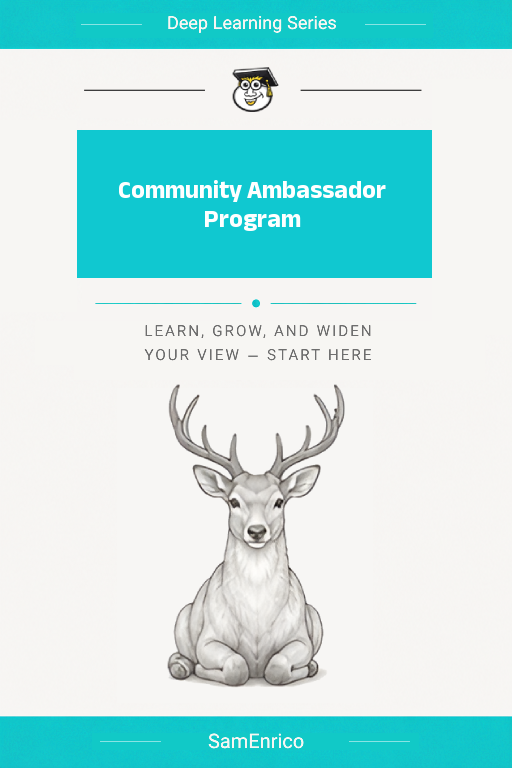
Non-FictionZero-to-One CreatorAmbassadors
Community Ambassador Program eBook
Train superfans as community ambassadors to help m
Train superfans as community ambassadors to help moderate and welcome new members.
Formats
Free sample
Chapter 1: The Belonging Economy--For the past decade, businesses have been chasing a ghost. They have poured billions of dollars into growth marketing, acquisition funnels, and vanity metrics—likes, shares, followers, page views—only to discover that these numbers are hollow. A million followers who never engage is not a community. A thousand daily active users who churn within thirty days is not a business moat. It is a leaky bucket.
And the corporate world has spent an extraordinary amount of money trying to patch that bucket with the wrong materials.The hard truth is this: attention is no longer scarce. What is scarce is belonging. In a world where any user can jump from one platform to another in three clicks, the only thing that keeps them anchored is a sense that they matter, that they are seen, and that they are part of something larger than themselves. This is not soft rhetoric. This is the new economics of community-driven retention.This chapter argues that traditional growth metrics have failed precisely because they measure the wrong thing.
They measure arrivals, not roots. They count footsteps, not homes. The organizations that will thrive in the next decade are not those with the loudest marketing campaigns but those with the deepest community infrastructures. At the heart of that infrastructure lies a singular, underutilized asset: the superfan turned ambassador. Before we can build a Community Ambassador Program, we must first understand why belonging has become the ultimate competitive advantage and how volunteer superfans outperform every paid marketing channel on the planet.The Death of Vanity Metrics Let us begin with an autopsy.
For years, the marketing world operated under a simple assumption: more eyes equal more revenue. This assumption birthed the age of vanity metrics. Companies celebrated hitting one million followers on Instagram. They threw parties for crossing ten thousand Twitter retweets. They reported quarterly earnings with slides boasting double-digit growth in "brand impressions."Then something changed.
Platforms saturated. Ad costs skyrocketed. And most critically, users became numb. The average person today sees over ten thousand branded messages per day. Their brains have developed what neuroscientists call "banner blindness"—an automatic filter that discards promotional content before it reaches conscious awareness.
Your beautifully crafted post is not being ignored out of malice. It is being ignored out of biological necessity.Worse still, even when users do engage, they do not stay. The average mobile app loses seventy-seven percent of its daily active users within the first three days. Within thirty days, that number climbs to ninety percent. This is not an anomaly.
This is the standard trajectory of attention-based acquisition. You spend a fortune to bring someone through the door, and they walk out the back before you have learned their name.The problem is structural. Vanity metrics measure transactions, not relationships. A like is a micro-transaction of approval. A follow is a low-fidelity promise of future attention.
Neither creates loyalty. Neither builds belonging. And neither can be relied upon when a competitor offers a slightly better feature or a slightly lower price.What replaces vanity metrics is something far messier, far harder to measure, and far more valuable: retention through belonging. Belonging is not a feeling. It is an economic force.
When a member belongs to a community, their lifetime value multiplies. They buy more. They complain less. They defend the brand during crises. They recruit their friends without being asked.
They become, in essence, an unpaid sales force whose authenticity cannot be purchased.Defining the Three Roles: User, Customer, Ambassador To understand how belonging drives retention, we must first distinguish between three fundamentally different relationships an individual can have with an organization. These are not merely stages on a ladder; they are distinct psychological states with different behaviors, motivations, and economic implications.The User is the most transactional relationship. A user interacts with a product or service but feels no emotional attachment. They are here for utility. They will use a ride-share app because it is cheapest, a food delivery service because it is fastest, a software tool because their boss required it.
The moment a better option appears, the user disappears. Users do not join communities. They do not defend brands. They do not provide feedback unless something breaks. They are, from a retention perspective, a liability—expensive to acquire and impossible to keep.The Customer is a modest upgrade.
A customer has made a purchase, but the relationship remains primarily economic. They might have positive feelings toward the brand—satisfaction, perhaps mild loyalty—but these feelings are contingent on continued value exchange. The moment the product disappoints or a competitor offers a better deal, the customer shops elsewhere. Customer relationships are governed by the logic of the market: price, features, convenience. These are rational calculations, and rationality is merciless.The Community Ambassador is something else entirely.
An ambassador is not merely a user who pays or a customer who returns. An ambassador is an invested stakeholder who actively builds value for others. They answer questions in forums. They welcome newcomers. They create user-generated content.
They organize meetups. They defend the brand in public debates. They do all of this without a paycheck and often without being asked.Here is what makes the ambassador economically extraordinary: their motivation is not transactional. They do not help others because they expect a discount or a free t-shirt. They help because helping fulfills an intrinsic need—for purpose, for identity, for belonging.
The ambassador wakes up wanting to contribute. You cannot manufacture that with a marketing budget. You can only create the conditions for it to emerge.The transition from user to customer is driven by price and convenience. The transition from customer to ambassador is driven by belonging. And belonging, unlike price, is a moat that competitors cannot easily cross.
No matter how good the rival product, it cannot replicate the relationships, the shared history, and the emotional bonds that form within a genuine community.The Trust Transfer Phenomenon Why do ambassadors matter so much for new member acquisition and retention? The answer lies in a cognitive shortcut that psychologists call source credibility bias, but which we will call the Trust Transfer.Here is the reality that makes marketers uncomfortable: new members do not trust you. They do not trust your corporate spokesperson. They do not trust your CEO's Linked In post. They do not trust your polished case studies or your carefully edited testimonial videos.
They have been lied to too many times by precisely these sources. Their skepticism is not irrational. It is learned.Who do they trust? They trust people like themselves. Research consistently shows that recommendations from peers are five times more trusted than recommendations from corporate sources.
This is not a small margin. It is a chasm. When a new member joins a community and sees an ambassador—a volunteer, an unpaid superfan, someone with no obvious financial incentive—welcoming them, answering their questions, and guiding them through the norms of the group, something remarkable happens. The trust that the new member has for the ambassador transfers, by association, to the organization itself.This is the Trust Transfer phenomenon. It works like this: New member arrives skeptical.
Ambassador offers help, expecting nothing in return. New member thinks, "This person is kind and knowledgeable, and they are not…
This is the end of the free sample. Get the eBook to keep going. Buy now
About this book
Details
- Author
- Munn Edelmira
- Publisher
- SamEnrico
- Language
- English
- Genre
- Non-Fiction, Zero-to-One Creator, Ambassadors
- Released
- 2026-05-27
- Pages (approx.)
- 140
- Available as
- eBook, Audiobook

Read better in the ZLOADR app
Your eBooks on your phone or tablet. Sign in with your SamEnrico account and start reading.
More by Munn Edelmira
 Metta for Jealousy and Envy CourseMunn Edelmira$11.99
 Beginner Meditation for SeniorsMunn Edelmira$11.99
 Recovery Maintenance ManualMunn Edelmira$11.99
 Priority Mistake CorrectionMunn Edelmira$11.99
 Self Hypnosis for Hydration HabitsMunn Edelmira$11.99
 The Canopy Pioneers: Unveiling the Hidden World of Australia's RainforestsMunn Edelmira$11.99
 The 21st Amendment: How America Drank Its Way to RepealMunn Edelmira$11.99
 Understanding Deafness, Isolated, Due to Mitochondrial TransmissionMunn Edelmira$17.99
 Nonprofit Accountant ChecklistMunn Edelmira$12.99
 Hospitality Territory Sales ManagerMunn Edelmira$11.99
 How to Become a Die TesterMunn Edelmira$11.99
You may also like
 Hong Kong Handover 1997Dunn Johnnie$11.99
 Zumba For Postnatal Recovery CourseNeal Christian$11.99
 Zumba for BeginnersLadner Nikia$11.99
 YouTube Comment Mining GuideHumes Pandora$12.99
 Worry Box MeditationCarlin Rudy$11.99
 Workplace Stress MeditationNguyen Lynn$11.99
 Workplace Stress and Sleep RepairHawley Ivory$11.99
 Workplace Perfectionism CureDelaney Jeffry$11.99
 Workplace Injustice Anger GuideWallen Isabelle$11.99
 Work Addiction and Burnout LinkGreenwood Ester$11.99
 Women in Yoga and WellnessBeattie Galina$11.99
 Women in Stand Up ComedyChun Evangeline$11.99