
Non-FictionSelf-HelpTechnology
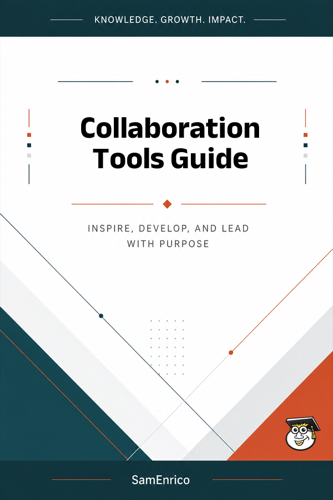
Collaboration Tools Guide Audiobook
Use Miro Mural and Figma for virtual co creation.
by Beebe Chet
Use Miro Mural and Figma for virtual co creation.
Formats
Free sample
Chapter 1: The Asynchronous Mindset--–- Ten minutes into the virtual workshop, the facilitator calls for a show of hands. No one responds. A participant types “👋” into the chat, but three others are on mute, two are checking email, one is making coffee, and another has a child climbing onto their lap. The beautiful Miro board, meticulously prepared with sticky notes in five colors, sits untouched except for a single cursor that has been circling the same frame for four minutes. This scene repeats thousands of times each day across every time zone.
The participants are not lazy or disengaged. They are behaving exactly as humans behave when dropped into a synchronous digital space that pretends to be physical. The problem is not the tool. The problem is the assumption that collaboration requires everyone to be in the same room—or the same Zoom call—at the same time.The Great Synchronous Delusion The shift to remote work revealed a fundamental flaw in how most organizations think about collaboration. For decades, the default mode of teamwork was synchronous: meetings, workshops, off-sites, stand-ups, brainstorms.
Physical proximity was not just convenient; it was considered necessary for creativity and alignment. When the pandemic forced millions of knowledge workers into their homes, companies scrambled to replicate the in-person experience on video calls. They bought Zoom licenses. They installed Miro and Mural. They scheduled back-to-back virtual workshops.
And then they wondered why everyone was exhausted, why participation dropped, and why the beautiful whiteboards became digital graveyards.The answer is uncomfortable but liberating: synchronous collaboration is a luxury, not a default. In the physical world, getting ten people in a room requires scheduling, travel, and rooms. That friction creates scarcity, which makes the time valuable. In the digital world, scheduling a Zoom call requires exactly four clicks. There is no travel cost, no room capacity limit, no natural forcing function.
As a result, the volume of synchronous meetings exploded, but the quality did not. Teams found themselves in “collaboration overload”—more time together, less meaningful output.Consider the data. A 2022 study by the Harvard Business Review found that the average knowledge worker spends 85 percent of their workweek on email, messaging, and meetings. Only 15 percent remains for focused, deep work. Among those collaboration hours, the researchers distinguished between “high-value collaboration” (decision-making, problem-solving, creative alignment) and “low-value collaboration” (status updates, information broadcast, social coordination).
The majority of synchronous meetings fell into the latter category. In other words, teams were spending their most expensive resource—real-time…
This is the end of the free sample. Get the Audiobook to keep going. Buy now
About this book
Details
- Author
- Beebe Chet
- Publisher
- SamEnrico
- Language
- English
- Genre
- Non-Fiction, Self-Help, Technology
- Released
- 2026-06-11
- Pages (approx.)
- 143
- Available as
- eBook, Audiobook

Listen in the VoxFlicks app
Audiobooks and audio dramas wherever you go. Sign in with your SamEnrico account and press play.
More by Beebe Chet
 Lunch Break Reset GuideBeebe Chet$11.99
 Conversation Starters for FuneralsBeebe Chet$11.99
 Anger at Childs LyingBeebe Chet$11.99
 Immigrant Child Museum TripsBeebe Chet$11.99
 UAE Post Interview Follow UpBeebe Chet$11.99
 Dream Species JournalBeebe Chet$11.99
 Prototyping for Problem SolversBeebe Chet$11.99
 Cartier's Crown Jewels: The Rise of a Luxury Empire (1900-1950)Beebe Chet$11.99
 The Dark Web Syndicate: Australia's Cyber Crime UnderworldBeebe Chet$11.99
 How to Produce Oil MediumBeebe Chet$11.99
 A Collector's Handbook to the Standard Flying TenBeebe Chet$11.99
 Invoice Currency Choice GuideBeebe Chet$12.99
You may also like
 Hong Kong Handover 1997Dunn Johnnie$11.99
 Zumba For Postnatal Recovery CourseNeal Christian$11.99
 Zumba for BeginnersLadner Nikia$11.99
 YouTube Comment Mining GuideHumes Pandora$12.99
 Worry Box MeditationCarlin Rudy$11.99
 Workplace Stress MeditationNguyen Lynn$11.99
 Workplace Stress and Sleep RepairHawley Ivory$11.99
 Workplace Perfectionism CureDelaney Jeffry$11.99
 Workplace Injustice Anger GuideWallen Isabelle$11.99
 Work Addiction and Burnout LinkGreenwood Ester$11.99
 Women in Yoga and WellnessBeattie Galina$11.99
 Women in Stand Up ComedyChun Evangeline$11.99