
Non-FictionStrategic AtlasGTM Strategy
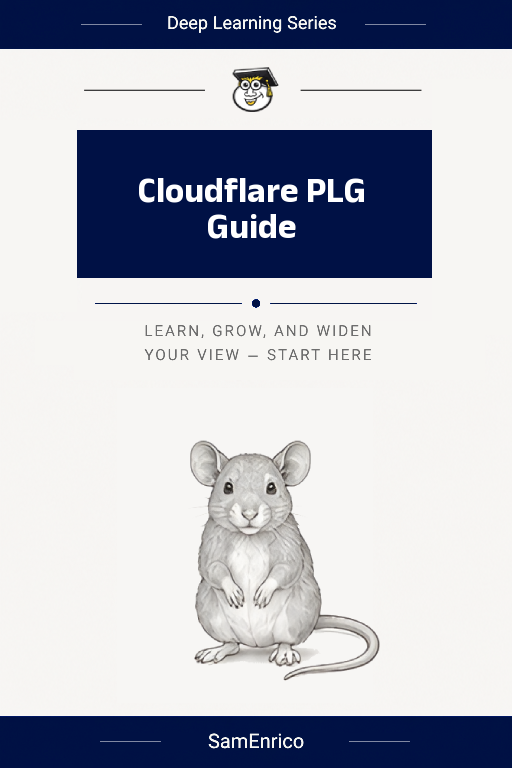
Cloudflare PLG Guide eBook
Explore freemium CDN, self-service security, and s
by Sawyers Onie
Explore freemium CDN, self-service security, and sales-assisted for enterprise performance packages.
Formats
Free sample
Chapter 1: The Free Paradox--–- In 2010, Cloudflare was bleeding cash on every single free user. A typical customer cost them $0.50 in bandwidth alone, and most paid nothing. Their board asked the obvious question: “Why are we giving away our most expensive resource?” The CEO, Matthew Prince, gave an answer that sounded insane: “Because the free user is the only reason we will ever beat Amazon.”Fifteen years later, Cloudflare protects nearly 20% of all websites on the internet. Their free tier has never made a dollar of direct revenue. And yet, without it, their $30 billion enterprise business would not exist.
This is the paradox that most founders never understand: the customers who pay you nothing are often the most valuable assets you will ever acquire.This book is about how Cloudflare weaponized free. It is not a technical manual about configuring DNS or writing WAF rules. It is a playbook for founders, product managers, and revenue operators who want to build a product-led growth engine that turns hobbyists into enterprises without a single sales call until the customer is ready. And it starts with understanding why free is not a cost center—it is a strategic moat.The Cost of Free: Why Most Saa S Companies Get It Wrong Every Saa S founder has been told the same lie: “Free users are a cost. Kill the free tier.” The logic seems sound.
Free users consume bandwidth, storage, compute, and support. They generate no revenue. They complain in public forums. They demand features they will never pay for. The math appears simple: free users lose money, paying users make money.
Therefore, eliminate free users.This math is wrong because it measures the wrong thing. It measures the cost of each free user in isolation. It does not measure the defensive value of preventing competitors from gaining a foothold. It does not measure the data value of real-world traffic patterns that improve the product for everyone. And it completely ignores the acquisition value of a self-service funnel that requires no marketing spend.Consider the alternative.
If Cloudflare had no free tier in 2010, a hobbyist with a new blog would have chosen a competitor—likely a cheap shared host with no CDN, or a paid CDN like Akamai that cost $500/month. That hobbyist would never have learned Cloudflare’s dashboard. He would never have become a paid customer when his blog went viral. He would never have become an enterprise customer when his startup raised a Series B. Cloudflare would have lost not one customer, but an entire future revenue stream that started at zero.The cost of free is not the bandwidth you give away today.
The cost of free is the market share you lose to competitors who do offer free. When you kill your free tier, you do not save money. You hand your future enterprise customers to the next startup that is willing to lose money on them today.The Free Tier Defensibility Matrix Not all free tiers are created equal. Some free tiers are genuinely defensible. Others are simply burning cash.
The difference is the difference between Cloudflare and the thousands of failed PLG startups that copied their model without understanding it.The Free Tier Defensibility Matrix has three tiers. Every founder must place their product in one of these three categories before designing a free plan. Choosing the wrong category is fatal.Commodity Free Tiers (Not Defensible)A commodity free tier offers a service that any competitor can replicate at similar cost. Basic file storage with no egress advantages. Simple CDN with no network effects.
Generic compute with no unique capabilities.If your free tier is a commodity, competitors can copy it overnight. Users have no reason to stay. Price is the only differentiator, and your price is zero—the same as every other commodity free tier. You are competing on nothing.Examples of failed commodity free tiers: dozens of “free CDN” startups from 2005-2010 that offered nothing but edge caching. They all died because Cloudflare’s network-effect free tier ate them alive.
They offered the same service but without the compounding value of millions of free users improving latency.If your free tier is a commodity, do not offer free. Offer a low-cost paid tier instead. Free will only attract users who churn the moment a competitor offers a better free tier—and a competitor always will.Network-Effect Free Tiers (Defensible)A network-effect free tier becomes more valuable as more people use it. Each free user improves the product for every other user. This is Cloudflare’s core insight with Anycast routing.Here is how it works.
Cloudflare has data centers in over 330 cities worldwide. When a free user in Mumbai requests a website, Cloudflare learns the optimal route from that user to the nearest edge node. That data improves routing for every other user in Mumbai—free and paid alike. The free user’s request is not a cost; it is a signal that improves the network for everyone.The more free users Cloudflare has, the better their routing intelligence becomes. The better their routing intelligence becomes, the faster their paid CDN performs.
The faster their paid CDN performs, the more enterprise customers they attract. The free user is the fuel for the entire engine.This is defensible because a competitor cannot replicate the network effect without first acquiring millions of free users—and they cannot acquire millions of free users without offering a better free tier than Cloudflare. But they cannot offer a better free tier because they lack the network effect. Catch-22.To build a network-effect free tier, ask yourself: does each free user generate data that improves the product for all users? If yes, you have a defensible moat.
If no, keep reading.Switching-Cost Free Tiers (Most Defensible)A switching-cost free tier makes it painful for users to leave. They do not stay because the free tier is good. They stay because leaving means rebuilding their entire workflow from scratch.Cloudflare achieves this through R2 storage, Workers compute, D1 databases, and Workers AI. Once a developer stores their data in R2, writes serverless functions in Workers, hosts their database in D1, and runs inference on Workers AI, leaving Cloudflare means rewriting every integration. The cost of leaving is measured in engineering months, not dollars.This is the most defensible free tier because it creates a technical monopoly.
The user is not locked in by contract; they are locked in by code. And unlike a contract, code cannot be renegotiated.To build a switching-cost free tier, ask yourself: does your free tier store user data or logic that cannot be easily exported? If yes, you have a defensible moat. But be warned: users will eventually resent you if switching costs feel exploitative rather than accidental. Cloudflare’s switching costs are accidental—they are a byproduct of building a unified stack, not a deliberate trap.
That distinction matters.The Four Defensive Values of Free Beyond the matrix, free tiers generate four specific types of value that justify their cost. Most founders only see the first type. The most successful founders see all four.Defensive Value: Preventing Competitors Every free user who chooses Cloudflare is a user who…
This is the end of the free sample. Get the eBook to keep going. Buy now
About this book
Details
- Author
- Sawyers Onie
- Publisher
- SamEnrico
- Language
- English
- Genre
- Non-Fiction, Strategic Atlas, GTM Strategy
- Released
- 2026-06-01
- Pages (approx.)
- 154
- Available as
- eBook, Audiobook

Read better in the ZLOADR app
Your eBooks on your phone or tablet. Sign in with your SamEnrico account and start reading.
More by Sawyers Onie
 Nepotism Workplace Anger GuideSawyers Onie$11.99
 Drew Barrymore Flower ShopSawyers Onie$11.99
 Improv for Job InterviewsSawyers Onie$11.99
 Financial Stress for EntrepreneursSawyers Onie$11.99
 Ravens' Whisper: The Forgotten Prophecy of Odin’s EyesSawyers Onie$11.99
 Understanding Radio Digito Facial DysplasiaSawyers Onie$17.99
 Handbag Repair SpecialistSawyers Onie$11.99
 Texas LLC for Non ResidentsSawyers Onie$12.99
 How to Start a Organist (own Account) Business (Beginners Guide)Sawyers Onie$11.99
You may also like
 Hong Kong Handover 1997Dunn Johnnie$11.99
 Zumba For Postnatal Recovery CourseNeal Christian$11.99
 Zumba for BeginnersLadner Nikia$11.99
 YouTube Comment Mining GuideHumes Pandora$12.99
 Worry Box MeditationCarlin Rudy$11.99
 Workplace Stress MeditationNguyen Lynn$11.99
 Workplace Stress and Sleep RepairHawley Ivory$11.99
 Workplace Perfectionism CureDelaney Jeffry$11.99
 Workplace Injustice Anger GuideWallen Isabelle$11.99
 Work Addiction and Burnout LinkGreenwood Ester$11.99
 Women in Yoga and WellnessBeattie Galina$11.99
 Women in Stand Up ComedyChun Evangeline$11.99