
Non-FictionForecast & OutlookCloud FinanceCloud Economics
Cloud Infrastructure Capital Guide eBook
Allocate to data centers, edge computing, and mult
Allocate to data centers, edge computing, and multi cloud integration.
Formats
Free sample
Chapter 1: The $74M Mistake--–- The conference room on the 47th floor of a San Francisco tower had floor-to-ceiling windows overlooking the bay, a long walnut table that cost more than most Americans' annual salaries, and the palpable tension of a company about to die. It was March 2024, and Fast Forward Robotics—once valued at $1.2 billion—had exactly ninety-seven days of runway remaining. The CFO, a thirty-two-year-old former investment banker named Sarah Chen, had just projected the company's cash flow onto the eighty-inch screen. The number at the bottom of the last column, in bright red, was -$74,000,000.That was not the amount they needed to raise. That was the amount they had already spent.
On cloud."Can someone explain to me," said the CEO, a founder who had once been lauded as the next Elon Musk, "how we burned seventy-four million dollars and have nothing to show for it but a bunch of Lambda functions and a bill from AWS that could have bought a fucking island?"No one answered. The CTO, who had architected the entire system, was no longer with the company. He had resigned two weeks earlier, citing "personal reasons," and had taken a quiet job at a large consumer marketplace that still believed in cloud-first. The head of infrastructure, a talented engineer named Marcus, was still in the room. He had been warning about this for eighteen months.
No one had listened."We followed the playbook," Marcus finally said. His voice was steady, but his hands were shaking slightly under the table. "We went all-in on cloud. Reserved instances. Multi-region.
Auto-scaling. We did exactly what every AWS summit told us to do. We just didn't realize that the playbook was written by people who sell cloud."The room was silent. Sarah scrolled to the next slide. It showed a simple comparison: Fast Forward's cloud spend per v CPU-hour versus what the same compute would have cost on owned hardware in a colocation facility.
The cloud number was $0.087. The on-prem number, factoring in hardware depreciation, power, cooling, and a third of an engineer's salary to manage it, was $0.021."We overpaid by a factor of four," Sarah said. "For thirty months. On steady-state workloads that never changed. And because we architected everything around proprietary services—Dynamo DB, Lambda, SQS, API Gateway—we can't just lift and shift to somewhere cheaper without a twelve-month rewrite.
We are locked in, we are bleeding, and we have ninety-seven days to figure out whether we raise a down-round at a ninety percent valuation cut or shut down."They raised the down-round. The existing investors, who had watched $74M evaporate into cloud bills, agreed to put in another $20M on the condition that Sarah became CEO and Marcus became CTO. The founder was moved to a "chief visionary officer" role with no operational authority. Over the next nine months, the new leadership team repatriated 80% of Fast Forward's workloads to owned hardware in a colocation facility outside Reno, Nevada. Their monthly cloud bill dropped from $2.1M to $340,000.
The company survived. Barely.The $74M Mistake is not an outlier. It is a warning.The Silent Epidemic of Cloud Waste Over the past five years, I have analyzed cloud spending across more than two hundred enterprises, from seed-stage startups to Fortune 50 manufacturing giants. The pattern is so consistent that it has become predictable: companies adopt cloud-first strategies driven by vendor marketing and boardroom FOMO, they spend two to three years building on proprietary services, and then they discover that their "variable Op Ex" has become a fixed cost that grows faster than revenue. By the time they realize what has happened, they are locked in, overpaying, and facing a migration cost that exceeds their annual infrastructure budget.The numbers are staggering.
According to internal data from major Fin Ops platforms, the average enterprise wastes between 25% and 40% of its cloud spend. That is not a typo. Nearly one-third of every dollar spent on cloud infrastructure goes to resources that are idle, over-provisioned, orphaned, or simply unnecessary. For a company spending $10M annually on cloud, that is $2.5M to $4M of pure waste—money that could have funded engineering headcount, product development, or profit.But waste is only half the story. The other half is lock-in.
Once a company has built its application ecosystem around proprietary cloud services—Dynamo DB instead of Postgre SQL, Lambda instead of Kubernetes, SQS instead of Rabbit MQ—the cost of leaving becomes prohibitive. Migration estimates of six to eighteen months and $1M to $10M are common. Many companies simply accept their fate, paying the cloud tax indefinitely because the upfront cost of escape is too high.This book is not anti-cloud. That would be as foolish as being pro-cloud without nuance. The cloud is an extraordinary tool for specific workloads: elastic demand, unpredictable traffic, geographic distribution, and short-lived experiments.
But for the vast middle of enterprise computing—the steady-state databases, the batch processing jobs, the internal APIs, the predictable transaction systems—the cloud is often the most expensive way to run code ever invented.The purpose of this book is to give you a capital allocation framework for the hybrid, multi-cloud, edge-enabled world that actually exists today, not the world that cloud vendors promised a decade ago. You will learn how to calculate your true total cost of ownership across data centers, colocation facilities, edge nodes, and public clouds. You will learn when to buy hardware and when to rent compute. You will learn how to detect lock-in before it becomes irreversible. And you will learn how to build a governance model that prevents your own $74M Mistake.But first, you need to unlearn what the cloud industry has taught you.The Great Misunderstanding Cloud computing, in its purest form, was never supposed to be a cost-saving measure.
When Amazon launched EC2 in 2006, the value proposition was not "cheaper." It was "faster and more flexible." Instead of waiting six weeks for a server to be provisioned, you could spin up a hundred instances in sixty seconds. Instead of forecasting capacity twelve months in advance, you could scale with real-time demand. Instead of paying for idle servers, you could pay only for what you used.These benefits are real. They are valuable. And they have absolutely nothing to do with cost reduction.Somewhere along the way—around 2014, when "cloud-first" became a boardroom mantra and AWS's revenue started doubling every year—the narrative shifted.
Cloud providers began marketing cloud as a cost-saving measure. They produced TCO white papers comparing their prices to the cost of running your own data center. Those white papers were not neutral analyses. They were marketing documents designed to make on-premises infrastructure look like an expensive, outdated relic.The problem is that most technology leaders believed them. And once you believe that cloud is cheaper, every subsequent decision is distorted.
You stop investing in your data center. You let your hardware depreciation schedules slip. You lose the institutional knowledge of how to run your own infrastructure. You become dependent on cloud services that have no open-source equivalent. And then, when your cloud bill hits $500,000 per month and your revenue is only $400,000, you have no alternatives.
You are locked in. You are trapped. You are Fast Forward Robotics.The good news is that this trap is entirely…
This is the end of the free sample. Get the eBook to keep going. Buy now
About this book
Details
- Author
- Eason Roxanna
- Publisher
- SamEnrico
- Language
- English
- Genre
- Non-Fiction, Forecast & Outlook, Cloud Finance, Cloud Economics
- Released
- 2026-06-07
- Pages (approx.)
- 138
- Available as
- eBook, Audiobook

Read better in the ZLOADR app
Your eBooks on your phone or tablet. Sign in with your SamEnrico account and start reading.
More by Eason Roxanna
 Pregnancy Anxiety ReliefEason Roxanna$11.99
 Resource Denial Anger GuideEason Roxanna$11.99
 The Parenting Nonverbal GuideEason Roxanna$11.99
 End of Day Confidence RitualEason Roxanna$11.99
 Line App Sticker Addiction GuideEason Roxanna$11.99
 The Great Canadian Bank Heist: The Inside Job That Shocked a NationEason Roxanna$11.99
 Understanding Microtia, Meatal Atresia and Conductive DeafnessEason Roxanna$17.99
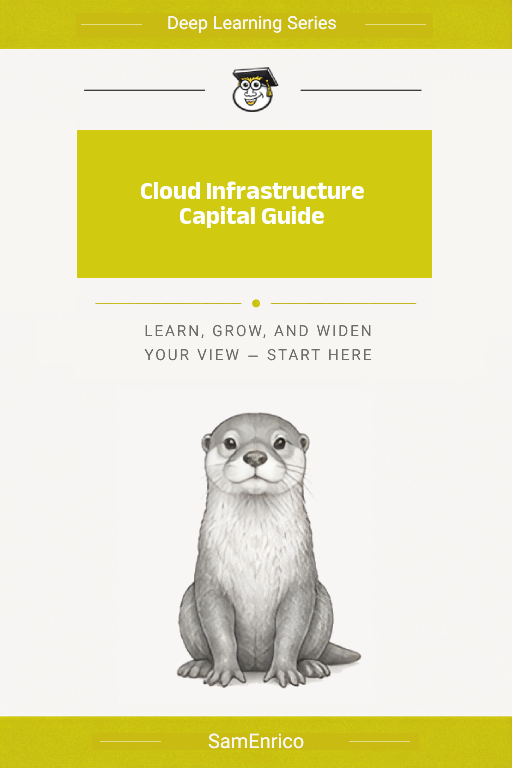 Cloud Infrastructure Capital GuideEason Roxanna$12.99
 Non Disclosure Agreement ReviewEason Roxanna$12.99
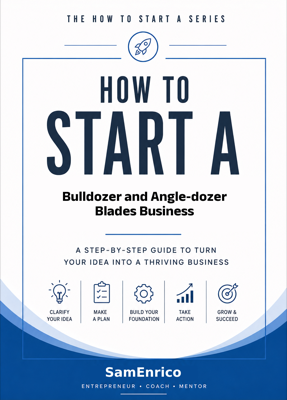 How to Start a Bulldozer and Angle-dozer Blades Business (Beginners Guide)Eason Roxanna$11.99
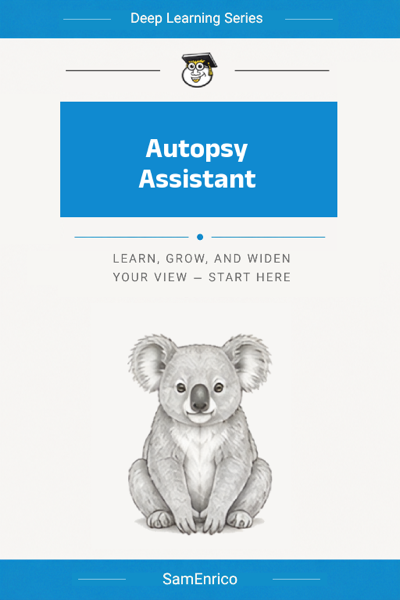 Autopsy AssistantEason Roxanna$11.99
You may also like
 Hong Kong Handover 1997Dunn Johnnie$11.99
 Zumba For Postnatal Recovery CourseNeal Christian$11.99
 Zumba for BeginnersLadner Nikia$11.99
 YouTube Comment Mining GuideHumes Pandora$12.99
 Worry Box MeditationCarlin Rudy$11.99
 Workplace Stress MeditationNguyen Lynn$11.99
 Workplace Stress and Sleep RepairHawley Ivory$11.99
 Workplace Perfectionism CureDelaney Jeffry$11.99
 Workplace Injustice Anger GuideWallen Isabelle$11.99
 Work Addiction and Burnout LinkGreenwood Ester$11.99
 Women in Yoga and WellnessBeattie Galina$11.99
 Women in Stand Up ComedyChun Evangeline$11.99