
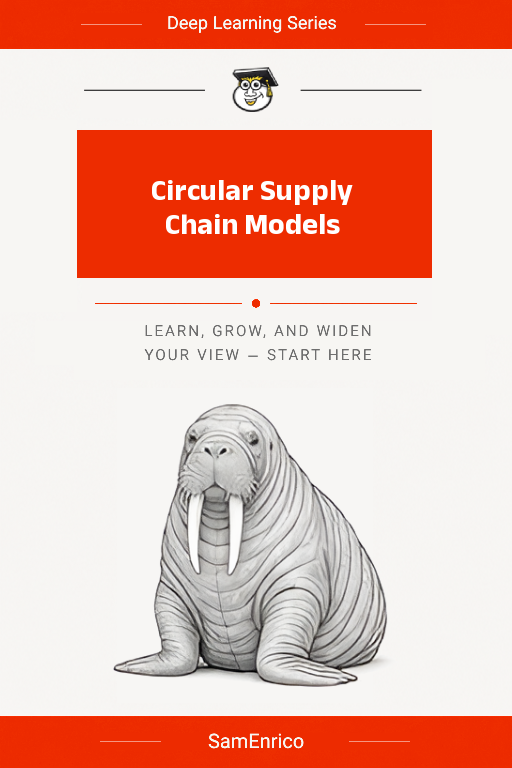
Non-FictionAnnual CheckupCircularReverse Logistics
Circular Supply Chain Models
Transition to circular supply chains including rev
Transition to circular supply chains including reverse logistics and recycled material sourcing to reduce disruption risk.
Formats
About this book
Free sample
Chapter 1: The Fragile Thread--–- On a Tuesday morning in March 2021, a supply chain director at one of the world’s largest automakers watched a single email change everything. The message, which arrived at 6:47 AM from a longtime semiconductor supplier in Taiwan, contained just three sentences: “Due to unforeseen production constraints, we are suspending all shipments of microcontroller units effective immediately. We will provide updates on a weekly basis. We regret the inconvenience.” Within seventy-two hours, that one email had idled three assembly plants, put 8,000 workers on temporary furlough, and shaved $500 million from the company’s quarterly forecast. The director had done everything right by traditional supply chain standards: dual sourcing, safety stock, long-term contracts, and a dedicated risk management team.
None of it mattered. The supply chain hadn’t broken because of poor management. It had broken because it was linear—and linear chains snap when you pull on them hard enough.This is a book about why linear supply chains are failing and how circular models offer a way out. But before we get to solutions, we need to sit with the problem. We need to understand, in visceral and financial detail, why the “take-make-dispose” model that powered industrial growth for a century has become the single greatest source of disruption risk for modern businesses.
This chapter diagnoses the inherent vulnerabilities of the linear economy: dependence on virgin raw materials, disregard for product returns, and the illusion that supply chains can be both efficient and fragile at the same time. By the end, you will see your own supply chain differently. You will see the weak points you have been trained to ignore. And you will understand why circularity is not an environmental luxury but an operational necessity.The Myth of the Smooth Flow For decades, supply chain professionals were taught a seductive story. The story went like this: raw materials flow from mines and farms to factories, where they become products.
Products flow to distribution centers, then to stores, then to customers. Customers use the products and eventually discard them. The end. The diagram on every Power…
This is the end of the free sample. Get the eBook to keep going. Buy now
Contents
- Chapter 1
- Chapter 2
- Chapter 3
- Chapter 4
- Chapter 5
- Chapter 6
- Chapter 7
- Chapter 8
- Chapter 9
- Chapter 10
- Chapter 11
- Chapter 12
Details
- Author
- Ramey Elisabeth
- Publisher
- SamEnrico
- Language
- English
- Genre
- Non-Fiction, Annual Checkup, Circular, Reverse Logistics
- Released
- 2026-06-01
- Pages (approx.)
- 141
- Available as
- eBook, Audiobook

Read better in the ZLOADR app
Your eBooks on your phone or tablet. Sign in with your SamEnrico account and start reading.
More by Ramey Elisabeth
 Influencer Induced Inadequacy GuideRamey Elisabeth$11.99
 Hopelessness In Persistent DepressionRamey Elisabeth$11.99
 Congress Member Retirement PlanningRamey Elisabeth$11.99
 Executive Hostage Survival Field GuideRamey Elisabeth$11.99
 Self Hypnosis Labor PainRamey Elisabeth$11.99
 The Velvet Underground’s Exploding Factory: Warhol, Nico, and the Birth of PunkRamey Elisabeth$11.99
 The Curse of the Black Pharaoh: Tutankhamun’s Tomb and the Race for Ancient SecretsRamey Elisabeth$11.99
 Middlesex University DubaiRamey Elisabeth$12.99
 Robotic Process Automation DeveloperRamey Elisabeth$11.99
 Understanding Congenital MegaloureterRamey Elisabeth$17.99
 How to Become a Cell TesterRamey Elisabeth$11.99
You may also like
 Hong Kong Handover 1997Dunn Johnnie$11.99
 Zumba For Postnatal Recovery CourseNeal Christian$11.99
 Zumba for BeginnersLadner Nikia$11.99
 YouTube Comment Mining GuideHumes Pandora$12.99
 Worry Box MeditationCarlin Rudy$11.99
 Workplace Stress MeditationNguyen Lynn$11.99
 Workplace Stress and Sleep RepairHawley Ivory$11.99
 Workplace Perfectionism CureDelaney Jeffry$11.99
 Workplace Injustice Anger GuideWallen Isabelle$11.99
 Work Addiction and Burnout LinkGreenwood Ester$11.99
 Women in Yoga and WellnessBeattie Galina$11.99
 Women in Stand Up ComedyChun Evangeline$11.99