

Chunking for Problem Solving eBook
Split large problems into sub problems for easier
Split large problems into sub problems for easier solution finding.
Formats
Free sample
Chapter 1: The Overwhelm Paradox...--–- You have eighteen unread emails. Three deadlines passed yesterday. Your phone is buzzing with messages from four different group chats. The project document on your screen has 47 comments, most of which contradict each other. And somewhere in the back of your brain, a small, tired voice whispers: “I cannot do any of this.”That voice is lying.
But it is lying for a reason.The reason is not that you are lazy. It is not that you are stupid. It is not that you lack willpower, discipline, or talent. The reason you freeze when faced with a large problem is neurological, not moral. Your brain is doing exactly what evolution designed it to do: protecting you from a threat it cannot process all at once.
The problem is that the threat is not a saber-toothed tiger. It is a spreadsheet. And your brain cannot tell the difference.This chapter is about why your brain freezes, why trying harder makes it worse, and what you can do in the next sixty seconds to break the spell. By the end of this chapter, you will understand the neurological bottleneck that causes overwhelm, the structural difference between simple and complex problems, and the first law of chunking that will serve as the foundation for everything else in this book.The Universal Experience of Freezing Let us start with an experiment. I want you to imagine the following scenarios, and I want you to notice what happens inside your chest and between your ears.Scenario one: You need to bake a cake.
You have a recipe. The recipe lists ingredients: flour, eggs, sugar, butter, baking powder. It lists steps: preheat oven to 350 degrees, mix dry ingredients, cream butter and sugar, add eggs, combine, bake for thirty minutes. You have done this before. You know exactly what to do.
Even if you have never baked this specific cake, the recipe provides a clear path from start to finish. How do you feel? Probably calm. Maybe slightly bored. But not overwhelmed.Scenario two: You need to plan a wedding.
You have no recipe. There is no standard sequence of steps that works for every couple. You have to choose a venue, a date, a guest list, a caterer, a florist, a photographer, a musician, an officiant, and a dress. Each of those choices has sub-choices. The venue affects the caterer.
The date affects the venue. The budget affects everything. You have never done this before. There is no single correct path. How do you feel?
If you said “overwhelmed,” you are normal. If you said “excited,” you are either lying or you have planned seventeen weddings already.Now here is the crucial insight: the difference between these two scenarios is not the amount of work. A wedding may require five hundred hours of work. A complex cake with fondant decorations may also require five hundred hours of work. The difference is structure.
The cake problem has a known path. The wedding problem has an unknown path. Your brain treats unknown paths as threats.This is the Overwhelm Paradox: when a problem contains more moving parts than your working memory can hold, your brain triggers a stress response. That stress response narrows your cognitive focus. Narrowed focus makes it even harder to see the overall structure of the problem.
And because you cannot see the structure, you try harder. Trying harder increases stress. Increased stress narrows focus further. The loop accelerates until you either shut down entirely or lunge at the first apparent solution without thinking.You have experienced this. Everyone has.
The student staring at a blank exam booklet. The executive staring at a quarterly report that shows red everywhere. The parent staring at a pile of school forms, permission slips, medical records, and activity schedules. The startup founder staring at a thousand things that could kill the company tomorrow. In each case, the feeling is the same: a tightness in the chest, a buzzing in the ears, a sense that the problem is a solid wall with no doors.Here is the truth that will save you: the wall has doors.
You just cannot see them because your brain is in panic mode. And the way out of panic mode is not to try harder. It is to stop trying to solve the whole problem and start looking for the smallest piece you can see.The Neurological Bottleneck: Why Four Is the Magic Number To understand why overwhelm happens, we need to understand a piece of cognitive science that most productivity books ignore. The psychologist Nelson Cowan spent decades studying the limits of human working memory. His conclusion, now widely accepted, is that the average adult can consciously hold only about four distinct pieces of information at once.
Some people can hold five. Almost no one can hold seven. The old “seven plus or minus two” rule from the 1950s has been revised downward. Four is the real number.Let that sink in. You can hold four things in your conscious mind at once.
That is it.Now consider the problems you face. A business turnaround involves dozens of variables: revenue, costs, headcount, product quality, customer satisfaction, cash flow, debt, investor expectations, employee morale, market conditions, competitor actions. That is more than four. A Ph D thesis involves hundreds of variables: the introduction, the literature review, the methodology, the data collection, the analysis, the discussion, the conclusion, the defense, the advisor’s feedback, the committee’s requirements, the formatting guidelines. That is more than four.
Planning a move involves: the new apartment, the old apartment, the lease, the movers, the boxes, the utilities, the address change, the school transfer, the job commute, the new neighborhood. That is more than four.Your working memory is a thimble. The problem is an ocean. When you try to pour the ocean into the thimble, your brain does the only logical thing: it triggers a stress response. From an evolutionary perspective, this makes perfect sense.
If you are facing a situation with too many variables to track, that situation is likely dangerous. The brain’s job is to keep you alive, not to keep you comfortable. So it floods your system with cortisol and adrenaline. Your heart rate increases. Your peripheral vision narrows.
Your digestive system slows down. And your cognitive processing shifts from “explore and analyze” mode to “fight or flight” mode.In fight or flight mode, you are not capable of creative problem solving. You are capable of exactly three things: attacking the threat, running from the threat, or freezing and hoping the threat goes away. This is why you procrastinate. Procrastination is not laziness.
Procrastination is a freeze response. Your brain has classified the problem as a predator, and it is waiting for the predator to leave.The predator does not leave. The spreadsheet does not get up and walk away. The Ph D thesis does not complete itself. The wedding does not plan itself.
So you stay frozen, feeling increasingly guilty, and the guilt adds another variable to the already overflowing working memory, which makes the overwhelm worse.The only way out is to stop trying to hold the whole…
This is the end of the free sample. Get the eBook to keep going. Buy now
About this book
Details
- Author
- Wagoner Joetta
- Publisher
- SamEnrico
- Language
- English
- Genre
- Non-Fiction, Self-Help, Problem Solving
- Released
- 2026-06-08
- Pages (approx.)
- 146
- Available as
- eBook, Audiobook

Read better in the ZLOADR app
Your eBooks on your phone or tablet. Sign in with your SamEnrico account and start reading.
More by Wagoner Joetta
 Student Journaling for StressWagoner Joetta$11.99
 Money Worry Journal WorkbookWagoner Joetta$11.99
 The Anger Self-Soothing KitWagoner Joetta$11.99
 Virtual Performance ManagementWagoner Joetta$11.99
 The Spice Traders' Secret: Unraveling the DNA of the Indian Ocean's Genetic LegacyWagoner Joetta$11.99
 Neon Ghosts: The Secret Lives of Tokyo’s Yakuza InformantsWagoner Joetta$11.99
 Pinterest Redbubble AI ArtWagoner Joetta$12.99
 Kanban for Shopify StartupsWagoner Joetta$12.99
 Understanding Enolase Deficiency Type 3Wagoner Joetta$17.99
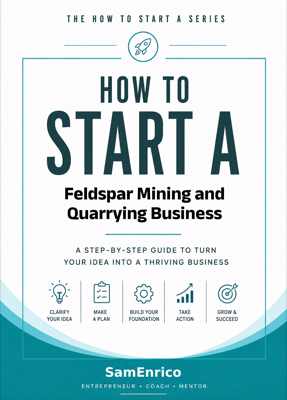 How to Start a Feldspar Mining and Quarrying Business (Beginners Guide)Wagoner Joetta$11.99
 Geothermal TechnicianWagoner Joetta$11.99
You may also like
 Define Problem Statement WorkshopNichols Curtis$11.99
 The Interruption MVP MethodLyon Camellia$11.99
 Pain Point Innovation GuideHagan Davina$11.99
 The Struggle Is Data GuideBattle Kirby$11.99
 Problem Solving DBT WorkbookCriswell Violette$11.99
 Problem Solving VisualizationWeeks Jamar$11.99
 Problem Solving for EmotionsCollado Zelda$11.99
 Problem Framing WorkshopDancy Rosario$11.99
 Group Creative Problem Solving HandbookOliveira Mardell$11.99
 Problem Solving DreamsSchmid Ray$11.99
 Collaborative Problem SolvingGilson Dara$11.99
 Collaborative Problem Solving HandbookCross Lisa$11.99