
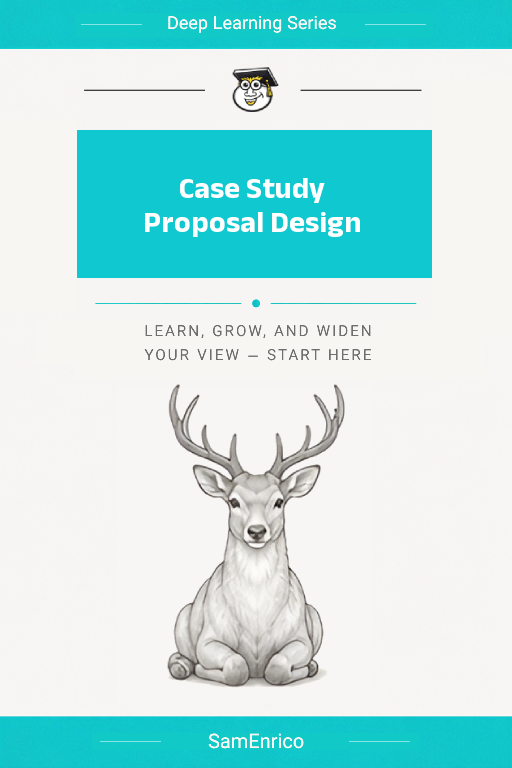
Case Study Proposal Design eBook
Propose single or multiple case study research for
by Bone Thea
Propose single or multiple case study research for grad projects. Define cases, bound systems, and justify case selection with replication logic.
Formats
Free sample
Chapter 1: The Deciding Question--You are staring at a blank document. Your committee has approved your topic, your literature review is half‑written, and you have a nagging sense that you should be doing a “case study” – because that is what people in your field do, because you have a small number of sites, or because you heard the word in a methods seminar. But no one has asked you the question that will determine whether you waste the next six months or build a foundation for a defendable dissertation. That question is not “what is your case?” or “how will you collect data?” It is much simpler and much harder: Should you be doing a case study at all?This chapter is not about how to design a case study. It is about whether you should.
Most graduate students skip this step. They assume case study is the default for qualitative, small‑N, or applied research. They are wrong. Case study is a specific methodology with specific conditions of use. If your project does not meet those conditions, you will spend months forcing a square methodology into a round research question – and your committee will spot the misalignment in the first ten minutes of your defense.
This chapter gives you a five‑question diagnostic, a decision flowchart, and three graduate‑student scenarios that show you exactly how to make the call. By the end, you will know with confidence whether to proceed with a case study or pivot to another methodology before it is too late.The Cost of Getting the Methodology Wrong Let us begin with a story. A doctoral student in public health wanted to study why vaccination rates varied across three rural counties. She had a small number of sites, qualitative data, and a tight timeline. She called her study a “multiple case study” because that sounded rigorous.
She spent six months collecting interviews, observing health department meetings, and analyzing policy documents. When she presented her findings to her committee, the first question was not about her results. It was: “Why is this a case study? Your research question asks ‘how many’ and ‘how often’ – that is a survey or secondary data analysis. You have no propositions, no replication logic, and no bounded system.
You have three interesting stories, not a case study.”She passed – after a revision that took another four months. But the damage was done. She had wasted six months on a design that never fit her question. Her committee’s core objection was not about her data quality or her writing. It was about methodological alignment – the match between research question and methodology.
And she had never asked the deciding question at the start.This chapter ensures you do not make her mistake. The cost of misalignment is not just time. It is credibility. Committees and reviewers are trained to spot mismatches between questions and methods. A well‑executed case study with a misaligned question is still a failed proposal.
A modest but aligned study – even with fewer cases or simpler analysis – is a success because it answers the question it set out to answer.What a Case Study Actually Is (And Is Not)Before you can decide whether to use a case study, you need a precise definition. The most cited definition in the social sciences comes from Robert Yin (2018), and it has three parts. A case study is:An empirical inquiry – it is grounded in real‑world evidence, not speculation or pure theory.That investigates a contemporary phenomenon – the event, process, or system is happening now or in the recent past, not centuries ago. Historical research uses different methods.Within its real‑world context, especially when the boundaries between the phenomenon and context are not clearly evident.That third condition is the key. Most research methods try to strip away context.
Experiments control it. Surveys measure it and then statistically adjust for it. But case studies embrace context as essential. You cannot understand the phenomenon without understanding the setting in which it occurs.Consider two examples. If you want to study how a hospital implements a new electronic medical record system, you might ask: where does the “implementation” end and the “hospital” begin?
The answer is not obvious. Implementation involves technology, training, workflow changes, leadership decisions, and staff attitudes. These are all part of the implementation and part of the hospital’s daily operations. The boundaries are blurred. That is a case study.If you want to study the effect of a new drug on blood pressure, the boundaries are not blurred.
The drug is the phenomenon; the patient’s biology is the context, but you can measure the drug’s effect in a clinical trial without understanding the patient’s life story. That is not a case study.Here is what a case study is not:Not a synonym for qualitative research. You can do qualitative research without doing a case study (e.g., phenomenology, grounded theory, ethnography). Conversely, case studies can include quantitative data (e.g., time‑series analysis, survey data within cases).Not a report on a single person or organization. Just because you are studying one school does not automatically make it a case study.
You also need the blurred boundary condition and the contemporary focus.Not a storytelling exercise. Stories have plots and characters but no systematic design. Case studies have protocols, replication logic, and chain of evidence.If your project does not meet the three conditions – contemporary, real‑world context, blurred boundaries – you should stop now and reconsider your methodology. The rest of this chapter helps you make that determination systematically.The “How” and “Why” Logic Case studies excel at answering explanatory questions – questions about causal mechanisms, processes, and how events unfold. These questions typically begin with “how” or “why.” For example:How did a rural school successfully implement restorative justice practices when others failed?Why did one county achieve high vaccination rates while a neighboring county did not?How did a family business navigate succession across three generations?Notice what these questions do not ask.
They do not ask “how many” (a survey question). They do not ask “what will happen next” (a prediction question for experiments or forecasting). They do not ask “what is the average effect” (a statistical question for large‑N studies).If your research question begins with “how many,” “how often,” “what percentage,” or “to what extent” – you are likely looking at a survey, secondary data analysis, or quasi‑experimental design. If your question asks “what” in a descriptive sense (e.g., “what are the characteristics of X”), you may need a descriptive study, not necessarily a case study.The “how” and “why” logic is not arbitrary. It flows from the nature of case study evidence.
Case studies produce rich, contextual, process‑oriented data. That kind of data is ideal for explaining how something happened – the sequence of events, the key decisions, the turning points. It is also ideal for explaining why something happened – the causal mechanisms that connect events. But it is inefficient for counting things. If you need a population average, interview 20 people and you have a small, non‑generalizable sample.
If you need to understand a process, interview 20 people and you have a wealth of insight.Here is a diagnostic…
This is the end of the free sample. Get the eBook to keep going. Buy now
About this book
Details
- Author
- Bone Thea
- Publisher
- SamEnrico
- Language
- English
- Genre
- Non-Fiction, Student's Shortcut, Case Study
- Released
- 2026-06-01
- Pages (approx.)
- 159
- Available as
- eBook, Audiobook

Read better in the ZLOADR app
Your eBooks on your phone or tablet. Sign in with your SamEnrico account and start reading.
More by Bone Thea
 The Lawn Chemical GuideBone Thea$11.99
 Hotel Nonverbal GuideBone Thea$11.99
 Harvard Extension School Time ManagementBone Thea$11.99
 Burnout Recovery for DentistsBone Thea$11.99
 The Cosmic Drumbeat: How the World Was Sung into ExistenceBone Thea$11.99
 How to Produce Bicycle FendersBone Thea$11.99
 Refrigeration Appliance Service TechnicianBone Thea$11.99
 How to Become a Sterile-products ProcessorBone Thea$11.99