Athletic Performance Napping eBook
Schedule pre-competition naps to improve reaction
by Taylor Kayla
Schedule pre-competition naps to improve reaction time and endurance.
Formats
Free sample
Chapter 1: The 2:00 PM Killer...--The scoreboard read 102-101. Fourteen seconds remained on the clock. The opposing point guard had driven past the defense for the seventh time that quarter, and as he elevated for what would become the winning layup, the help defender rotated over. He saw the play developing. His brain registered the ball leaving the shooter's hand.
His muscles prepared to jump. But the jump came two-tenths of a second too late. The ball cleared his fingertips by inches. The buzzer sounded. The game was over.In the locker room, the coach asked a simple question: "Why were you slow?"The defender had no answer.
He had slept eight hours the night before. He had eaten a clean breakfast. He had hydrated properly. He had done everything right. And yet, at the exact moment when reaction time mattered most, his body had betrayed him.
The truth—the truth that no coach had ever taught him, the truth that no teammate had ever mentioned, the truth that would have changed the outcome of that game—was that he had been ambushed by a biological phenomenon so predictable, so universal, and so consistently ignored that it has cost more championships than poor conditioning, bad coaching, and inferior talent combined.That phenomenon is the 2:00 PM Killer.The Most Predictable Performance Crash in Human Biology Every athlete knows about the third-quarter slump. Every coach has seen a team that dominated the first half fall apart after halftime. Every fan has watched a player make brilliant decisions in the opening period only to commit baffling errors as the game wears on. Most people attribute these collapses to fatigue, poor conditioning, or mental weakness. They are wrong.The 2:00 PM Killer is not about how hard you trained.
It is not about how much you want to win. It is not about your grit, your determination, or your willpower. It is about two biological clocks ticking inside your body right now, and the precise moment every single day when those clocks conspire to shut you down.Let's start with the first clock. It is called the homeostatic sleep drive, or Process S for short. Think of Process S as an hourglass that begins running the moment you wake up.
Every minute you remain awake, more sand falls to the bottom. Every minute you remain awake, the pressure to sleep increases. By midday, that hourglass is half empty. By late afternoon, it is nearly exhausted. And here is the critical detail that most athletes never learn: Process S does not care about your goals.
It does not care about the score. It does not care that you have been training for this competition for six months. It only cares about one thing—how long you have been awake.Now add the second clock. It is called the circadian rhythm, or Process C. Unlike the linear, ever-increasing pressure of Process S, Process C follows a wave.
It rises and falls over a roughly 24-hour cycle, creating natural peaks of alertness and natural valleys of drowsiness. You have experienced these valleys before. That heavy feeling in your eyes at 3:00 PM. That urge to close your office door or find an empty locker room bench. That moment when your brain feels like it is wading through mud.
That is Process C dipping toward its lowest point of the day.Here is the danger. Process S and Process C are not independent. They interact. And in the early afternoon—specifically between 12:00 PM and 4:00 PM—these two forces align against you. Your sleep drive is moderately high because you have been awake for six to ten hours.
Your circadian rhythm is simultaneously dropping toward its trough. The combination produces a cognitive and physical performance deficit that has been measured in every human population ever studied, from professional athletes to air traffic controllers to long-haul truck drivers.The data is staggering. Studies examining thousands of professional basketball games have found that shooting accuracy declines by 3 to 5 percent during afternoon games compared to evening games, even when controlling for every possible variable. Research on soccer players has shown that sprint speeds decrease by 2 to 4 percent during matches that kick off between 1:00 PM and 3:00 PM. Reaction time tests administered to elite fighters have demonstrated a 10 to 15 percent slowdown during the post-lunch window—a difference that means the difference between slipping a punch and taking it flush on the jaw.These are not small effects.
In sports where hundredths of a second separate champions from also-rans, a 10 percent degradation in reaction time is catastrophic. And yet, the vast majority of athletes schedule their most important competitions directly into this danger zone. Afternoon games. Midday finals. Lunchtime matches.
They walk onto the field, the court, or the mat with two biological clocks actively working against them, and they have no idea it is happening.The Cellular Price of Fighting Your Biology Most athletes, when they feel the afternoon slump coming on, do exactly the wrong thing. They try to power through it. They drink more caffeine. They scream louder. They run harder.
They tell themselves that champions push past fatigue, that weakness is a choice, that the athlete who wants it more will find a way to win.This is not toughness. It is metabolic recklessness.When you fight through the post-lunch dip without rest, your body pays a cellular price that most coaches never mention and most athletes never consider. The price is oxidative stress. Every cell in your body constantly produces free radicals—unstable molecules that damage cellular structures, including DNA, proteins, and cell membranes. Under normal conditions, your body neutralizes these free radicals with antioxidants, maintaining a delicate balance.
But when you are sleep-deprived or when you push through natural periods of drowsiness, that balance tips. Free radical production increases. Antioxidant defenses decrease. And your cells come under attack.For an athlete, this is not theoretical. Oxidative stress during exercise has been directly linked to increased muscle damage, prolonged recovery times, elevated inflammation, and reduced immune function.
The athlete who skips a nap during the post-lunch dip is not just performing worse in that moment. They are breaking down their own bodies faster than they can repair them. They are turning a single afternoon competition into a recovery debt that will take days to repay.Consider what happens during a typical afternoon training session. You arrive at 1:00 PM. Your Process S is elevated.
Your Process C is dipping. Your reaction time is already compromised before you lace up your shoes. You begin your warm-up, and because you feel sluggish, you push harder than usual to feel "awake." By the time you start the main portion of your workout, your oxidative stress levels are already elevated above baseline. Then you train intensely for two hours, generating additional free radicals from muscle contraction. By the end of the session, your body is in a state of significant oxidative imbalance.Now compare that to an athlete who naps for twenty minutes before the same training session.
That athlete wakes with lower adenosine levels, reduced sleep pressure, and a circadian rhythm that has been partially reset by the nap. Their oxidative stress at the start of the…
This is the end of the free sample. Get the eBook to keep going. Buy now
About this book
Details
- Author
- Taylor Kayla
- Publisher
- SamEnrico
- Language
- English
- Genre
- Non-Fiction, Health & Wellness, Sports Science
- Released
- 2026-06-09
- Pages (approx.)
- 148
- Available as
- eBook, Audiobook

Read better in the ZLOADR app
Your eBooks on your phone or tablet. Sign in with your SamEnrico account and start reading.
More by Taylor Kayla
 Parenting Mental Health GuideTaylor Kayla$11.99
 Chemotherapy Breath ComfortTaylor Kayla$11.99
 Stress and Substance Use CouplesTaylor Kayla$11.99
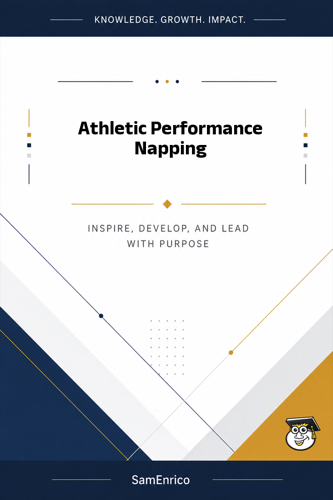 Athletic Performance NappingTaylor Kayla$11.99
 Infant CPR ProtocolTaylor Kayla$11.99
 The Trucking Company TrapTaylor Kayla$11.99
 Gratitude for Solitude GuideTaylor Kayla$11.99
 The Old Man and the Sea RealTaylor Kayla$11.99
 Loma Linda Adventist HealthTaylor Kayla$11.99
 Frozen Echoes: The Lost Franklin Expedition's Final BroadcastTaylor Kayla$11.99
 The Gum Tree Alchemists: Indigenous Australian Knowledge of Medicinal PlantsTaylor Kayla$11.99
 The Shadow of the Habsburgs: Blood, Gold, and the Spanish EmpireTaylor Kayla$11.99