
Assertiveness Self Esteem Link eBook
Builds confidence through successful assertive act
Builds confidence through successful assertive acts.
Formats
Free sample
Chapter 1: The Readiness Lie--–- You have been lied to. Not by a villain twirling a mustache, not by someone who wished you harm. The lie came wrapped in gentle packaging—self-help books with pastel covers, well-meaning therapists, motivational speakers on You Tube, even your own mother's best intentions. The lie sounds like wisdom. It sounds like kindness.
It sounds like patience. It sounds like this: You need to love yourself before anyone else can. Work on your self-esteem first. Feel confident, then act.This is the most expensive lie in modern psychology.Not because it is false in every possible way—self-esteem is wonderful, and loving yourself is a noble goal—but because it has the causal direction exactly backwards. It tells you to wait for a feeling that cannot arrive until you stop waiting.
It traps you in a loop where the prerequisite for action never materializes because the action itself is the only thing that can create the prerequisite.This chapter is going to shatter that loop. By the time you finish reading these pages, you will understand why every moment you have spent "working on your self-esteem" through affirmations, journaling, and positive thinking may have actually kept you stuck. More importantly, you will understand the single counterintuitive truth that changes everything: Feelings follow actions. Not the other way around. Not sometimes.
Not for extroverts or lucky people. Always. For everyone. For you.Let me prove it.The Most Expensive Lie Imagine a woman named Sarah. Sarah is thirty-four years old.
She has a master's degree. She is articulate, thoughtful, and widely respected by her colleagues. She is also deeply unhappy in her job. For three years, she has been underpaid relative to her peers. Her boss regularly interrupts her in meetings.
A male colleague has taken credit for two of her major projects. Everyone who knows Sarah agrees she deserves a raise, a promotion, and an apology. Sarah agrees with them.So what stops her?Not lack of knowledge. Sarah has read fourteen articles about negotiating salaries. She has watched six TED Talks on assertiveness.
She has borrowed three books from the library, including one that told her to "channel her inner warrior." She even practiced a script in front of her bathroom mirror, using a hairbrush as a pretend boss.What stops Sarah is a voice in her head that sounds reasonable, patient, even wise. The voice says: You're not ready yet. Your confidence isn't high enough. If you ask now, you'll stumble over your words and look foolish. What if he says no?
What if he laughs? You need to work on your self-esteem first. Read another book. Do more affirmations. Then, when you feel truly confident, you can ask.That voice is the Readiness Lie.
And Sarah has been living inside it for three full years.The Readiness Lie is a cognitive loop that feels like preparation but functions as paralysis. Here is how it works. You identify a situation that requires assertiveness—asking for a raise, setting a boundary with a parent, saying no to a friend, ending a toxic relationship, speaking up in a meeting. You recognize that you lack the confidence to do it successfully. So you decide to "work on yourself" first.
You read books. You do affirmations. You wait to feel ready. But confidence does not arrive, because confidence is not something you can manufacture in isolation. Confidence is the residue of successful action.
Without action, there is no residue. Without residue, no confidence. Without confidence, no action. The loop tightens like a garrote.Three years later, Sarah is still underpaid, still interrupted, still watching her colleague take credit for her work. And she blames herself.
I just don't have enough self-esteem, she thinks. If only I could love myself more. If only I were more confident. There must be something wrong with me.The tragedy is that Sarah has it exactly backwards. She does not need more self-esteem to act.
She needs to act to generate more self-esteem. Every day she waits, her self-esteem actually decreases, because inaction is interpreted by her brain as evidence of inadequacy. By waiting to feel ready, she is training herself to feel unready. The Readiness Lie is not a holding pattern. It is a downward spiral.The Readiness Lie has a formal name in behavioral psychology: the readiness fallacy.
It is the belief that internal states—confidence, motivation, self-esteem, willpower—must precede external actions. Every study of behavior change over the past fifty years shows the opposite: external actions precede internal states. You do not run because you are motivated; you become motivated because you ran. You do not write because you feel inspired; you feel inspired because you wrote. You do not speak assertively because you have self-esteem; you develop self-esteem because you spoke assertively.This is not optimism.
This is not positive thinking. This is neurobiology.The Brain's Update Mechanism To understand why feelings follow actions, you need to understand a small but mighty region of your brain called the anterior cingulate cortex. I promise this will not become a neuroscience textbook. But this one piece of information will change how you understand yourself forever.The anterior cingulate cortex (ACC) is often called the brain's "conflict monitor." Its job is to detect mismatches between what you expect to happen and what actually happens. When you act in a way that contradicts your self-concept—when you say no despite believing yourself to be a people-pleaser, when you speak up despite believing yourself to be shy—your ACC lights up like a warning siren.
It sends a signal: Something has changed. Pay attention. This does not fit.That signal is uncomfortable. It feels like anxiety. It feels like self-doubt.
It feels like the urge to take back what you just said and apologize. Most people interpret that discomfort as evidence that they are doing something wrong. They feel the ACC activation and think: See? My body is telling me to stop. I'm not ready.
I shouldn't have said that. I'll wait until it feels easier.Here is what most people misunderstand. The discomfort is not a stop sign. It is a growth signal. Your brain is not warning you away from danger.
Your brain is registering the fact that you have violated an old prediction. And every time you violate an old prediction, your brain has no choice but to update its model of who you are.This is the mechanism of learning. This is how you learned to ride a bicycle, to speak a new language, to cook without burning dinner. You did something badly, felt uncomfortable, and your brain updated. Over time, the discomfort faded because the new behavior was no longer a violation—it was the new normal.The same mechanism applies to assertiveness.
Every time you act assertively despite fear, your ACC fires. And then—crucially—your brain updates its prediction model. Oh, your brain learns, I said no to that request, and the world did not end. I interrupted that interruption, and I was not fired. I asked for what I wanted, and I survived.That update is the biological mechanism of rising self-esteem.
Each successful assertive act rewires the prediction circuit. Over time, the ACC stops firing because the new behavior is no…
This is the end of the free sample. Get the eBook to keep going. Buy now
About this book
Details
- Author
- Michel Christa
- Publisher
- SamEnrico
- Language
- English
- Genre
- Non-Fiction, Self-Help, Self Esteem
- Released
- 2026-06-11
- Pages (approx.)
- 125
- Available as
- eBook, Audiobook

Read better in the ZLOADR app
Your eBooks on your phone or tablet. Sign in with your SamEnrico account and start reading.
More by Michel Christa
 The Free Clinic WaitMichel Christa$11.99
 Emotional Regulation Self EsteemMichel Christa$11.99
 The Beginner's Breath CounterMichel Christa$11.99
 Intestinal Methanogen OvergrowthMichel Christa$11.99
 Serenity Prayer GuideMichel Christa$11.99
 Sandbag Strength TrainingMichel Christa$11.99
 Funeral Pre Planning GuideMichel Christa$11.99
 IKEA Maze Shopping CompulsionMichel Christa$11.99
 Odysseus: The Cretan LabyrinthMichel Christa$11.99
 The Forgotten Geometer: Unlocking the Secrets of Angkor WatMichel Christa$11.99
 Silent Witness: The Unseen Trial of the Lindbergh Baby KidnapperMichel Christa$11.99
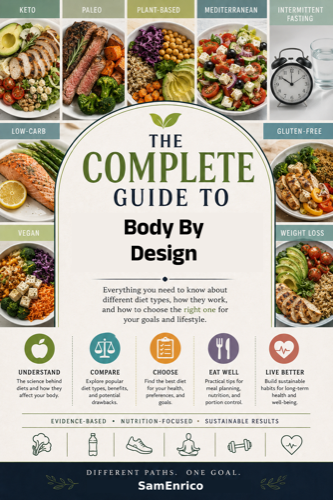 The Complete Guide to Body By DesignMichel Christa$11.99
You may also like
 TM For Low Self EsteemIrby Kimber$11.99
 Self Esteem Restoration GuideHigdon Val$11.99
 Mindfulness Meditation for Self EsteemKing Nathaniel$11.99
 Loneliness And Self ConnectionChoi Fletcher$11.99
 Divorce and Self EsteemDelong Miyoko$11.99
 Post Hypnotic Suggestion for Self EsteemDamron Luigi$11.99
 Positive Assertion for ComplimentsGrimm Mao$11.99
 Envy and Self EsteemWray Keitha$11.99
 Self Hypnosis For Self Esteem GuideSisk Rosalva$11.99
 MBSR For Low Self Esteem HandbookPortillo Terra$11.99
 Follower Count Self Worth GuidePham Hortensia$11.99
 Celebrity Recurring Dream MeaningRenteria Angle$11.99