
Non-FictionSelf-HelpInterpersonal Skills
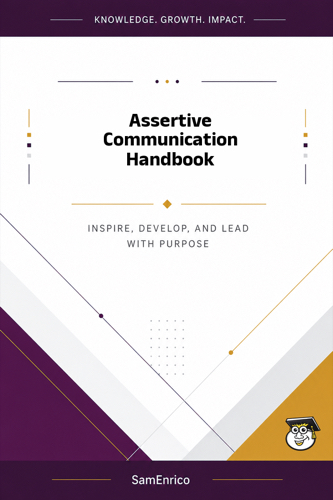
Assertive Communication Handbook eBook
Master the three communication styles and deploy a
by Parham Emely
Master the three communication styles and deploy assertive scripts for any situation.
Formats
Free sample
Chapter 1: The Day I Lost My Spine--–- I remember exactly where I was when I realized I had become a ghost in my own life. It was a Tuesday, 2:47 in the afternoon, standing in a return line at a big-box electronics store. I was holding a printer that had never worked—a $179 paperweight that had consumed four hours of my life on the phone with customer support. The clerk, a young man with a name tag that read "Marcus" and an expression that read "I would rather be anywhere else," looked at the printer, looked at my receipt, and said four words that should have been simple: "You're past the return window."I was past it by six days.Now, here is what a person with a healthy spine would have said: "I understand the policy, but this printer was defective when I bought it. I spent four hours on the phone with your support team trying to fix it.
That's why I'm past the window. I need a refund."Here is what I said: "Oh. Okay. I'm sorry."I turned around and walked out of the store carrying the dead printer. I drove home in silence.
I put the printer in the trash can. And then I sat in my car in the driveway for twenty minutes, not crying, not angry, just… hollow. I had paid $179 for the privilege of not making Marcus uncomfortable. I had traded my money for his convenience. I had traded my self-respect for a moment of peace that wasn't even peaceful—it was just quiet.That was the day I realized I had a communication problem.
But not the problem I thought.For years, I believed I was "nice." I believed I was "easygoing." I believed I was "low maintenance." These were the stories I told myself, and they were comforting stories. But comfort is not the same as truth. The truth was that I was passive. I was a doormat. I had confused silence with kindness, and I had paid for that confusion with my money, my time, my energy, and eventually my relationships.I am not alone in this.
Over the past decade, as I have trained thousands of people in assertive communication, I have heard versions of my printer story from almost every single one of them. The woman who paid for a meal she didn't order because she didn't want to "make a scene." The man who worked seventy-hour weeks for two years without asking for a raise because he didn't want to "seem greedy." The parent who let their adult child move back home, then stay, then take over the basement, then stop paying rent—all because they didn't want to "hurt their feelings." The spouse who said "it's fine" three thousand times until one day it wasn't fine, and the marriage exploded in a fight that had been brewing for a decade.These are not small failures. These are the cracks that become canyons.Why This Book Exists This book exists because most of us were never taught how to communicate assertively. Think about that for a moment. You were taught how to read.
You were taught how to write. You were taught basic math, basic science, basic history. But were you ever taught—in school, at home, or anywhere else—how to say "no" without feeling guilty? How to ask for what you want without sounding demanding? How to disagree with someone without becoming aggressive or disappearing into silence?Probably not.Most of us learned communication the way we learned to eat with utensils: by watching other people and imitating them badly.
We watched our parents. We watched our teachers. We watched television and movies. And we absorbed patterns that were never explained, never questioned, and often deeply dysfunctional. The parent who screamed.
The parent who withdrew. The teacher who shamed. The friend who manipulated. The boss who bullied. These were our teachers, and they taught us well—just not well in the right direction.The result is that most adults operate on autopilot.
When faced with a difficult conversation, we default to one of two modes: fight (aggression) or flight (passivity). Some of us have learned a third mode: freeze (passive-aggression), where we neither fight nor flee but instead sabotage, sulk, or slowly poison the relationship with indirect hostility.None of these modes work. Not in the long run. Not for your relationships. Not for your career.
Not for your mental health.The Four Styles (Not Three, Not Two—Four)Let me be precise about what I mean by these styles, because precision matters. If you cannot name the problem, you cannot fix the problem.Passive communication is the style of self-sacrifice. The passive person violates their own rights to appease others. They say "yes" when they mean "no." They apologize when they have done nothing wrong. They shrink.
They disappear. They hope that if they are small enough and quiet enough and agreeable enough, no one will hurt them. The payoff of passivity is temporary safety. The cost of passivity is everything else: your money, your time, your energy, your self-respect, and eventually the respect of others.The passive person's body language is collapsed. Shoulders rounded.
Eyes down. Voice soft. They take up as little space as possible. They have learned—often in childhood—that visibility is dangerous.Aggressive communication is the style of domination. The aggressive person violates the rights of others to get what they want.
They interrupt. They threaten. They blame. They shout. They believe—often unconsciously—that the only way to win is to make someone else lose.
The payoff of aggression is short-term victory and the release of pent-up frustration. The cost of aggression is the slow erosion of every relationship that matters.The aggressive person's body language is inflated. Chest out. Jaw tight. Finger pointing.
Voice loud. They take up as much space as possible. They have learned—often from watching powerful people—that intimidation is the same as strength.Passive-aggressive communication is the style of indirect revenge. The passive-aggressive person appears to comply on the surface while sabotaging underneath. They say "sure, no problem" and then "forget." They say "I'm fine" while sighing heavily.
They say "whatever you want" while making sure you pay for your choice later. The payoff of passive-aggression is the ability to express anger without taking responsibility for it. The cost of passive-aggression is trust. You cannot trust someone who says one thing and does another.The passive-aggressive person's body language is a mismatch. Words say "fine." Face says "furious." They have learned—often in environments where direct conflict was punished—that the only safe way to express anger is sideways.Assertive communication is the style of mutual respect.
The assertive person honors their own rights and the rights of others. They say "yes" when they mean yes and "no" when they mean no. They ask for what they want directly. They disagree without attacking. They listen without surrendering.
The payoff of assertiveness is sustainable relationships, reduced stress, and genuine self-respect. The cost is that you have to actually do the work.The assertive person's body language is grounded. Spine straight. Eyes steady. Voice…
This is the end of the free sample. Get the eBook to keep going. Buy now
About this book
Details
- Author
- Parham Emely
- Publisher
- SamEnrico
- Language
- English
- Genre
- Non-Fiction, Self-Help, Interpersonal Skills
- Released
- 2026-06-09
- Pages (approx.)
- 128
- Available as
- eBook, Audiobook

Read better in the ZLOADR app
Your eBooks on your phone or tablet. Sign in with your SamEnrico account and start reading.
More by Parham Emely
 Meditation for Abandonment FearParham Emely$11.99
 Older Worker MigrationParham Emely$11.99
 Metta For Social AnxietyParham Emely$11.99
 Fishery Quota SystemsParham Emely$11.99
 Mindful Conflict Resolution GuideParham Emely$11.99
 Food Insecurity Student GuideParham Emely$11.99
 Parent Caregiver Grief GuideParham Emely$11.99
 Self Worth And Body ImageParham Emely$11.99
 The Whispering Apothecary: Ancient Nubia's Forgotten HealersParham Emely$11.99
 The Platters: Only You, Only ThemParham Emely$11.99
 The Last Whistle: The Haunting of the Centralia Mine FireParham Emely$11.99
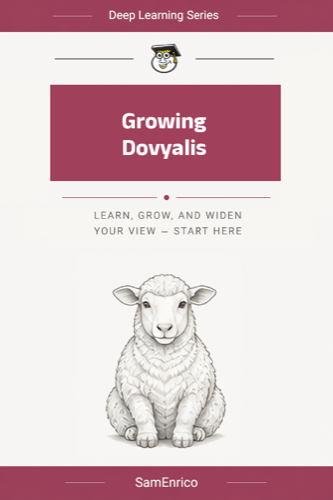 Growing DovyalisParham Emely$11.99
You may also like
 Hong Kong Handover 1997Dunn Johnnie$11.99
 Zumba For Postnatal Recovery CourseNeal Christian$11.99
 Zumba for BeginnersLadner Nikia$11.99
 YouTube Comment Mining GuideHumes Pandora$12.99
 Worry Box MeditationCarlin Rudy$11.99
 Workplace Stress MeditationNguyen Lynn$11.99
 Workplace Stress and Sleep RepairHawley Ivory$11.99
 Workplace Perfectionism CureDelaney Jeffry$11.99
 Workplace Injustice Anger GuideWallen Isabelle$11.99
 Work Addiction and Burnout LinkGreenwood Ester$11.99
 Women in Yoga and WellnessBeattie Galina$11.99
 Women in Stand Up ComedyChun Evangeline$11.99