
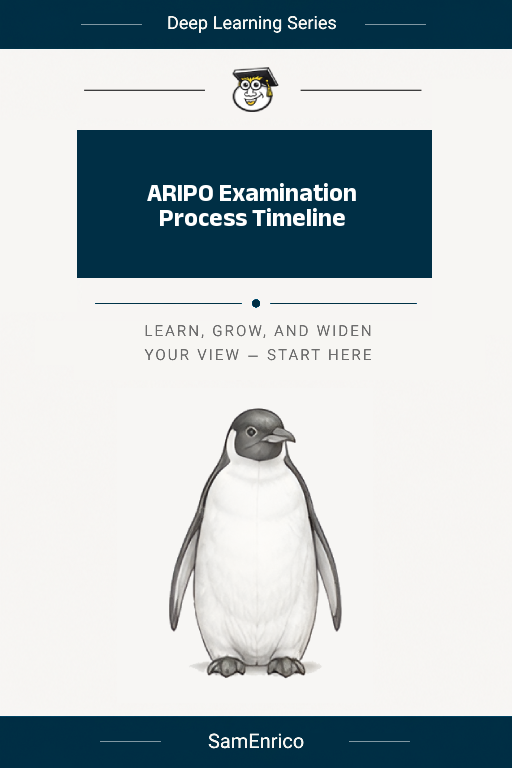
ARIPO Examination Process Timeline
Expect 12-18 months from filing to registration in
by Carlin Rudy
Expect 12-18 months from filing to registration in Harare, understanding substantive examination on absolute grounds and opposition periods.
Formats
About this book
Free sample
Chapter 1: The Harare Calculus--–- The first mistake most IP professionals make is treating the African Regional Intellectual Property Organization (ARIPO) as just another patent office. It is not. A filing in Harare is not a destination; it is a corridor. You do not walk away with a single, enforceable regional right. You walk away with a bundle of national rights that must be managed, maintained, and eventually enforced in up to twenty-two separate jurisdictions.
Understanding this fundamental truth is the difference between mastering the ARIPO timeline and becoming another statistic in the long graveyard of abandoned applications.This book is not an academic treatise. It is a field manual for the practitioner who needs to move from filing to grant in the shortest possible time, without sacrificing quality or enforceability. The title promises an examination of the ARIPO examination process timeline, and that is precisely what you will receive. But timelines do not exist in a vacuum. They are the product of choices: which protocol to use, which states to designate, when to request examination, how to respond to objections, and whether to file regionally or nationally.
Each decision accelerates or decelerates the clock. This chapter lays the foundation for every decision that follows.The Geography of Choice: Why Harare Exists ARIPO was established in 1976 by the Lusaka Agreement, but its practical relevance for most applicants began with the Harare Protocol on Patents and Industrial Designs (1982) and the Banjul Protocol on Marks (1993). The organization’s headquarters in Harare, Zimbabwe, processes applications for member states that have ratified one or both protocols. As of 2026, ARIPO has twenty-two member states, but not all have signed both protocols. This is the first trap.The Harare Protocol covers patents, utility models, and industrial designs.
The Banjul Protocol covers trademarks and service marks. A country may be a member of ARIPO but not of the Harare Protocol, meaning you cannot obtain a patent there through the regional system. Conversely, a country may be a member of the Harare Protocol but not the Banjul Protocol, meaning you cannot obtain a trademark there regionally. The table…
This is the end of the free sample. Get the eBook to keep going. Buy now
Contents
- Chapter 1
- Chapter 2
- Chapter 3
- Chapter 4
- Chapter 5
- Chapter 6
- Chapter 7
- Chapter 8
- Chapter 9
- Chapter 10
- Chapter 11
- Chapter 12
Details
- Author
- Carlin Rudy
- Publisher
- SamEnrico
- Language
- English
- Genre
- Non-Fiction, Business Brief
- Released
- 2026-05-29
- Pages (approx.)
- 129
- Available as
- eBook, Audiobook

Read better in the ZLOADR app
Your eBooks on your phone or tablet. Sign in with your SamEnrico account and start reading.
More by Carlin Rudy
 Worry Box MeditationCarlin Rudy$11.99
 Empathy for BIPOCCarlin Rudy$11.99
 Hundred Days Campaign GuideCarlin Rudy$11.99
 Design Thinking for AI ProductsCarlin Rudy$11.99
 Emotion Chain AnalysisCarlin Rudy$11.99
 Voluntary vs Involuntary DetoxCarlin Rudy$11.99
 Hands Only CPRCarlin Rudy$11.99
 Remote Work for IntrovertsCarlin Rudy$11.99
 The Beast of Gévaudan: France's Phantom PredatorCarlin Rudy$11.99
 Brewing the Impossible: The Lost Coffee Cult of the IncaCarlin Rudy$11.99
 Service Providers Guide to AcupunctureCarlin Rudy$11.99
 Art and Design ComparisonCarlin Rudy$12.99
You may also like
 Hong Kong Handover 1997Dunn Johnnie$11.99
 Zumba For Postnatal Recovery CourseNeal Christian$11.99
 Zumba for BeginnersLadner Nikia$11.99
 YouTube Comment Mining GuideHumes Pandora$12.99Worry Box MeditationCarlin Rudy$11.99
 Workplace Stress MeditationNguyen Lynn$11.99
 Workplace Stress and Sleep RepairHawley Ivory$11.99
 Workplace Perfectionism CureDelaney Jeffry$11.99
 Workplace Injustice Anger GuideWallen Isabelle$11.99
 Work Addiction and Burnout LinkGreenwood Ester$11.99
 Women in Yoga and WellnessBeattie Galina$11.99
 Women in Stand Up ComedyChun Evangeline$11.99