
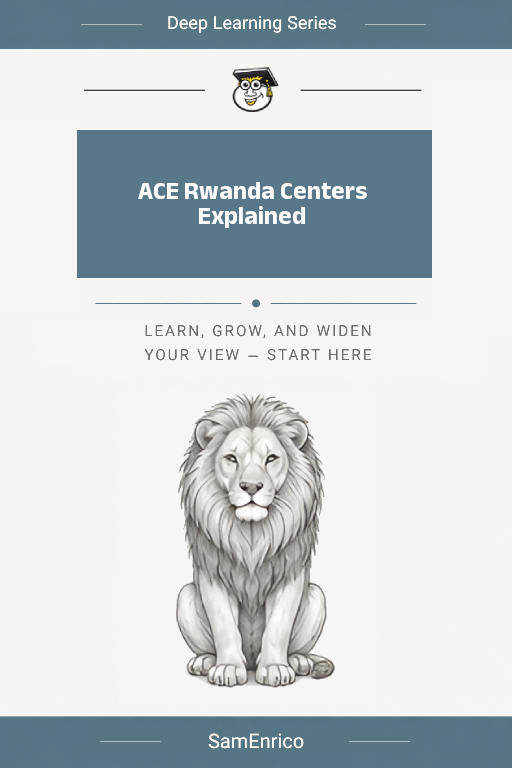
ACE Rwanda Centers Explained
Profiles African Centers of Excellence in Rwanda i
Profiles African Centers of Excellence in Rwanda including ACE in Data Science, Climate, Energy, and Public Health at UR.
Formats
About this book
Free sample
Chapter 1: The Data Imperative--–- On a humid morning in Kigali, 2014, a senior official at the Ministry of ICT and Innovation stared at a spreadsheet that told a disturbing story. Rwanda had ambitious plans to become the "Singapore of Africa," a knowledge economy powered by data, algorithms, and artificial intelligence. But the country had a problem hiding in plain sight: there were barely two hundred Rwandans with advanced degrees in statistics, computer science, or econometrics. The entire public sector could field fewer than fifty data scientists. The private sector was poaching from the same shallow pool.
And the university system was producing graduates who had memorized theoretical models but could not clean a messy dataset, build a predictive model, or advise a minister on evidence-based policy.That spreadsheet became a rallying cry. Within two years, the World Bank had approved the Africa Centres of Excellence (ACE) II Project, and the University of Rwanda (UR) had won funding for what would become the continent's most ambitious experiment in graduate-level data science education. This chapter tells the story of that experiment: the African Centre of Excellence in Data Science (ACE-DS) , a institution that has trained nearly eight hundred master's and doctoral students from across East and Southern Africa, co-designed its curriculum with central banks and revenue authorities, and produced research that has reshaped public health, agriculture, and economic planning. But to understand what ACE-DS became, we must first understand the void it was created to fill.The Pre-ACE Landscape: A Continent Starved for Quantitative Talent In the years before ACE-DS opened its doors in 2016, the statistics were sobering. Sub-Saharan Africa, home to fifteen percent of the world's population, produced less than one percent of global research output.
More critically, the region had fewer than twenty doctoral graduates per year in data-intensive fields like biostatistics, econometrics, and computational statistics. Rwanda, despite its post-genocide reconstruction success, was no exception. The country's entire higher education system graduated roughly one hundred master's students annually across all quantitative disciplines—a number dwarfed by the demands of a government implementing Vision 2020 and preparing for Vision 2050.The consequences were…
This is the end of the free sample. Get the eBook to keep going. Buy now
Contents
- Chapter 1
- Chapter 2
- Chapter 3
- Chapter 4
- Chapter 5
- Chapter 6
- Chapter 7
- Chapter 8
- Chapter 9
- Chapter 10
- Chapter 11
- Chapter 12
Details
- Author
- Velazquez Merrill
- Publisher
- SamEnrico
- Language
- English
- Genre
- Non-Fiction, Student's Shortcut, Centers of Excellence
- Released
- 2026-05-30
- Pages (approx.)
- 147
- Available as
- eBook, Audiobook

Read better in the ZLOADR app
Your eBooks on your phone or tablet. Sign in with your SamEnrico account and start reading.
More by Velazquez Merrill
 The Labyrinth WorkbookVelazquez Merrill$11.99
 The Black Dahlia John F. Kennedy ConnectionVelazquez Merrill$11.99
 Fear Of Failure In ArtVelazquez Merrill$11.99
 ABCDE Method Daily UseVelazquez Merrill$11.99
 ABCDE Digital Spreadsheet MethodVelazquez Merrill$11.99
 The Last Stand of the 300: Marathon’s Forgotten TriumphVelazquez Merrill$11.99
 VAT Registration Thresholds EUVelazquez Merrill$12.99
 10 Ways to Use Domaine De Canton (liqueur) (Recipe Book)Velazquez Merrill$11.99
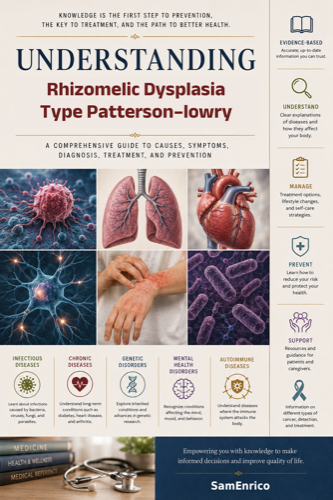 Understanding Rhizomelic Dysplasia Type Patterson–lowryVelazquez Merrill$17.99
 Marketing SpecialistVelazquez Merrill$11.99